Most adults do not quit self-defense training because they lack motivation. They quit because the class schedule, commute, crowded room, or inconsistent instruction stops fitting real life. That is where the online krav maga vs gym decision becomes practical: which format gives you enough quality training to build skills you will actually retain and use?
The honest answer is not that one format automatically wins. A serious gym can provide pressure testing and live partners. A structured online academy can provide access, repetition, progression, and expert instruction that a twice-weekly class cannot always match. The stronger choice depends on your goal, your schedule, and whether you are prepared to train with discipline.
Online Krav Maga vs Gym: Start With Your Real Constraints
A local Krav Maga gym offers a familiar path. You arrive at a scheduled time, follow an instructor, train with other students, and receive immediate correction. For people who thrive on a group environment and can attend consistently, that structure has real value.
But convenience is not a minor detail in self-defense training. It is often the difference between progressing for years and disappearing after a few weeks. If your work changes by the day, you travel, care for a family, live far from a qualified school, or simply cannot make evening classes, an online program removes the obstacle that usually ends training before it starts.
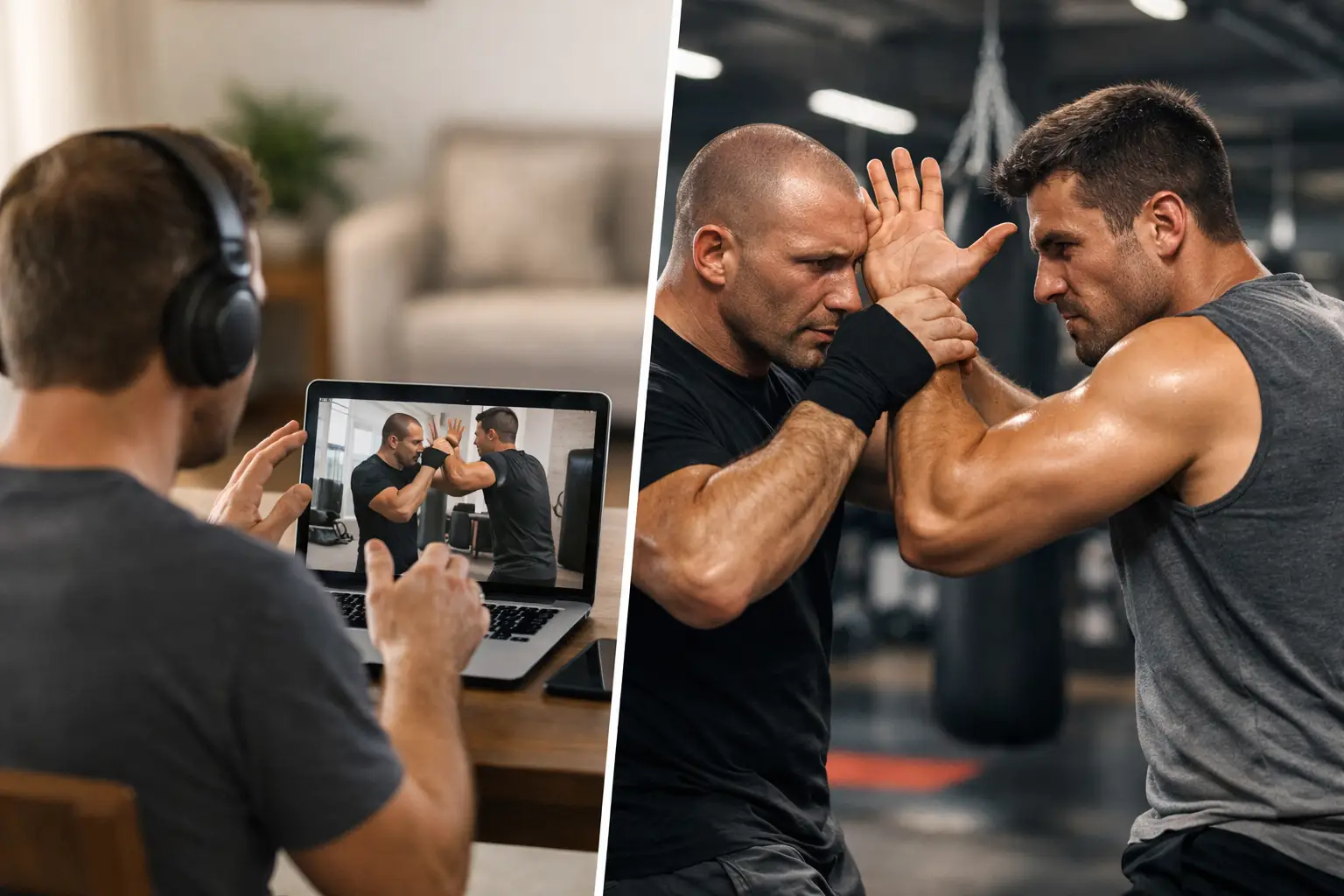
Online Krav Maga lets you train before work, after your children are asleep, during travel, or in short focused sessions at home. You can replay a movement until the mechanics make sense instead of hoping you remember a fast demonstration from last Tuesday. That repetition is not a shortcut. It is how technique becomes reliable under stress.
The key distinction is this: flexibility only produces results when it is paired with a curriculum. Random videos can entertain you, but they do not create a fighter or prepare you for a violent encounter. A belt-by-belt system gives each drill a place, sets a standard for progress, and prevents beginners from jumping into advanced material before they own the fundamentals.
What a Gym Does Better
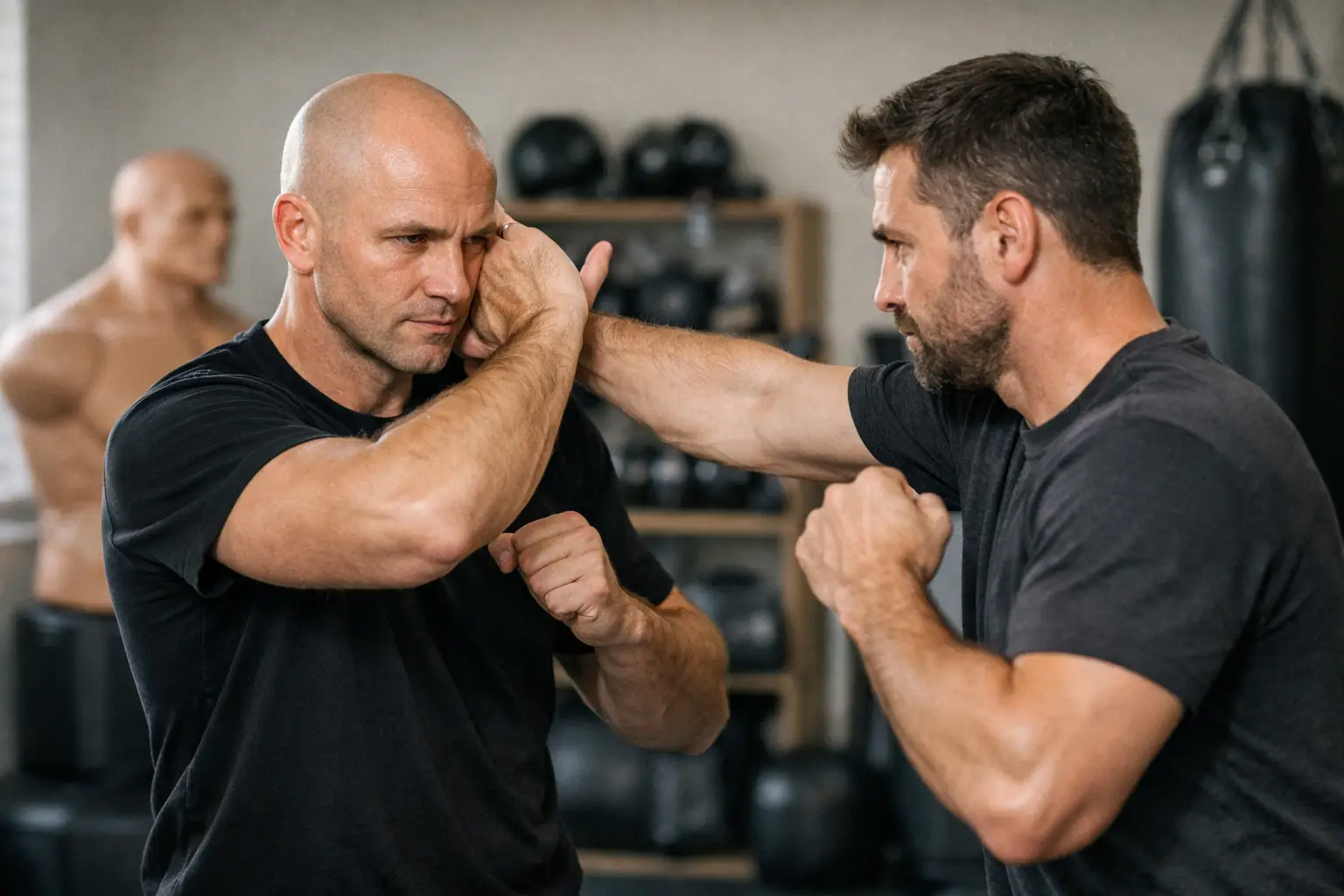
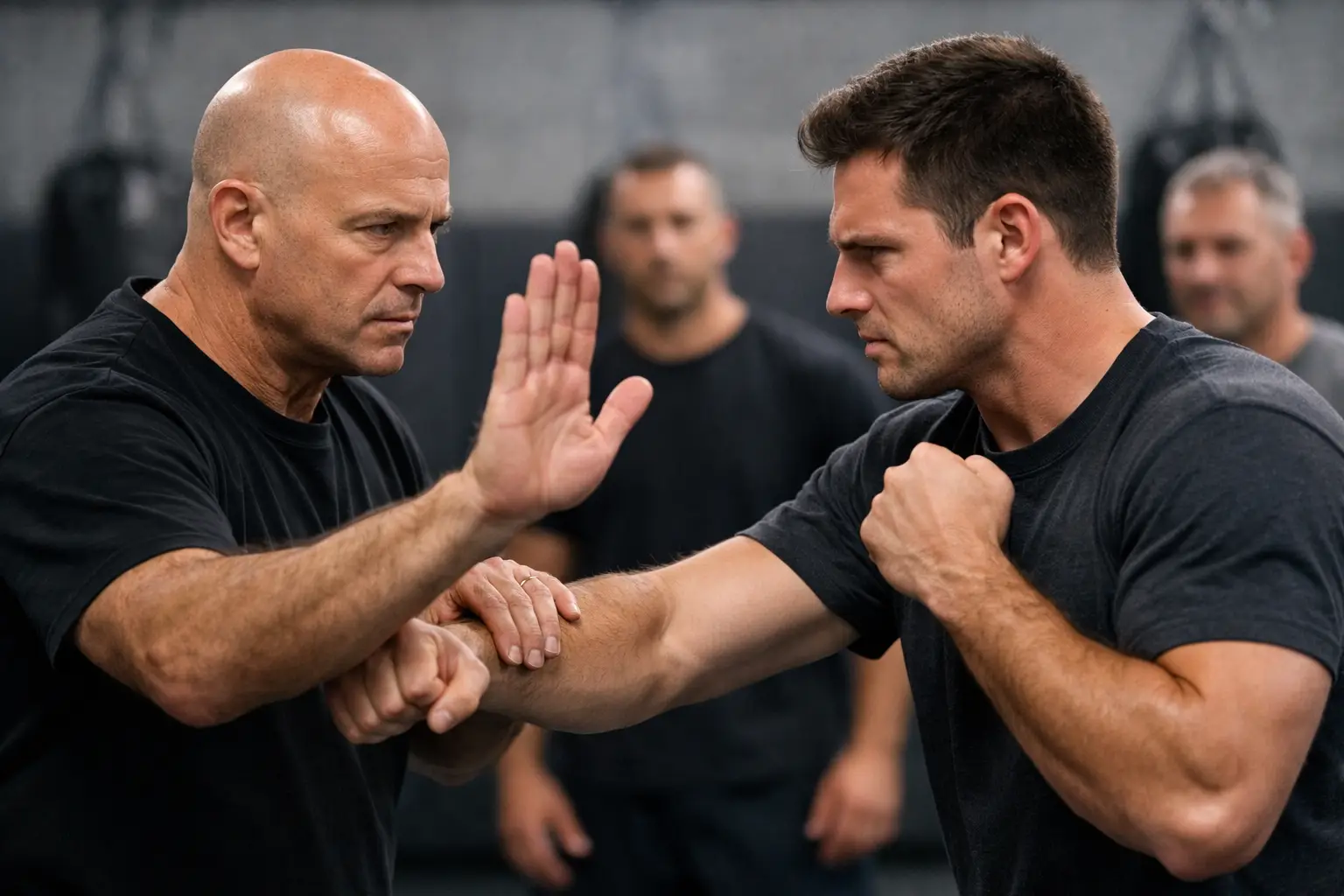
A good gym has advantages that should not be ignored. The most obvious is partner work. Defending against resistance, managing distance, reading a person’s movement, and controlling adrenaline all feel different when another human being is involved.
A qualified instructor can also spot details you may miss on camera or in a mirror. A dropped guard, poor body alignment, overcommitted strike, or unsafe escape angle can become a habit if it goes uncorrected. In-person classes provide immediate feedback and an environment where students can learn to function around noise, fatigue, and unpredictability.
For this reason, gym training is especially valuable when you have access to instructors who teach reality-based Krav Maga rather than choreography. Look for coaching that addresses awareness, verbal boundaries, escape routes, common attacks, stress response, and the legal and ethical responsibility to use only the force necessary to get safe.
Still, not every gym delivers that standard. Some schools offer only one or two classes per week, rotate instructors constantly, mix levels without clear progression, or focus heavily on fitness while giving limited attention to practical defense. Paying for access to a building is not the same as receiving organized, expert-led instruction.
What Online Training Can Do Exceptionally Well
Online instruction is strongest when it is built as an academy, not a loose library of clips. A serious program breaks material into progressive lessons, explains why each response works, demonstrates it from usable angles, and gives students a way to track their development.
That format creates several advantages for committed students. You control the pace, which matters when learning movements that demand coordination. You can slow down a lesson, repeat the same defensive sequence ten times, and return to it days later without feeling rushed by the next class. Your training becomes deliberate rather than dependent on the weekly schedule.
Online programs also give you more total exposure to the curriculum. In a gym, a missed class can mean missing an entire subject. Online, the lesson remains available. You can revisit striking mechanics, releases from grabs, ground survival concepts, defensive movement, or tactical principles until the sequence becomes familiar.
For beginners, this can be a more confident way to begin. There is no pressure to perform in front of strangers on day one. Older adults can move at an appropriate pace. Martial artists can study a new system without abandoning their primary discipline. Professionals with demanding schedules can maintain consistent training wherever they are stationed.
Krav Maga Online is designed around this model: structured instruction, formal belt progression, and direct access to Master Alain Cohen’s curriculum without requiring a rigid gym schedule or specialized training facility. The objective is not simply to watch lessons. It is to follow a recognized path from foundational skills toward higher-level training and certification.
The Limitation You Must Take Seriously
No responsible self-defense academy should claim that watching videos alone makes someone fully prepared for violence. It does not.
You cannot completely reproduce the timing, pressure, unpredictable energy, and physical resistance of a training partner by practicing solo. An online student must be honest about that limitation. If possible, add controlled partner drills with a trusted training partner, attend occasional seminars, work with a qualified local coach, or join safe practical sessions that allow you to test what you have learned.
This does not make online study less legitimate. It makes your training plan more intelligent. Solo training develops mechanics, stance, movement, striking form, decision-making, and repetition. Partner training tests whether those tools hold up when another person reacts. The best long-term approach often combines both.
If you cannot access a competent gym, online training remains far more productive than waiting indefinitely for ideal conditions. You can build a serious base now, develop physical readiness, learn correct principles, and arrive at future partner training with more confidence and understanding.
Accountability Is Not About Being Watched
People often assume a gym automatically creates discipline because an instructor is present. For some students, that is true. For others, a class membership becomes a monthly charge they barely use.
Online training requires greater personal responsibility, but it can also create stronger habits. Set fixed training windows each week. Keep a simple record of completed lessons. Film yourself occasionally to check posture, guard position, footwork, and striking mechanics. Practice with intent rather than rushing through videos to claim progress.
A formal curriculum helps here. When you know the requirements for your next level, training has direction. You are not asking, “What should I do today?” You are working through defined material and building toward a recognized standard.
Your environment matters as well. You do not need a commercial gym or expensive equipment to begin. A clear space, comfortable clothing, and a consistent routine can be enough for foundational training. As you advance, training tools and a reliable partner can add value, but lack of equipment should never be your excuse for avoiding the first step.
Which Option Is Right for You?
Choose a gym if you have a respected Krav Maga school nearby, can attend regularly, and want frequent supervised partner work. The social pressure and live training may keep you engaged, especially if you learn best through direct coaching.
Choose online training if access is your biggest barrier, your schedule changes constantly, you want to progress at your own pace, or you value the ability to repeat expert instruction whenever needed. It is also a strong option for students who want a structured foundation before adding live practice.
Choose both if you can. Study a clear online curriculum to build consistency and depth, then use qualified in-person sessions to pressure-test key skills. That combination gives you the volume of practice many gym students lack and the resistance training online students need.
Real self-defense readiness is not built by the location where you train. It is built by consistent practice, correct instruction, clear progression, physical commitment, and the willingness to confront what you still need to improve. Start with the format you can sustain, train with purpose, and keep raising the standard.