A confrontation rarely announces itself with a bell, a clear rule set, or room to prepare. It may begin with unwanted attention in a parking lot, an aggressive stranger closing distance, a grab, or a sudden attempt to force you somewhere you do not want to go. This guide to reality based self defense focuses on the decisions and actions that matter in that moment: recognize danger early, create space, protect yourself, escape, and get to safety.
Reality-based training is not about looking impressive. It is about building a response that can still work when your heart rate rises, your footing is poor, and the situation is confusing. That requires a clear system, repeated practice, and an honest understanding of what self-defense can and cannot do.
What Reality-Based Self Defense Actually Means
Reality-based self-defense trains for common conditions of personal violence rather than idealized fighting conditions. The goal is not to win an exchange, prove toughness, or collect techniques. The goal is to prevent harm and break contact as quickly as possible.
That changes the training priorities. You need awareness before physical action. You need simple gross-motor movements that are easier to recall under stress. You need to understand distance, verbal boundaries, common attacks, and how to move toward an exit instead of becoming fixed in place.
A practical program also recognizes that no two incidents are identical. An attempted grab differs from a punch, a confined-space confrontation differs from an open-area threat, and an encounter involving a weapon requires different priorities from an unarmed assault. There is no guaranteed technique. There are principles that improve your odds: act early, protect vital targets, create movement, use decisive counteraction when necessary, and leave.
Start With Prevention, Positioning, and Boundaries
The strongest self-defense decision often happens before physical contact. Awareness is not paranoia. It is the habit of noticing what is around you without becoming consumed by fear.
Keep your attention available when entering parking areas, stairwells, transit stations, and unfamiliar buildings. Avoid becoming fully absorbed in a phone when you need to move through a vulnerable space. Notice exits, populated areas, obstacles, and people whose behavior makes you uncomfortable. If your instincts signal that something is wrong, create distance early. You do not need to wait for proof to change direction, enter a business, call someone, or ask for help.
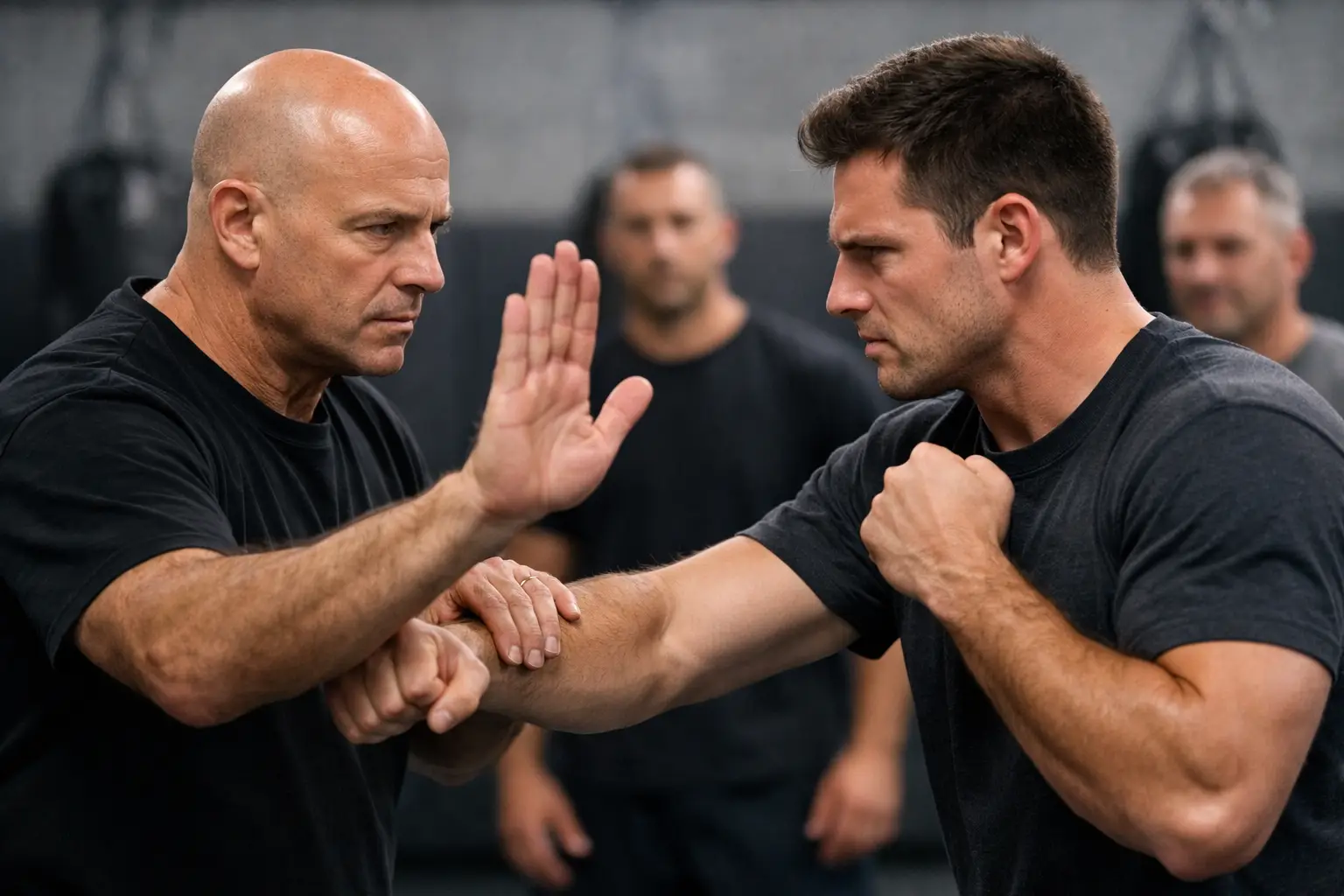
Verbal skills matter too. A firm, clear command such as “Stop,” “Back up,” or “I don’t want any trouble” can set a boundary, attract attention, and prepare your body to move. Your hands can remain raised in a non-threatening protective position while you speak. This posture helps you manage distance and puts your hands closer to where they may need to be.
The trade-off is simple: escalating verbally can sometimes aggravate an unstable person, while staying silent can leave your boundary unclear. Read the context. Your aim is not to dominate the conversation. It is to create an opportunity to disengage safely.
Build a Self-Defense Response That Works Under Stress
When an assault becomes physical, complicated sequences are a liability. Stress narrows attention and reduces fine motor control. A reliable response should be direct enough to practice repeatedly and adaptable enough to use from imperfect positions.
Protect Yourself Before You Counter
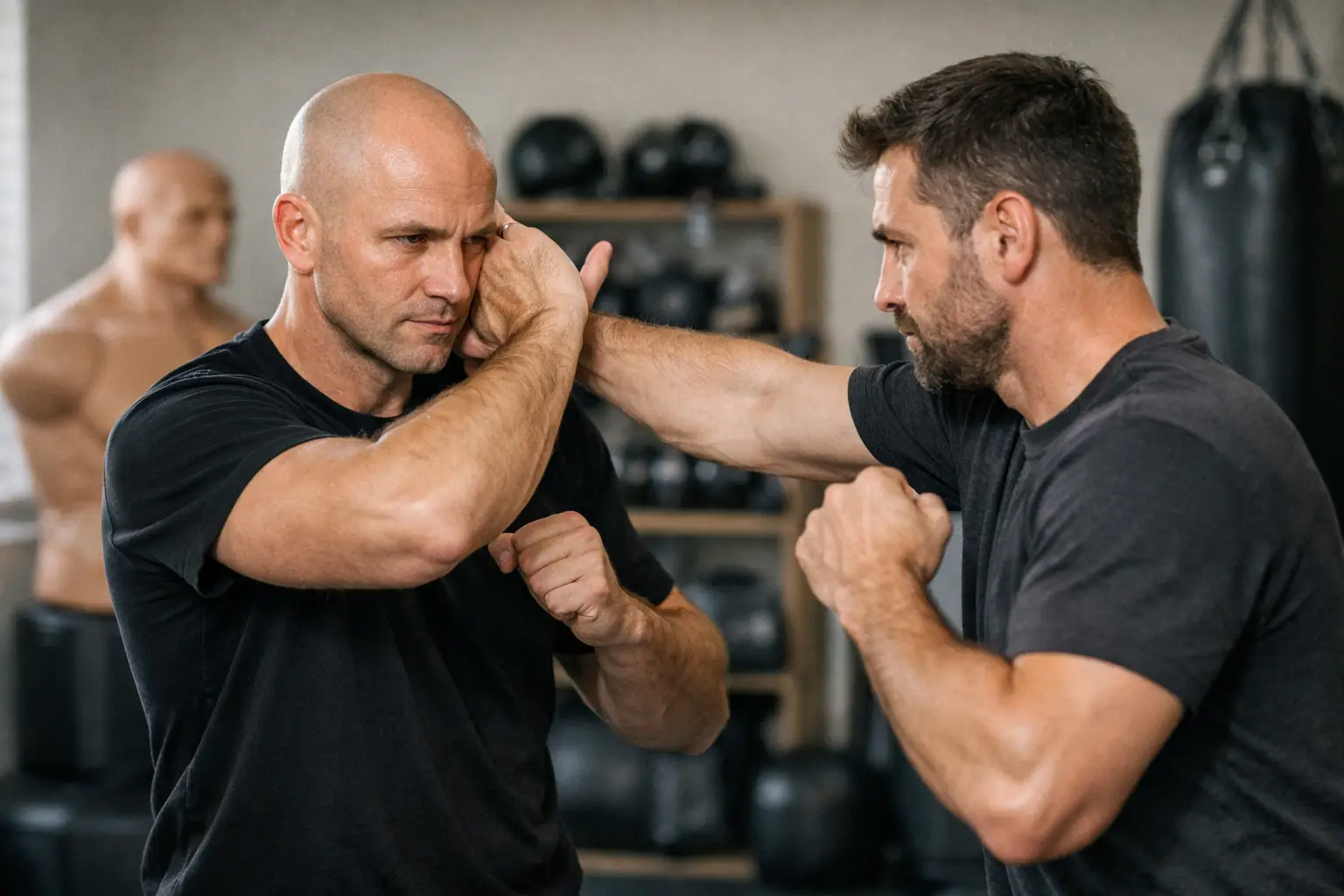
Your first movement may need to be defensive: covering your head, turning vulnerable targets away, stabilizing your balance, or breaking the attacker’s control of your body. If someone is swinging, shielding your head and moving off the line can matter more than throwing a perfect strike. If someone grabs you, your priority is often to break the grip, regain posture, and move away.
Good training teaches you not to freeze after the first action. Defend, counter if necessary to create an opening, and immediately assess your route out. The moment you can run, move to a safer area, or get behind a barrier, do it.
Train Distance and Movement, Not Just Strikes
Striking can be useful, but a strike without movement can leave you trapped at the same dangerous range. Reality-based self-defense emphasizes stepping, angling, controlling distance, and getting your body moving toward safety.
Practice moving with your hands up, changing direction, and maintaining balance while looking around. Work on standing up safely if you fall. Learn how confined spaces, walls, cars, furniture, and crowds affect your options. A technique that seems easy in open space may be far less practical when your back is against a wall.
Use Targets and Tools With Purpose
Effective counterattacks are not random. They are used to disrupt an attacker long enough for you to escape. In a high-stress encounter, the most useful options are generally direct, simple actions directed at available vulnerable areas, followed by immediate movement.
This does not mean every situation calls for maximum force. Self-defense must be reasonable for the threat you face, and laws vary by state and circumstance. If you can safely leave without physical force, that is usually the best result. If you are in immediate danger, act decisively enough to stop the assault and get away, then contact emergency services when safe.
Train the Scenarios Most People Avoid
A guide to reality based self defense should include the moments that make people uncomfortable, because those are the moments that deserve preparation. Training only from a neat starting stance creates false confidence. Real attacks can begin close, suddenly, and from awkward positions.
Useful scenario training includes defenses against common pushes, chokes, headlocks, wrist grabs, bear hugs, punches, and attempts to force you toward a vehicle or isolated area. It should also address the emotional side of the encounter: surprise, verbal intimidation, tunnel vision, and the instinct to apologize or comply when something feels wrong.
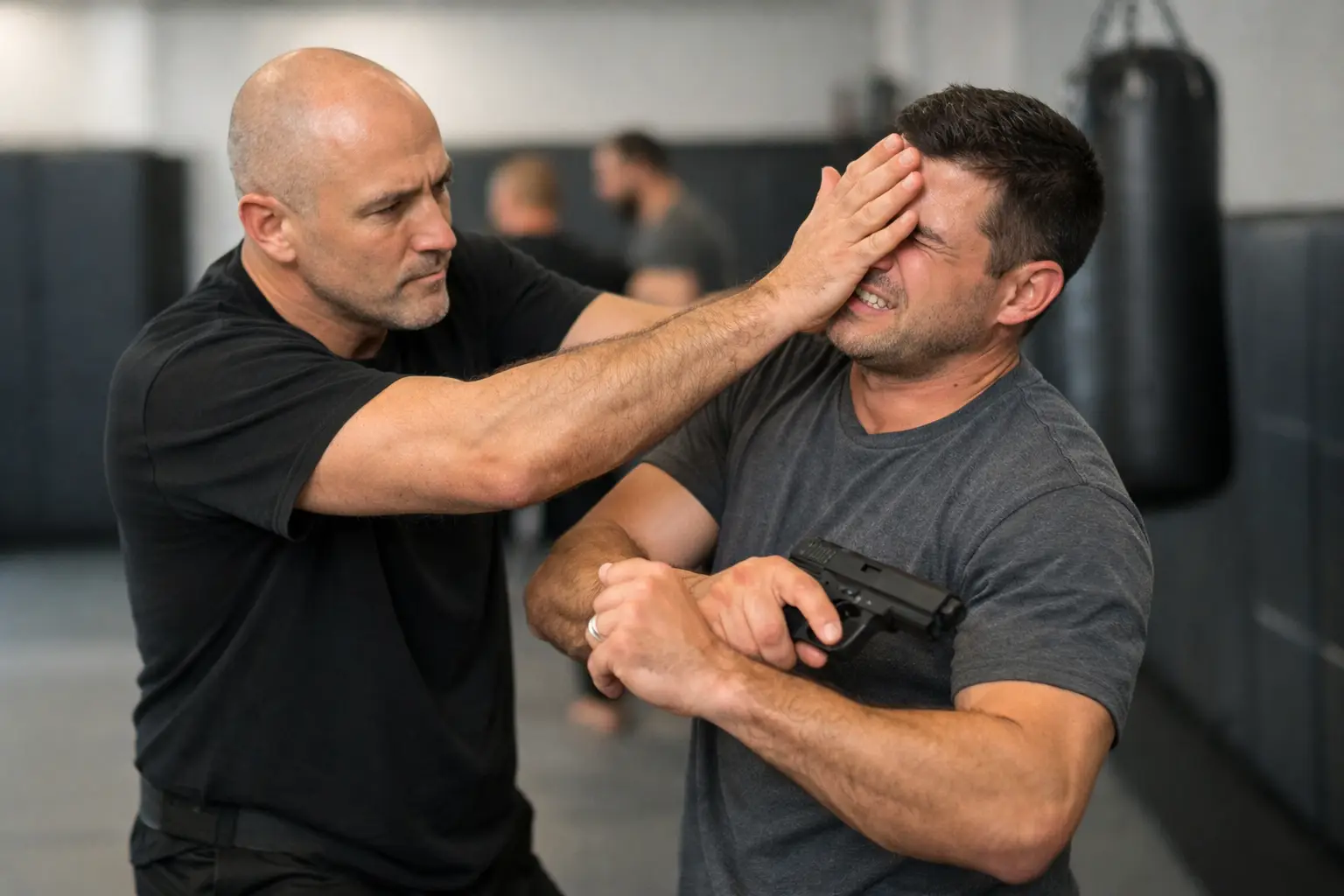
Weapon threats require particular caution. A weapon changes the risk immediately. Your priority is survival, not proving that you can disarm someone. Distance, escape routes, cover, compliance, and the attacker’s specific behavior all matter. Physical disarm techniques should be learned only through qualified instruction and drilled with strict control. They are emergency options, not promises.
How to Practice When You Train Online
Online training gives disciplined students the ability to build a structured foundation without depending on a local class schedule. But effective independent practice requires standards. Watching a video once is not training. Repetition, feedback, and progression are what turn instruction into usable skill.
Start slowly. Learn the stance, body position, mechanics, and purpose of each movement before adding speed. Use a mirror or record yourself to identify obvious errors in balance, guard position, and footwork. Practice in a clear area with stable footwear and no hazards nearby. If a drill involves impact, use appropriate equipment and avoid training at full power without safe supervision.
Solo practice is excellent for movement, striking mechanics, defensive covers, transitions, and conditioning. Partner work adds timing, pressure, resistance, and the unpredictability of another person. Both have a place. If you train with a partner, begin cooperatively, establish clear stop commands, and increase intensity only when both people can perform the drill safely.
A structured belt progression helps prevent the common mistake of jumping from one flashy technique to another. Krav Maga Online provides that progression through Master Alain Cohen’s instruction, allowing students to train from foundational self-defense skills toward more advanced applications at a pace they can sustain.
Measure Readiness by Decisions, Not Confidence
Confidence is valuable, but it should come from preparation rather than fantasy. A realistic student can answer practical questions: Can I identify an exit? Can I maintain distance while speaking firmly? Can I protect my head and move if surprised? Can I escape after creating an opening? Can I recognize when the safest option is to run, comply, or call for help?
Your training should also support your physical capacity. You do not need to become an elite athlete to improve your safety, but better balance, mobility, grip strength, conditioning, and ability to stand up quickly can expand your options. Consistency matters more than occasional hard sessions. Twenty focused minutes practiced several times a week can create meaningful progress when it follows a clear curriculum.
Self-defense is not a personality trait reserved for fighters, police officers, or military personnel. It is a learnable set of habits and actions. Train with seriousness, respect the limits of any technique, and make every practice session serve one purpose: giving yourself a better path home.