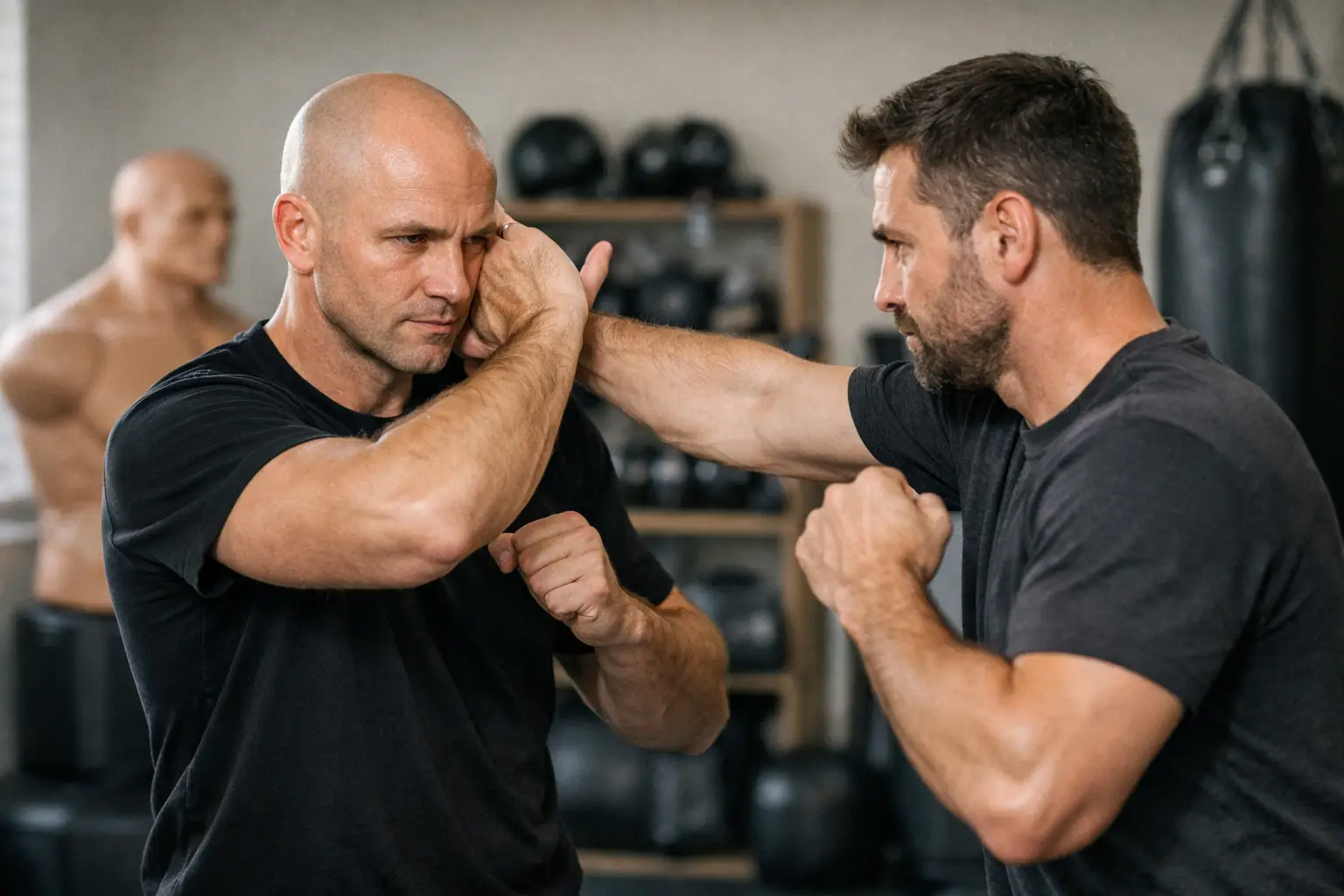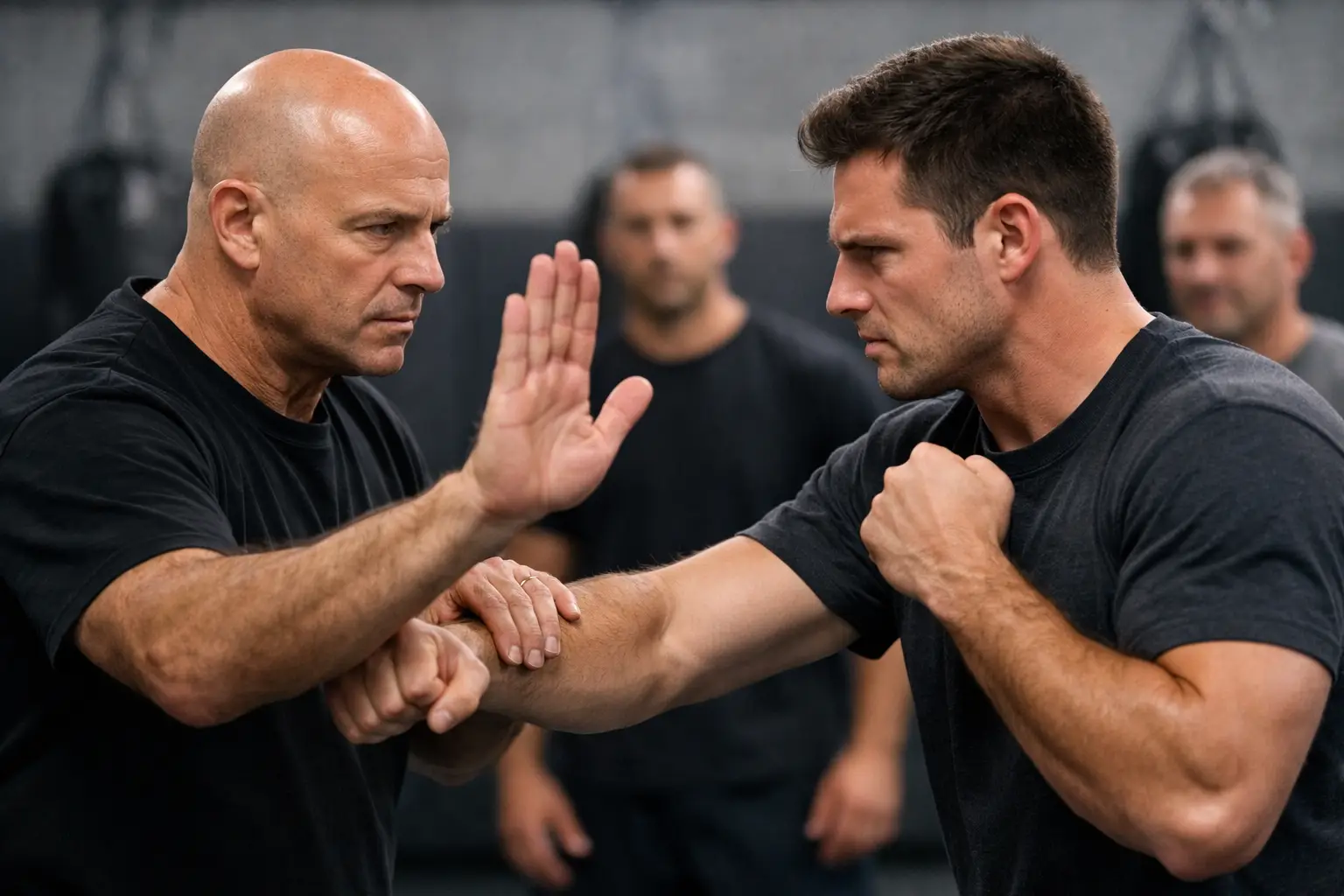
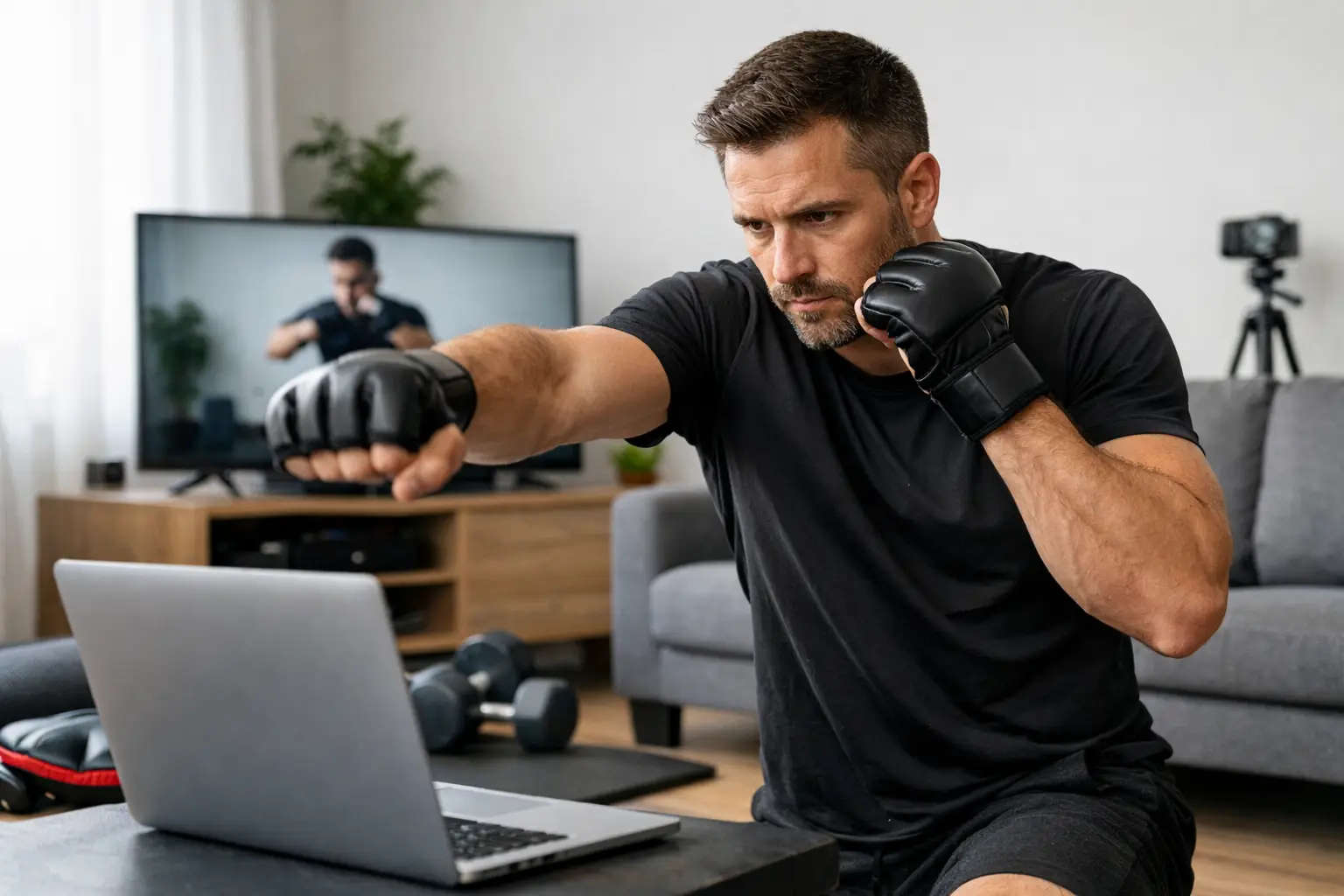
A crowded schedule, a long commute, or no qualified school nearby should not decide whether you can build real self-defense ability. You can learn Krav Maga from home, but the result depends on more than watching a few striking videos. You need a progressive curriculum, precise instruction, repetition, and an honest understanding of what solo training can and cannot teach.
Krav Maga was built around direct, practical responses to violence. That makes structure especially important. Random techniques may feel exciting, but they do not create the decision-making, movement, and defensive habits that hold up under pressure. Train with a clear system, and your home can become a serious place to develop capability.
What It Takes to Learn Krav Maga From Home
Home training works best when it follows the same logic as a quality academy: fundamentals first, controlled progression second, and advanced material only after the basics are reliable. A student who can move, protect their head, manage distance, strike with balance, and recover position is building a base that matters. A student who jumps immediately to weapon defenses is collecting choreography.
A structured online program gives each session a purpose. Early training should cover stance, movement, awareness, combatives, basic releases, and defensive posture. From there, the curriculum can introduce attacks at different ranges, multiple-threat awareness, ground survival principles, and scenario-based responses. Belt progression is valuable because it gives you a measurable standard instead of a vague feeling that you have trained enough.
The strongest online instruction also shows technique from more than one angle, explains common errors, and tells you why a movement works. Details matter. A punch delivered with poor alignment can injure your wrist. A defensive movement that leaves your chin exposed can create the opening an attacker needs. Expert-led video allows you to pause, review, and repeat those details until they become familiar.
Start With a Training Space You Can Control
You do not need a commercial gym or expensive equipment to begin. You do need enough clear floor space to step, turn, move backward, and practice without striking furniture or slipping on a rug. Wear stable athletic shoes if you are training on a hard surface, or train barefoot only when the surface is clean, dry, and secure.
Begin with bodyweight movement and shadow work. Practice your stance, forward and backward steps, pivots, open-hand positions, palm strikes, elbows, knees, and simple combinations in the air. If you add a heavy bag later, use it to develop controlled impact and alignment, not to prove how hard you can hit. Hand wraps and gloves can be useful for bag work, but they are not a replacement for correct mechanics.
Record short clips of your training when possible. Most people believe they are standing balanced or keeping their hands high until they see themselves on video. Reviewing your posture, foot placement, and recovery after every strike is one of the advantages of learning at home. You can correct a mistake before repeating it hundreds of times.
Train the Skills That Transfer First
Your first goal is not to look technical. Your goal is to become harder to surprise, harder to control, and better able to create an opportunity to escape. That starts with awareness and positioning as much as it starts with striking.
Build every session around a small number of skills. Practice moving from a neutral stance into a protective position. Practice verbal commands with a firm voice. Work on covering your head while moving off line. Then add direct counterattacks that create space, followed by movement away from the threat. Krav Maga is not about trading blows or winning a clean contest. The priority is to disrupt the assault and get to safety.
Shadow training is more valuable when you assign it a situation. Instead of throwing fifty unfocused punches, imagine an aggressive person closing distance. Set your hands, use a verbal boundary, move, cover, strike, and exit. Keep the scenario simple at first. Precision and decisiveness beat speed performed without control.
Breathing deserves attention too. Many beginners hold their breath during combinations, which stiffens the body and drains energy. Exhale sharply on strikes, reset your posture, and keep your eyes forward. The objective is not to become tense. It is to stay functional when your heart rate rises.
Follow a Schedule That Builds Retention
Three focused sessions each week will usually produce more progress than one exhausting session followed by ten days off. A practical home schedule might include two technical sessions of 30 to 45 minutes and one shorter session for movement, conditioning, and review. If your schedule is demanding, even 20 disciplined minutes can move you forward.
Start each session with joint mobility, light footwork, and controlled movement. Then work through one lesson or skill category. Finish by reviewing the core movement at a slower pace, when fatigue makes errors easier to notice. You are training a response pattern, not simply completing a workout.
Keep a simple training record. Note the lesson completed, the techniques practiced, where you felt unstable, and what needs review next time. This builds accountability and makes belt preparation far more effective. Real progress is usually quiet: cleaner footwork, less hesitation, better balance, and faster recovery after a strike.
Understand the Limits of Solo Practice
You can build an excellent foundation alone, but no responsible instructor should claim that solo drills fully reproduce a resisting human being. Distance changes. Timing changes. A partner may pull, grab, push, freeze, or react in ways a bag never will. Partner work eventually adds pressure, contact management, and the judgment required to apply a technique safely.
That does not mean you should wait for a partner before training. Use solo practice to develop the mechanics and movement that make partner training productive later. When you do work with another person, begin slowly, use clear communication, and avoid practicing dangerous techniques at full speed. Training partners should help you develop control, not become targets for reckless experiments.
For weapon threats, ground attacks, chokes, and high-intensity scenarios, follow qualified instruction closely. Do not improvise advanced defenses based on a short clip. The stakes are too high, and the details are too important.
Choose Instruction That Holds You Accountable
Not every online self-defense course is a Krav Maga education. Look for a defined belt-by-belt curriculum, clear teaching standards, assessments, and a way to receive feedback or guidance as you progress. A formal path creates standards for beginners while giving experienced martial artists a way to challenge themselves without skipping essential fundamentals.
Krav Maga Online is designed around that disciplined academy model, with instruction from Master Alain Cohen, structured progression from beginner levels through advanced training, and certification pathways for students who want recognized achievement. The value is not simply access to a library of videos. It is the ability to train in sequence, revisit lessons, and pursue measurable development on your own schedule.
Professional users, including security personnel and law enforcement candidates, should be especially selective. Online training can strengthen movement, conditioning, recognition, and technical knowledge, but it should complement any agency-specific policies, legal requirements, use-of-force training, and supervised practical instruction. Context determines what is appropriate.
Make Your Home Practice Realistic
The best home sessions include moments of decision, not just repetition. Give yourself a verbal cue before moving. Begin from different positions, such as standing near a doorway, seated at a desk, or holding an everyday object. Practice scanning your surroundings after the movement instead of staring at the imaginary attacker.
Do not confuse realism with chaos. You do not need to train at maximum intensity every day. Controlled repetitions build reliable mechanics; occasional higher-tempo rounds test whether you can maintain them under fatigue. If a technique becomes sloppy, reduce speed and regain precision.
Your home training can be flexible without becoming casual. Set the space, follow the lesson, repeat with purpose, and progress only when your fundamentals are dependable. The person who trains consistently with a proven system is not waiting for the perfect conditions to become more capable. They are building readiness one disciplined session at a time.