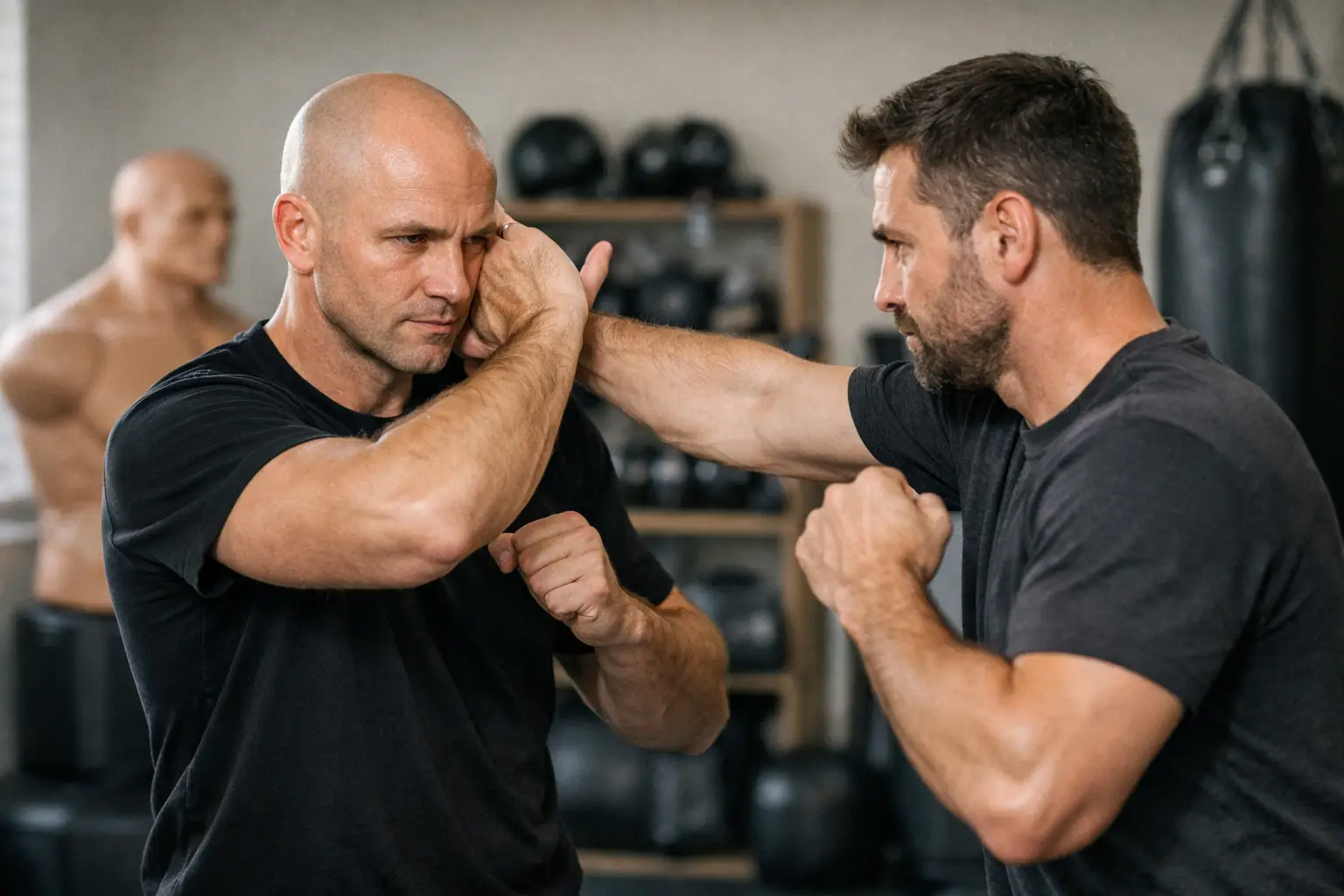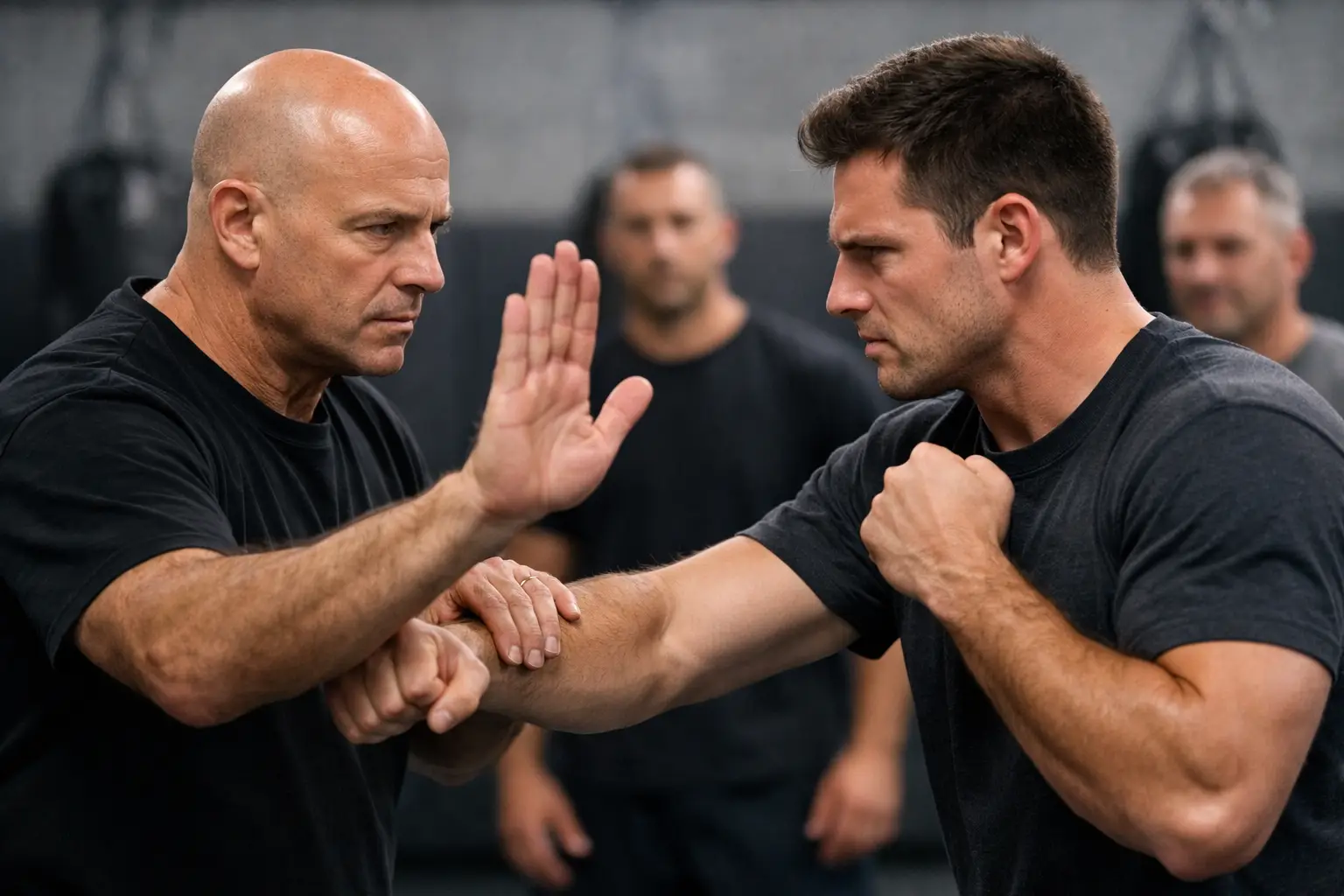
Most people do not quit self-defense because they lack courage. They quit because life gets in the way. Work shifts change, schools are too far away, class times do not match family schedules, and training partners are not always available. That is exactly why self defense training at home has become a serious option for adults who want practical skill, not just good intentions.
The key is understanding what home training can do well, what it cannot replace, and how to build a system that develops real-world performance. If your goal is confidence, better reactions, and a structured path to measurable progress, training at home can be highly effective. If your goal is fantasy-level mastery without coaching, pressure, or repetition, it will fail. Results come from method, not motivation alone.
What makes self defense training at home effective?
Home training works when it is built around reality-based fundamentals. In Krav Maga, that means simple gross-motor movements, clear tactical decisions, and repetition under increasing pressure. You are not trying to become a movie fighter. You are training your body to recognize danger, protect vital targets, create space, and escape when possible.
That is why the best home programs focus first on stance, movement, striking mechanics, common releases, and situational awareness. These are not glamorous topics, but they are the base of everything that follows. A student who learns to move correctly, keep balance under stress, and strike with purpose will progress faster than someone who jumps straight into advanced techniques.
Structure matters just as much as content. Random follow-along workouts may leave you tired, but fatigue is not the same as skill. Effective self defense training at home follows a progression. One lesson builds on the last. One belt level prepares you for the next. You know what you are practicing, why you are practicing it, and what standard you are trying to reach.
The biggest advantage of training at home
The greatest advantage is consistency. A student who trains three to four times a week at home for six months often develops more usable skill than someone who attends an in-person class occasionally. Frequency sharpens recall. Short, focused sessions improve reaction speed. You stop relearning the basics every week and start owning them.
Home training also removes a common excuse – waiting for the perfect conditions. You do not need a fully equipped gym. You do not need a heavy bag to begin. You do not need to coordinate with five other people. You need enough space to move safely, quality instruction, and the discipline to repeat key movements until they become natural.
For many adults, this flexibility is the difference between talking about self-defense and actually doing it. Parents can train after the kids are asleep. Professionals can train before a shift. Travelers can stay on schedule from a hotel room. That kind of access is not a minor convenience. It is often the reason progress becomes possible at all.
Where home training has limits
Serious instruction acknowledges trade-offs. Training alone will not fully replicate timing, resistance, unpredictability, or emotional pressure from a live attacker. You can build mechanics, speed, and tactical understanding on your own, but you must be honest about what still needs development.
That does not make home training weak. It means smart students train with intention. Solo work is excellent for striking form, combatives, footwork, shadow drills, burst movement, and rehearsing defenses. Partner work, when available, adds realism to grabs, clinch pressure, and timing. If you never have a partner, then guided solo progression becomes even more important because it reduces bad habits and keeps your practice aligned with tested principles.
This is where expert-led online instruction matters. Watching free clips from different sources often creates confusion. One coach teaches sport habits. Another teaches flashy techniques that collapse under pressure. A serious curriculum solves that by giving you one system, one progression, and one standard.
How to train at home without wasting time
Start with a fixed weekly plan. Not a vague promise to train more. A plan. For most adults, three sessions per week is enough to create visible progress. Four is better if recovery and schedule allow it. Each session should have a clear focus: movement and stance, striking mechanics, combative combinations, defenses against common attacks, and conditioning that supports fighting performance.
Keep the sessions short enough to stay consistent. Thirty to forty-five minutes is more sustainable than trying to force two-hour marathons. Precision drops when attention fades. A strong session is focused, sharp, and repeatable.
Build each workout in layers. Begin with movement preparation and guard position. Move into technical practice at controlled speed. Then add intensity through repetition, burst drills, and scenario-based combinations. Finish with a brief review of what must improve next session. This creates a professional training rhythm instead of a casual workout habit.
Video feedback can also change your progress dramatically. When students see their own stance, hand position, and recovery after a strike, errors become obvious. That is one advantage of digital learning many people overlook. In a crowded group class, you may miss details. At home, you can replay, correct, and repeat until the movement is clean.
Self defense training at home for beginners
Beginners often assume they need experience before they can train seriously. The opposite is usually true. A beginner with no bad habits and a structured program can improve very quickly, especially when the instruction is designed step by step.
The first goal is not complexity. It is reliable fundamentals. Learn how to stand in a stable fighting stance, move without crossing your feet, protect your head, strike directly, and recover your balance. Learn basic defenses against the most common threats a civilian might face, such as wrist grabs, chokes, and straight punches. Learn to scan, disengage, and create an exit.
What matters most is doing these basics correctly thousands of times, not sampling fifty techniques once. The students who become capable are usually the ones who respect repetition. They understand that under stress, the body falls back on what it knows best.
Why progression and certification matter
A lot of online fitness and martial arts content has no destination. You complete a video and move to the next one without knowing whether you improved. That may keep you entertained, but it rarely builds confidence.
Progression changes that. When your training follows clear levels, you gain accountability. You know what is expected at beginner stages and what comes next as your skill grows. This matters for civilians who want proof of development, and it matters even more for practitioners and professionals who need recognized standards.
A structured online academy model gives home training legitimacy. It transforms isolated practice into formal education. For students who want a serious path, including belt progression, mentorship, and official recognition, the difference is enormous. Krav Maga Online has built its reputation on exactly that idea: practical self-defense taught through a disciplined system that serves complete beginners and advanced operators alike.
Who benefits most from home-based training?
Adults with inconsistent schedules benefit immediately. So do people in areas without a credible Krav Maga school nearby. Existing martial artists often gain from it because it adds reality-based self-defense to skills they already have. Professionals in law enforcement, military, and private security may use home training to sharpen combatives between formal sessions or maintain continuity while deployed or traveling.
Older adults can benefit as well, provided the training is adapted intelligently. Good instruction does not assume every student is twenty-five and explosive. It teaches efficient movement, decisive action, and practical tactics that match the student in front of it.
That is the real test of a serious program. It does not just inspire. It organizes progress. It meets the student where they are and moves them forward with standards that remain high.
If you are considering training from home, do not ask whether it is perfect. Ask whether it is structured, realistic, and consistent enough to make you harder to intimidate, harder to control, and faster to respond. For most people, that answer can be yes – and the first session is where that change begins.