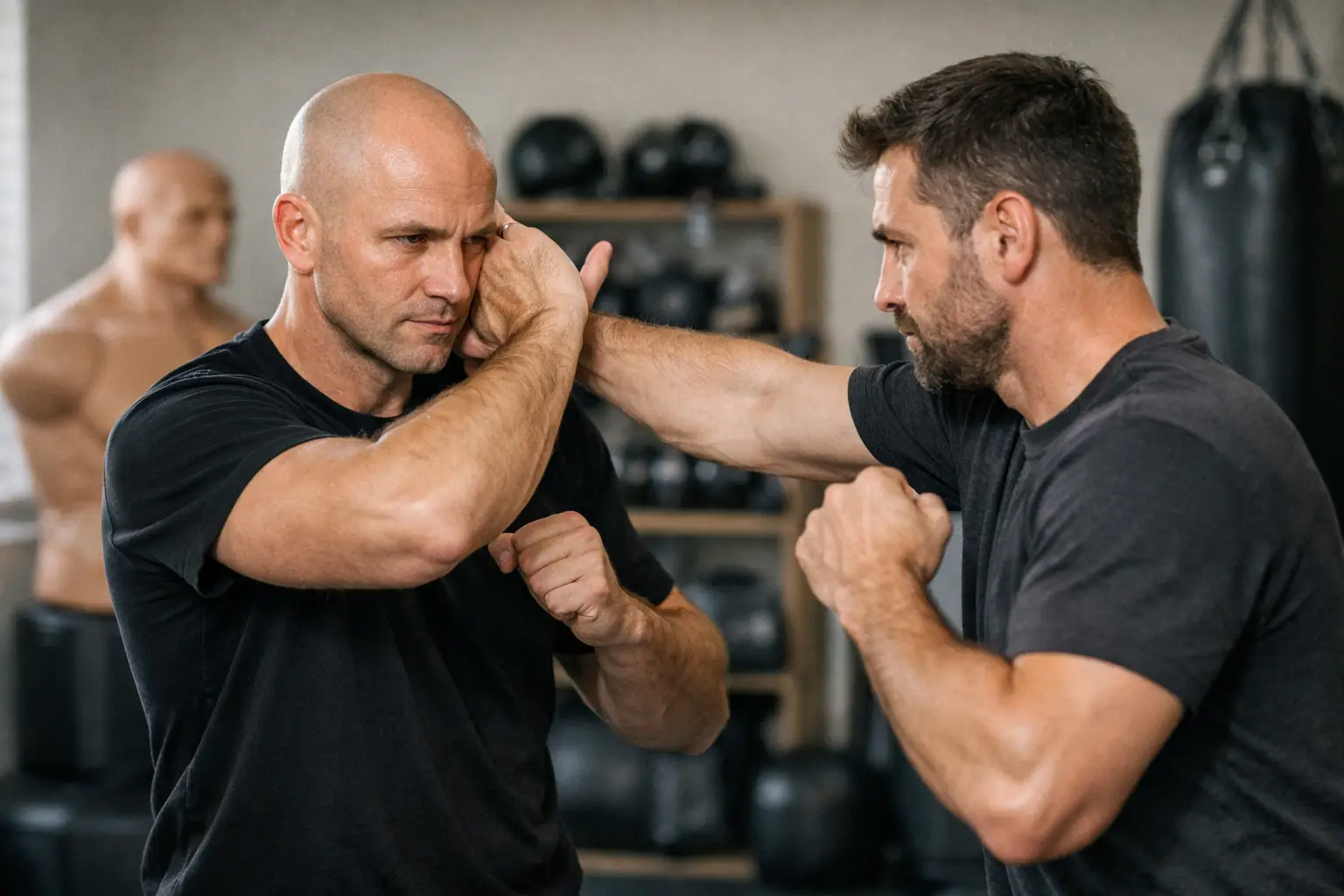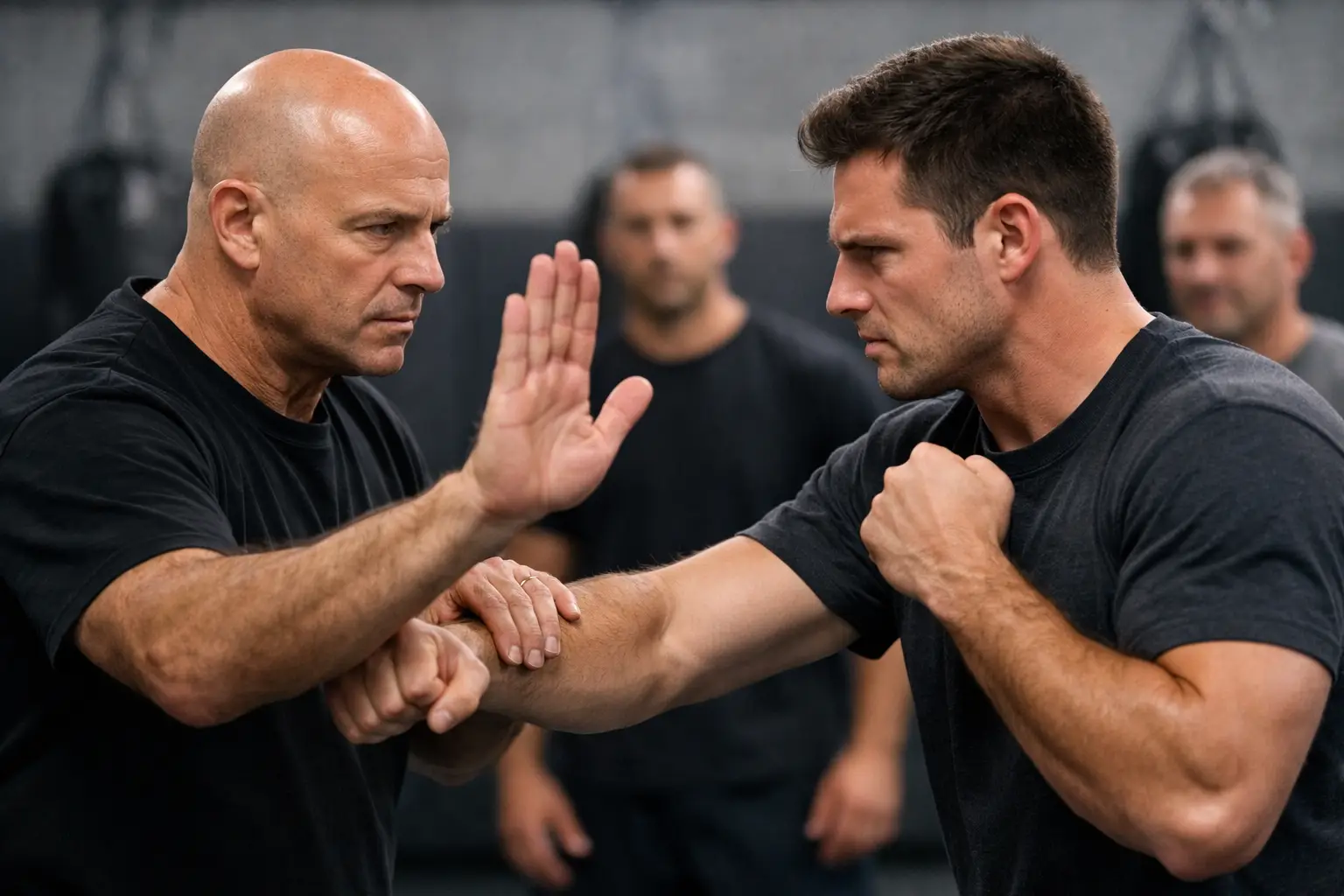
You do not need to arrive in fighting shape to begin learning self-defense. If you are asking, “does Krav Maga require fitness,” the honest answer is no – but it will demand that you train within your current limits and improve from there. Krav Maga is built for real people: busy adults, complete beginners, older students, and professionals who need practical skills, not a performance test at the door.
The goal is not to prove you are already athletic. The goal is to become more capable, more aware, and more prepared through structured training.
Does Krav Maga Require Fitness Before Your First Lesson?
No. Krav Maga does not require a particular body type, running time, lifting record, or martial arts background. A quality beginner program starts with stance, movement, awareness, defensive posture, balance, and simple high-percentage responses to common threats.
That matters because real self-defense is not a sport reserved for the fastest or strongest person in the room. A confrontation may happen when you are tired after work, carrying groceries, recovering from an illness, or caught off guard. Practical training must account for the fact that most people do not begin from perfect physical conditions.
Fitness helps, of course. Better cardiovascular endurance can help you move longer. Stronger legs can improve stability. Mobility can make certain techniques easier to perform. But these are advantages you develop alongside your self-defense skills, not entry requirements.
A beginner who trains consistently at a manageable pace will usually make more progress than a naturally fit person who trains too hard, gets discouraged, and quits after three weeks.
What Fitness Does Help With in Krav Maga
Krav Maga training can be physically demanding because it prepares you to move with purpose under stress. You may practice striking combinations, footwork, defensive movement, getting up from the ground, escaping holds, and making fast decisions. Over time, these drills challenge several areas of fitness at once.
Cardio and recovery
A short burst of movement can feel intense when adrenaline is high. Cardio conditioning helps you recover your breathing, think more clearly, and continue moving when you are fatigued. You do not need to be a distance runner to begin. Walking, cycling, swimming, or short low-impact intervals can support your training as your conditioning improves.
Strength and stability
Krav Maga uses the whole body. Your legs help you drive movement and maintain balance. Your core helps you turn, brace, and stay upright. Your upper body supports frames, defenses, strikes, and grip escapes.
Still, self-defense training is not a powerlifting contest. Technique, positioning, timing, and decisive action often matter more than brute strength. Training teaches you to use your body efficiently rather than relying on force alone.
Mobility and coordination
You do not need exceptional flexibility. You do need enough mobility to step, turn, raise your hands, bend your knees, and move safely. Coordination improves with repetition. At first, a defensive movement may feel awkward because it is unfamiliar. With focused practice, the same movement becomes faster and more natural.
The Real Requirement: Train at the Right Level
The biggest mistake beginners make is treating every session as a fitness challenge. That approach can lead to poor technique, avoidable soreness, and injury. Krav Maga is a skill system. You should first learn how to perform movements correctly, then build speed, power, and intensity over time.
Start with controlled repetitions. Learn the stance before trying to move explosively. Understand a defense before adding a strike. Practice balance and body mechanics before pushing for maximum speed. This progression is not a shortcut. It is how reliable skill is built.
For someone returning to exercise after a long break, the right starting point may be 15 to 25 minutes of focused training several times per week. For an active martial artist or security professional, the pace may be higher from the beginning. The standard is not identical effort for every person. The standard is measurable progress without sacrificing safety.
If you have an injury, joint limitation, heart condition, or other medical concern, get clearance from a qualified healthcare professional and modify your practice appropriately. Serious training means knowing when to push and when to adjust.
Why Beginners Often Improve Faster Than Expected
Many people think fitness means being able to do endless burpees, run miles, or train for an hour without stopping. In self-defense, usable fitness is more specific. Can you maintain a stable stance? Can you move away from danger? Can you protect your head? Can you create distance, regain your balance, and make a clear decision?
Those abilities improve quickly when training is structured. Early gains often come from better posture, breathing, coordination, and confidence. As your movements become more efficient, exercises that once felt exhausting become manageable.
There is also a psychological shift. A person who has never hit pads or practiced a defensive movement may hesitate at first. Repetition reduces that hesitation. You begin to recognize distance, understand your body position, and respond with more purpose. That confidence is not false bravado. It comes from knowing you have practiced.
How to Start Krav Maga If You Are Out of Shape
Begin with consistency, not punishment. Train two or three days per week and leave enough recovery between harder sessions. Focus on the foundational movements that establish a strong base: stance, guard, movement, basic strikes, defensive positioning, and safe ways to rise from the ground.
Keep your intensity honest. If your technique collapses because you are exhausted, slow down. Clean repetitions at 60 percent effort are more valuable than careless repetitions at full speed. As your body adapts, gradually increase the number of rounds, the duration of each drill, or the pace of your movement.
You can support your training with simple habits outside practice. Walk more often. Add basic bodyweight movements such as squats, push-ups against a wall or bench, and controlled planks. Stretch areas that feel restricted, especially the hips, ankles, shoulders, and upper back. Sleep and recovery matter as much as effort when you are building a new routine.
You also do not need a fully equipped gym. A clear training area, comfortable clothing, and a disciplined plan are enough to begin developing the fundamentals. Equipment can add value later, but it should never become an excuse to delay your first session.
Online Training Gives You Control Over the Pace
One advantage of online instruction is that you are not forced to match the pace of the strongest person in a group class. You can pause a lesson, review key details, repeat a movement, and train at the time of day when you have the most energy.
That flexibility is especially valuable for beginners who feel intimidated by traditional martial arts environments, adults with unpredictable schedules, and students without a nearby Krav Maga school. Structured video training lets you build the foundation privately while still following a defined progression.
Krav Maga Online provides a belt-by-belt path that allows students to develop technique, conditioning, and confidence in sequence. You are not simply following random workout videos. You are working toward practical competence through a curriculum designed to take beginners from the basics into more advanced self-defense training.
Fitness Is a Result of Training, Not a Barrier to It
Krav Maga will challenge you. That is part of its value. You will likely sweat, feel muscles working in new ways, and notice where your endurance needs improvement. But challenge is different from exclusion.
The person who starts with limited stamina can become more conditioned. The person who feels uncoordinated can become more controlled. The person who has avoided training because they do not feel fit enough can finally begin building the abilities they want.
Do not wait for some future version of yourself to deserve self-defense training. Start where you are, train with discipline, and let each session make you harder to intimidate.