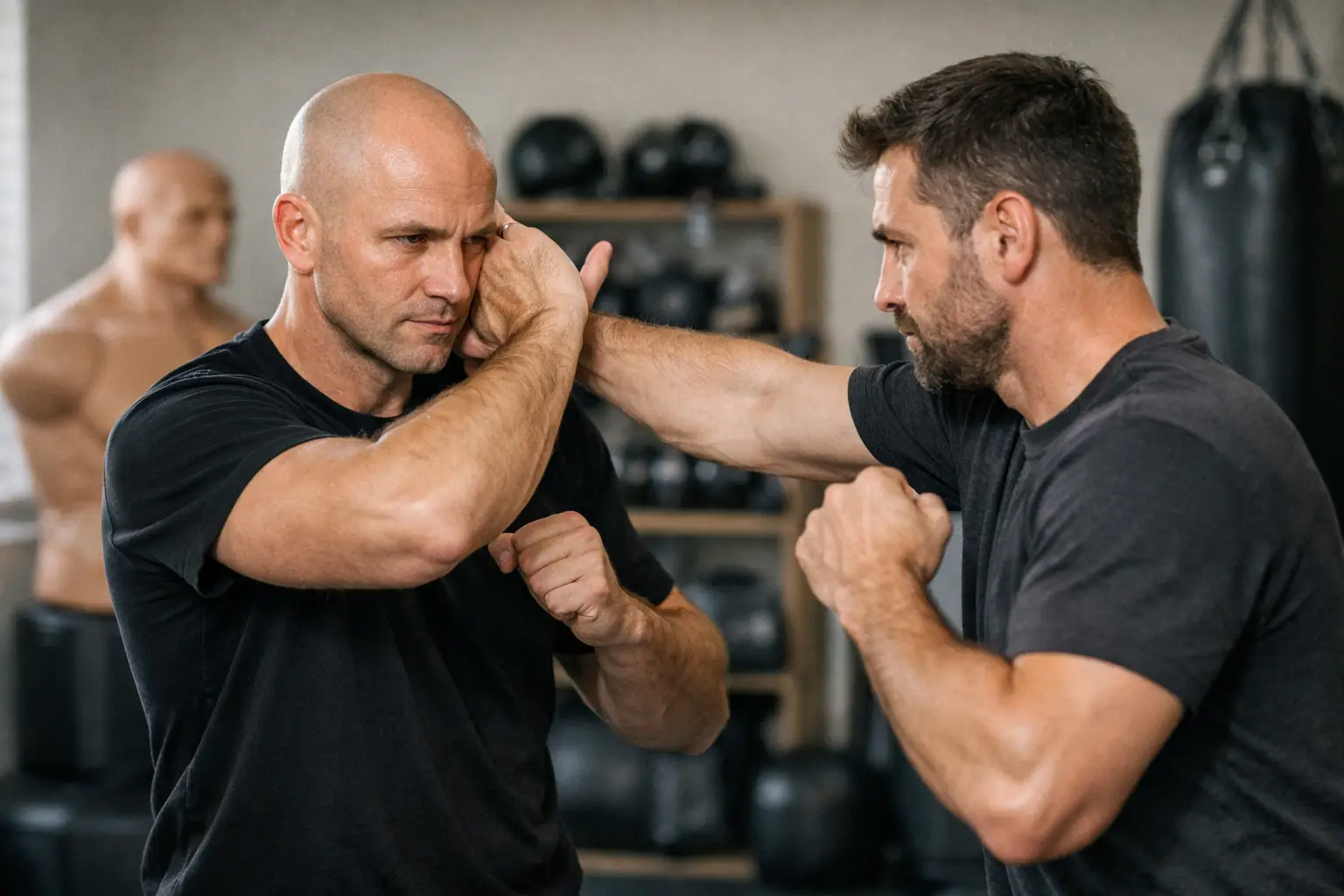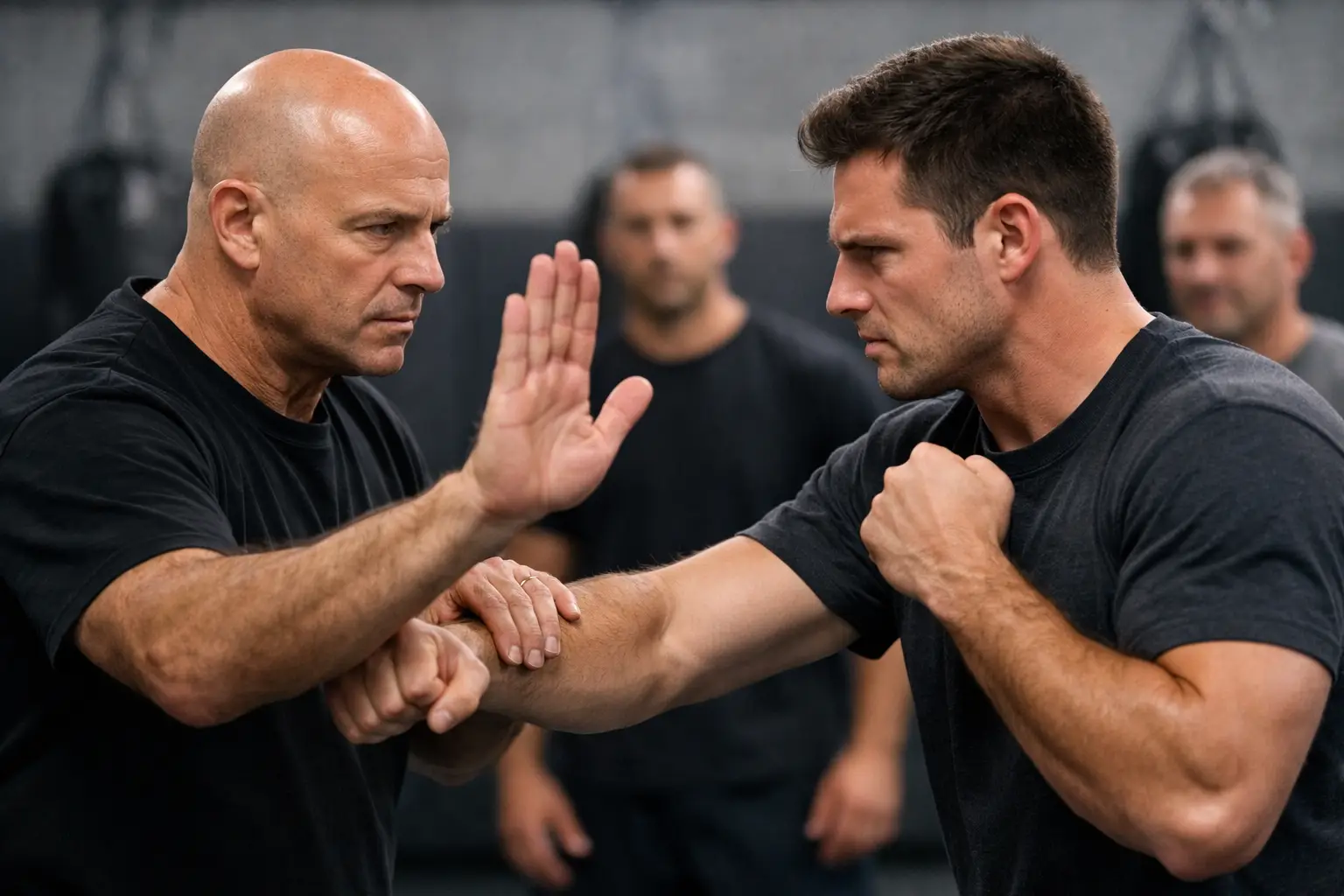

A belt in Krav Maga is not a souvenir from class attendance. It is evidence that you can perform under direction, understand the curriculum at your level, and apply practical self-defense principles with control. This complete guide to Krav Maga ranking explains what the belt system is designed to measure, what progression can look like, and why serious students treat each grade as a standard to earn.
Why Krav Maga Uses a Ranking System
Krav Maga is built for real-world self-defense, not for collecting techniques. A structured ranking system prevents students from being handed advanced solutions before they have the movement, awareness, fitness, and decision-making skills to use them responsibly.
At the early levels, training develops the foundations: stance, movement, distance, striking mechanics, common releases, and defenses against straightforward attacks. As students progress, the curriculum adds more pressure, more variables, and more demanding scenarios. The goal is not simply to remember a larger catalog of moves. The goal is to make useful responses more reliable when surprise, stress, and fatigue are involved.
A formal belt path also gives independent learners a clear standard. When you train online or around an unpredictable work schedule, it is easy to mistake exposure for competence. Ranking creates milestones. You know what to practice, what must improve, and what you must demonstrate before moving forward.
Complete Guide to Krav Maga Ranking: The Common Levels
Krav Maga ranking is not identical across every organization. Belt colors, level names, testing requirements, and time-in-grade policies can vary. That is why students should always follow the curriculum and certification standards of their own school or academy rather than assuming one chart applies everywhere.
Many recognized systems organize progress through three broad stages: Practitioner levels, Graduate levels, and Expert levels. Other programs use a familiar colored-belt sequence leading toward black belt. Both approaches can be legitimate when they are backed by a defined syllabus, qualified assessment, and consistent instruction.
Beginner ranks: building dependable fundamentals
The first ranks are where sound habits are formed. Students learn how to stand in a balanced fighting position, move without crossing their feet, generate direct strikes, cover and counter, escape basic grabs, and recognize when creating distance is safer than engaging.
This stage can feel deceptively simple. A beginner may know a defense in slow practice but still lose posture, forget to scan the environment, or stop moving after the first action. Training at this level is about repetition with purpose. Each defense must become cleaner, more efficient, and easier to access under pressure.
Yellow Belt is commonly associated with this entry phase in belt-based systems. Reaching it should mean more than completing introductory videos. It should show that the student can demonstrate core skills with correct body mechanics, composure, and an understanding of the safety principles behind the technique.
Intermediate ranks: handling pressure and complexity
Intermediate students are expected to connect skills rather than perform isolated drills. They may work against broader categories of threats, including more forceful chokes, headlocks, bear hugs, ground positions, and attacks involving greater resistance or multiple stages.
At this level, the quality of a response matters. Did the student identify the threat quickly? Did they protect vulnerable targets? Did they counter with enough purpose to create an exit? Did they disengage and scan rather than freeze after the initial defense?
Intermediate ranking also demands better conditioning. Self-defense is physical, and technique can deteriorate when breathing becomes hard or the pace rises. Fitness does not replace skill, but it helps keep skill available when it counts.
Advanced ranks: judgment, adaptation, and leadership
Advanced Krav Maga training introduces higher-level tactical judgment. Students may work with weapon threats, low-light considerations, confined spaces, multiple attackers, third-party protection, and increasingly realistic stress drills. Professionals may also pursue material tailored to law enforcement, military, close protection, aviation security, or counter-terrorism roles.
Advanced does not mean reckless. Weapon-defense training, for example, is not a promise that an unarmed person can safely defeat every armed attacker. It teaches principles for the worst moments: managing immediate danger, controlling distance when possible, disrupting the threat, and escaping whenever escape is available.
Black Belt and expert-level training represent a long-term commitment to technical quality, pressure-tested performance, and responsibility. Depending on the organization, these levels can also involve teaching ability, curriculum knowledge, mentorship, and the capacity to lead other students safely.
What a Krav Maga Belt Test Should Measure
A credible rank test evaluates more than memory. Students should expect to demonstrate techniques from their required syllabus, but the best assessments also examine the way those techniques are performed.
Examiners typically look for correct positioning, decisive counterattacks, controlled intensity, awareness of surroundings, and the ability to continue functioning when tired. They may require combinations, scenario work, pad drills, partner drills, or sustained physical effort before and during technical evaluation.
Control is a major part of readiness. Krav Maga is designed for self-protection, yet training partners must remain safe. A student who strikes hard but cannot regulate power, follow instructions, or work responsibly is not demonstrating the discipline required for advancement.
Tests should challenge you, but they should not become theater. The point is to verify functional skill under appropriate stress, not to reward ego or punish students with arbitrary exhaustion. Strong instruction balances intensity with progressive preparation.
How Long Does Krav Maga Ranking Take?
There is no honest universal answer. Progress depends on training frequency, prior experience, physical condition, quality of practice, instructor feedback, and the standards of the organization issuing rank.
A student training two or three focused sessions each week will usually build skill faster than someone who trains sporadically, but speed alone is not the objective. Advancing before fundamentals are reliable can create gaps that become obvious at higher levels. Conversely, an experienced martial artist may learn certain movement patterns quickly while still needing time to absorb Krav Maga’s threat-based decision-making and tactical priorities.
Online training changes the logistics, not the need for standards. It allows students to revisit instruction, train at flexible hours, and practice at their own pace. But serious progression still requires deliberate repetition, safe partner work where appropriate, video review or coaching feedback when available, and an official assessment process.
Train for Competence, Not Just the Next Belt
The strongest way to prepare for ranking is to train the current level until its essential actions feel dependable. Practice slowly enough to refine mechanics, then add pace and resistance gradually. Use a training partner when possible, but never force dangerous drills without supervision or suitable protective equipment.
Keep a simple record of your work. Note which defenses break down when you are tired, which combinations feel unnatural, and where you hesitate. Those details are more valuable than pretending every session went perfectly. A rank test often exposes the exact weaknesses a student has avoided in regular practice.
It also helps to separate technical practice from conditioning. Spend time developing strikes, movement, and defenses with precision. Then add realistic work that asks you to perform those skills after exertion. If every session is maximum intensity, technique can become sloppy. If every session is slow and comfortable, you may never learn how your body responds to pressure.
Choosing a Ranking Path You Can Trust
Before committing to any Krav Maga program, look beyond belt color. Ask whether the curriculum is clearly organized from beginner to advanced material, whether certification has defined requirements, and whether instructors can explain the purpose behind each skill. A meaningful progression path should show you what is expected at every stage.
Krav Maga Online provides a belt-by-belt training structure with direct instruction from Master Alain Cohen, allowing students to work from foundational Yellow Belt material toward advanced and professional tracks on a schedule that fits real life. That flexibility is powerful when it is paired with discipline: train consistently, review the details, and earn each level through performance.
Your next rank should never be the finish line. Treat it as proof that you are ready for a more demanding question: can you stay aware, move decisively, and protect yourself or another person when the situation is no longer predictable?