A threat rarely announces itself in a clean, predictable way. It may begin as confusion in a crowded place, a person behaving outside the normal pattern, or a moment when people freeze because they do not know what to do. Counter terrorism defense training online gives serious learners a structured way to develop awareness, judgment, movement, and defensive readiness before pressure takes over.
This is not entertainment training or a collection of dramatic techniques. Effective counter-terrorism preparation is built on discipline: recognizing risk early, making lawful decisions, protecting yourself and others when escape is possible, and responding with control when physical action cannot be avoided. For civilians, security professionals, and experienced martial artists, online training can provide a valuable foundation when it follows a real progression rather than a random video library.
What Counter Terrorism Defense Training Online Should Teach
Counter-terrorism defense is not about chasing threats or pretending every public setting is a battlefield. It is about building a practical protective mindset. The strongest training teaches you to observe without panicking, assess without guessing, and act decisively only when the situation justifies it.
That begins with situational awareness. You learn to notice entrances, exits, crowd flow, obstacles, unusual behavior, and the people around you without becoming paranoid or distracted. Awareness gives you time, and time creates options. In a real emergency, the ability to identify an exit, move family members toward safety, or communicate clearly can matter more than any advanced physical skill.
A credible program also addresses decision-making under stress. Students need to understand priorities: create distance when possible, leave danger when a safe route exists, seek help, and protect others without taking unnecessary risks. Physical intervention is a last resort, not the goal. Training should reinforce local laws, organizational policy, and the reality that professional roles carry different responsibilities than civilian roles.
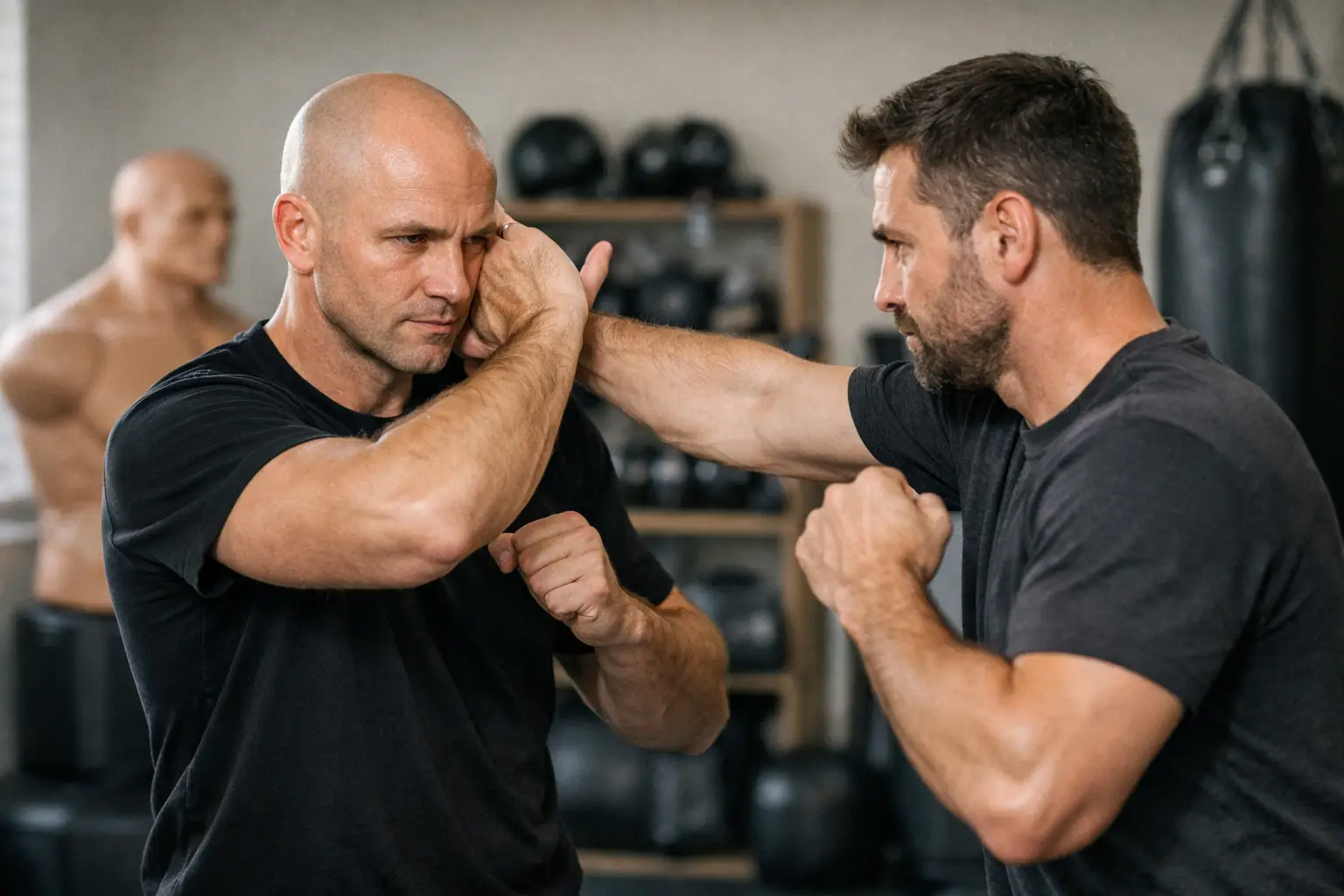
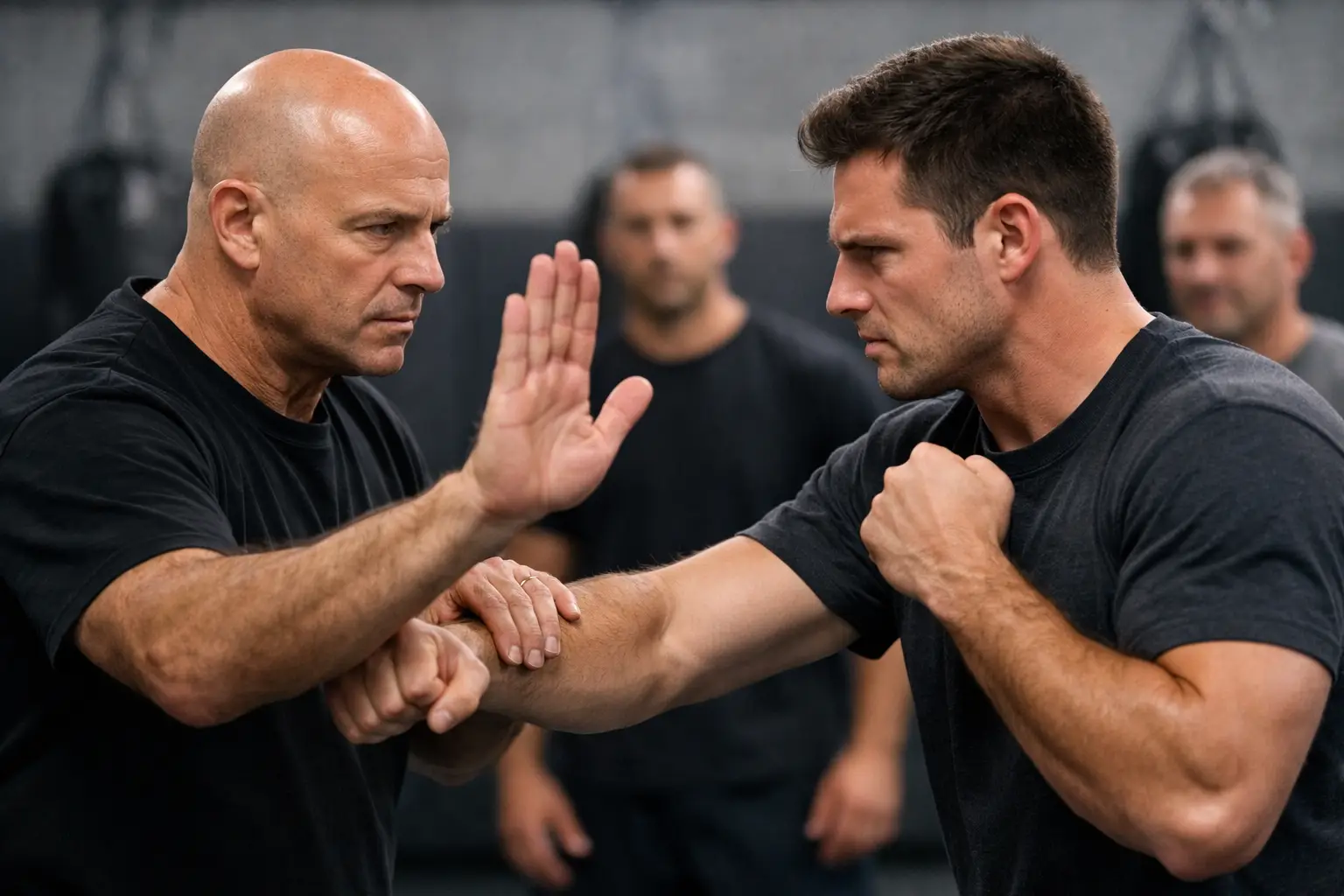
The physical component should be practical and controlled. Krav Maga-based training commonly develops balance, protective positioning, movement under pressure, releases from common holds, close-range defense principles, and the ability to recover after surprise. These skills are relevant because chaotic situations are close, fast, and rarely clean. Still, online students must be honest about the limits of solo practice. Video instruction can build strong mechanics and understanding, but it cannot fully replace supervised pressure testing with qualified partners.
Why Structured Online Training Has Real Value
A serious online academy removes one of the biggest barriers to consistent training: access. Many adults do not live near a qualified Krav Maga school. Others work rotating shifts, travel, care for family, or need the privacy and flexibility of training at home. Waiting for the perfect local class can mean waiting for years.
Online learning works best when it is organized around a proven curriculum. Instead of jumping from one defense clip to another, students follow a belt-by-belt path that develops stance, movement, defensive reactions, conditioning, mindset, and technical understanding in the right order. A beginner needs reliable fundamentals before attempting advanced professional material. A security practitioner may need to strengthen decision-making and control skills before moving into role-specific scenarios.
The pace is another advantage. You can repeat a lesson until the movement becomes familiar, train in shorter sessions several times a week, and revisit previous modules when you find a weakness. That repetition is not a shortcut. It is how dependable habits are built.
At Krav Maga Online, the value of this format is the ability to learn through a formal progression under Master Alain Cohen’s instruction while training on a schedule that fits real life. Students can begin with foundational material, pursue official belt development, and continue toward advanced tracks as their skill, experience, and training environment support it.
The Difference Between Civilian and Professional Preparation
The phrase counter-terrorism can cover very different needs. A civilian may want better awareness for travel, public events, commuting, or protecting family. Their focus should be avoidance, evacuation, communication, and basic personal defense. The goal is to get home safely, not to take on a professional security role.
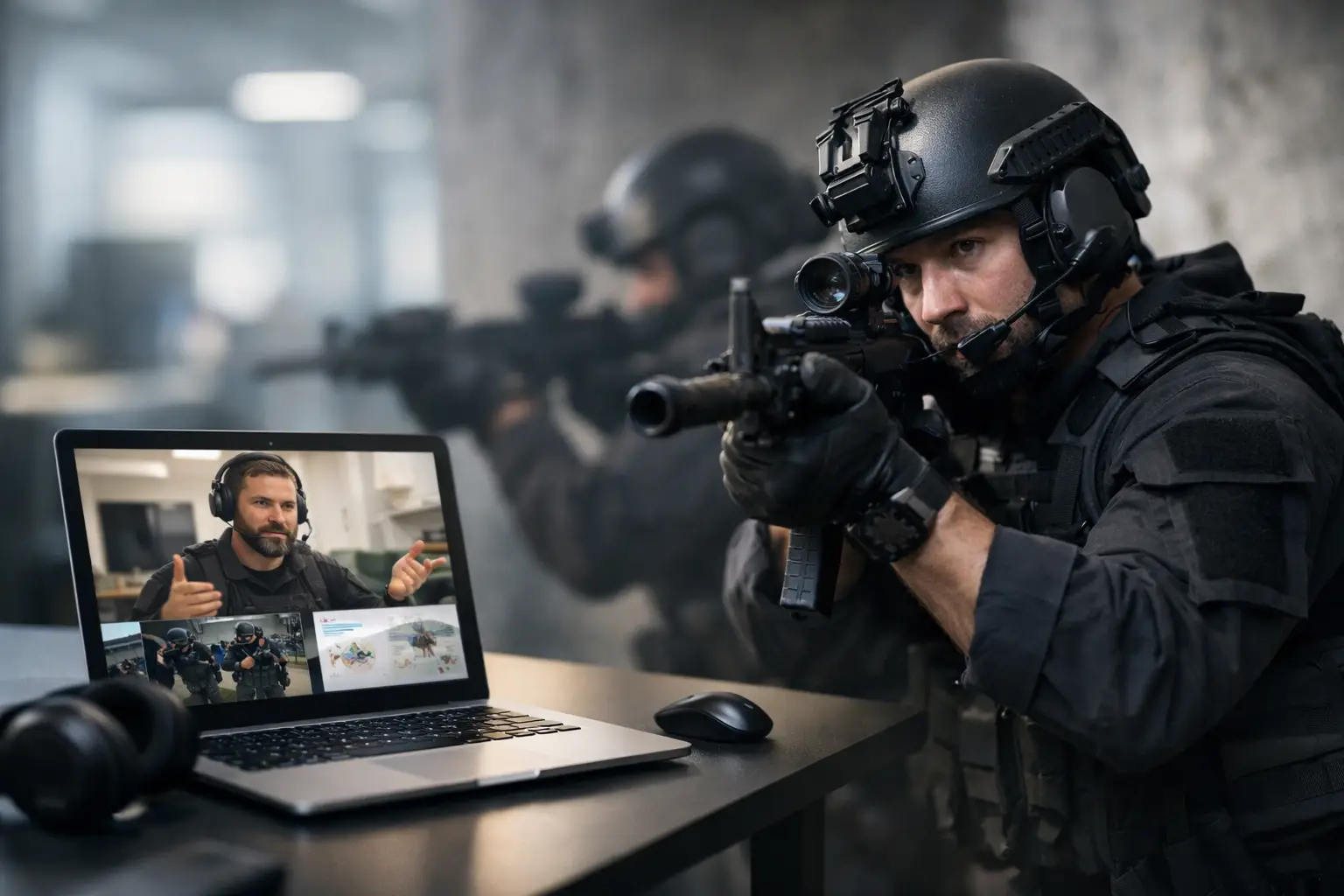
Law enforcement, military personnel, close protection teams, and security specialists operate under different mandates. They may need training shaped by policy, legal authority, team coordination, reporting requirements, protective duties, and organizational procedures. Their work may also require live instruction, scenario-based assessment, and agency-approved qualifications beyond any online course.
That distinction matters. Good online counter terrorism defense training does not blur the line between personal preparation and professional deployment. It gives civilians useful defensive skills without selling fantasy. It gives professionals a way to reinforce individual fundamentals and continue studying outside formal training blocks, while recognizing that operational readiness requires more than video-based learning.
How to Train at Home Without Creating Bad Habits
Home training demands standards. A small clear space, comfortable clothing, and focused practice are enough to begin, but casual repetition can harden poor form. Start slowly. Follow the instructor’s details on posture, hand position, balance, breathing, and recovery. Film yourself occasionally if the program permits it, then compare your movement with the lesson rather than assuming speed equals skill.
Training alone is especially useful for footwork, defensive posture, movement patterns, shadow practice, fitness, verbal commands, and mental rehearsal. These elements can improve substantially without equipment or a partner. Use controlled intensity and stop if pain, dizziness, or unsafe conditions appear. Protecting your ability to train next week is more valuable than forcing one hard session today.
When a lesson calls for partner work, use judgment. Practice only with a willing adult partner, establish clear limits, move gradually, and avoid techniques or levels of force that require direct supervision. For many students, occasional work with a qualified local instructor or trusted training group adds an important layer of feedback. Online education and in-person coaching can complement each other rather than compete.
A Progression That Builds Confidence Instead of False Confidence
False confidence is dangerous. It appears when someone learns a few techniques, watches advanced content, and assumes they are prepared for every threat. Real confidence is quieter. It comes from knowing what you can do, what you cannot yet do, and what decision gives you the best chance of safety.
A well-designed progression begins with fundamentals and tests understanding before advancing. Students should be able to explain the purpose of a movement, perform it with control, and recognize when it is not appropriate. Certification, when offered through a legitimate academy, should represent demonstrated learning and a commitment to standards, not simply time spent watching videos.
Look for training that provides clear lesson order, competent instruction, realistic safety guidance, and an assessment pathway. Be cautious of programs that promise instant expertise, guaranteed protection, or elite capability after a weekend of content. Counter-terrorism defense is a serious subject. It deserves instruction that respects both the learner and the consequences of poor judgment.
Train for Better Choices Under Pressure
The most valuable outcome of defense training is not aggression. It is the ability to stay functional when others become overwhelmed. That may mean noticing danger early, directing a loved one toward an exit, using your voice with authority, moving through confusion, or protecting yourself long enough to escape.
Start where you are. Build your physical base, sharpen your awareness, and follow a curriculum that challenges you without pretending that real-world readiness comes overnight. Consistent, accountable training gives you more than techniques – it gives you the composure to make better choices when they matter most.