
A missed bus, an isolated parking garage, a stranger closing distance too quickly – self-defense decisions are made under pressure, not in a perfectly timed class. That is why many adults ask, is online Krav Maga effective when the stakes are real? The honest answer is yes, provided the training is structured, practiced consistently, and understood for what it is designed to do.
Online Krav Maga can build awareness, movement, defensive mechanics, fitness, discipline, and a reliable decision-making framework. It cannot replace every benefit of working with a live partner. The strongest approach recognizes both truths, then uses video training to make meaningful progress wherever you are.
Is Online Krav Maga Effective for Real Self-Defense?
It can be highly effective for learning the foundation of practical self-defense. Krav Maga is not built around memorizing long forms or performing techniques for an audience. It is built around simple, direct responses: recognize danger, create distance, protect vulnerable targets, strike decisively when necessary, and get to safety.
A quality online program teaches these principles in a progression. You do not begin with advanced weapon defenses or complex tactical scenarios. You begin by learning stance, balance, movement, striking alignment, defensive posture, and situational awareness. Those fundamentals are exactly what many untrained people lack.
Video instruction also has an advantage that traditional group classes often cannot match: repetition on your terms. You can pause a lesson, review a detail, train for 20 minutes before work, and return to the same drill until the movement feels natural. For adults with demanding jobs, family obligations, travel schedules, or no local training center, that consistency can be the difference between training and never starting.
Effectiveness, however, is not created by watching. A course becomes training only when you stand up, move, drill, and repeat. The screen provides direction. Your effort develops the skill.
What Online Training Does Especially Well
A structured academy format is particularly valuable for beginners because it removes guesswork. Instead of collecting random self-defense clips and hoping they fit together, you follow a defined belt-by-belt curriculum. Each lesson has a purpose, and each level builds on movements you have already earned.
It develops usable body mechanics
A correct straight strike, palm strike, knee strike, elbow strike, or defensive movement depends on posture, hip engagement, balance, and recovery. Detailed instruction allows you to study these mechanics closely. You can train in front of a mirror, film yourself, compare your movement to the lesson, and correct obvious errors before bad habits become permanent.
You do not need a full gym to begin. Open space, comfortable training clothes, and a commitment to practice are enough for many early lessons. A heavy bag or striking pad can add intensity later, but equipment should not be the reason you postpone your first session.
It builds awareness before physical contact
The best self-defense outcome is often avoiding the encounter altogether. Online Krav Maga lessons can teach you to identify pre-attack cues, manage distance, position yourself near exits, use your voice, and understand when a situation is becoming unsafe.
These skills transfer directly into daily life. You can practice scanning your environment when leaving work, parking at night, entering an elevator, or walking through unfamiliar areas. No partner is required to become more alert and harder to surprise.
It creates a repeatable training discipline
A fixed class schedule helps some people. For others, it becomes the reason they quit. Online access lets you organize training around the life you actually have. A 30-minute session three times each week is more valuable than an ambitious plan that disappears after two weeks.
The key is to train with intent. Set a schedule, track completed lessons, and revisit prior material. Repetition under controlled conditions builds coordination and confidence long before you are ready for faster drills.
It gives you a clear standard of progression
A formal curriculum offers more than a collection of videos. It gives you milestones. Belt progression helps students see what they have learned, where they need work, and what comes next. That clarity matters for a complete beginner who may otherwise feel overwhelmed by the size of the subject.
At Krav Maga Online, students can follow instruction from Master Alain Cohen through a structured progression that begins with practical fundamentals and extends into advanced professional paths. The value is not simply access to more content. It is training within a recognized system rather than improvising your own.
Where Online Krav Maga Has Limits
Any serious answer must address the trade-offs. Self-defense is physical, dynamic, and often unpredictable. You cannot fully simulate resistance, timing, adrenaline, awkward angles, or the force of another person through a screen.
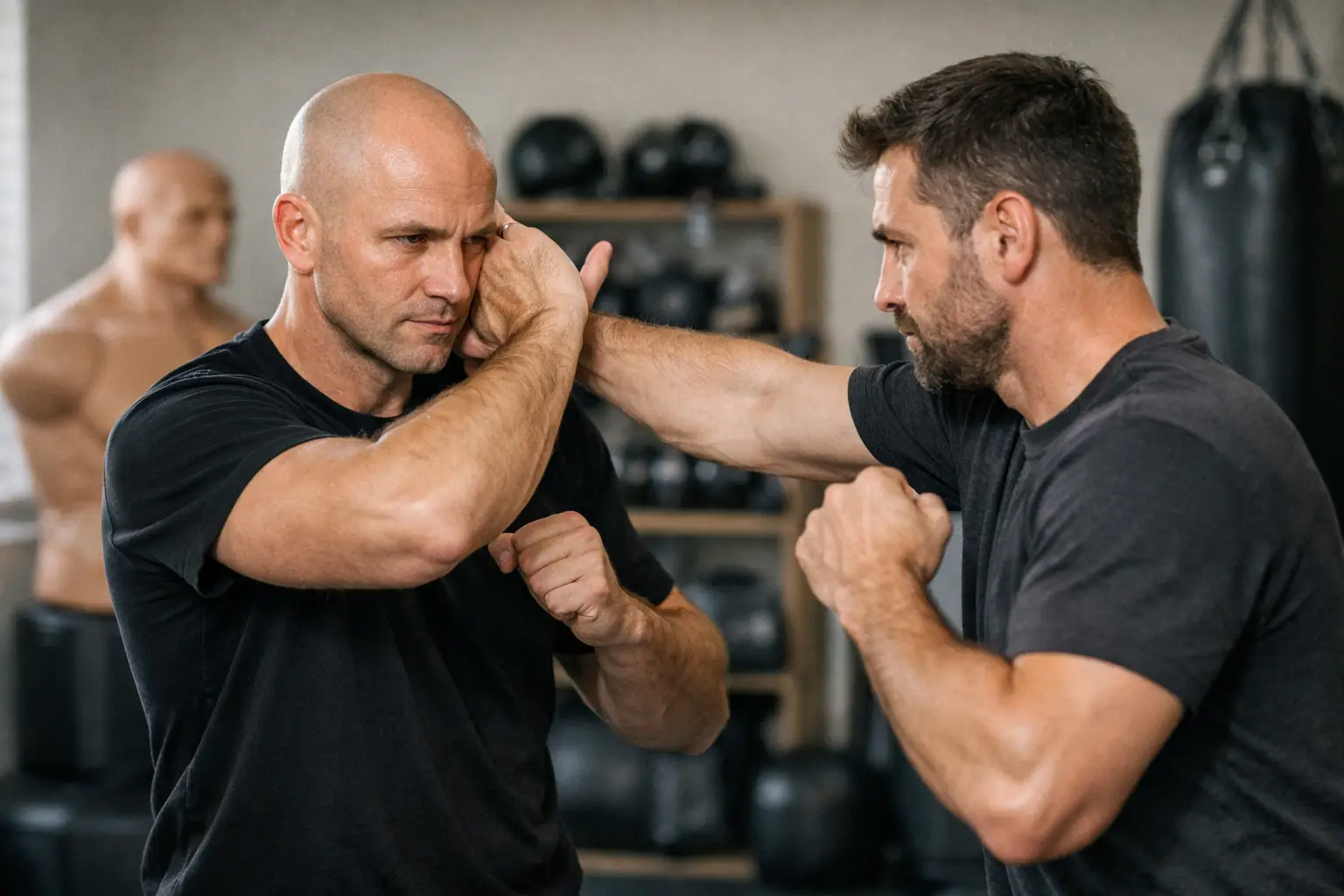
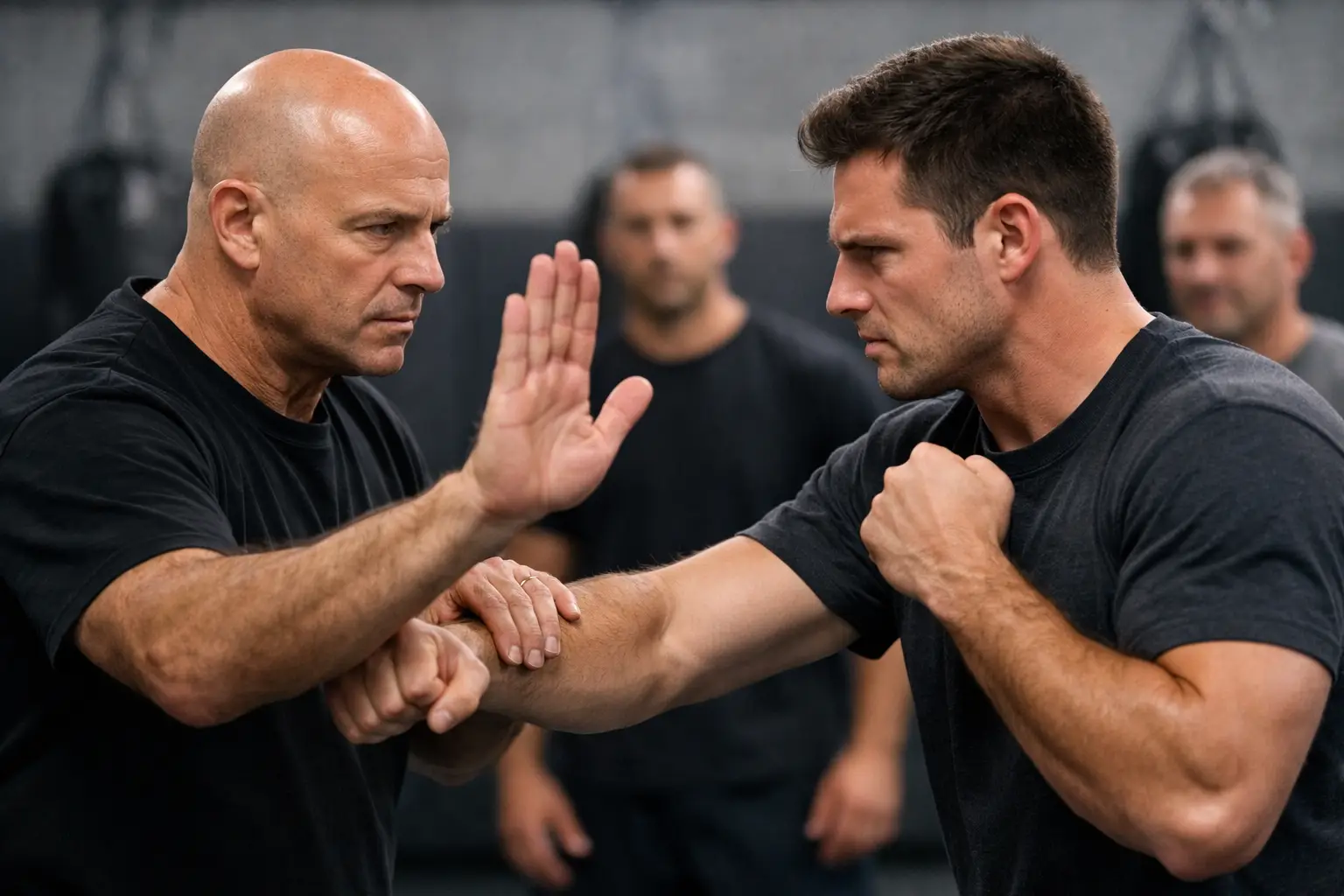
Partner training matters for certain skills. Escapes from grabs, defensive movement against an incoming strike, ground survival, and weapon-threat scenarios all benefit from controlled practice with another person. A knowledgeable instructor can also spot subtle errors in distance, posture, tension, and timing that you may miss on your own.
This does not make online training ineffective. It means you should be honest about your level of readiness. Online study is outstanding for building a strong foundation and maintaining regular practice. If you have access to a trustworthy training partner or an occasional in-person seminar, add those experiences safely as your skill develops.
Never ask an untrained partner to attack at full speed. Begin slowly, establish clear rules, use appropriate protective equipment when striking is involved, and increase intensity only when control is proven. Self-defense training should make you more capable, not send you to the emergency room.
How to Make Video Training Produce Better Results
The difference between passive viewing and skill development is deliberate practice. Treat each lesson like a training appointment, not entertainment. Start with a brief warm-up, focus on one or two techniques, and finish by reviewing what felt strong and what needs correction.
For the best results, build your practice around four habits:
- Train on a realistic weekly schedule you can maintain for months.
- Practice slowly first, prioritizing posture, balance, and clean movement.
- Add intensity through repetitions, bag work, movement drills, and conditioning.
- Review earlier lessons regularly so foundational skills remain available under stress.
Film a few repetitions from the front and side. You do not need professional production quality. A phone recording can reveal a dropped guard, overextended strike, poor stance, or loss of balance that feels invisible while you are training.
Conditioning also supports effectiveness. Krav Maga techniques are designed to be direct, but direct does not mean effortless. Basic cardiovascular work, mobility, core stability, and strength training help you move with more control and recover faster. A person who can maintain balance, protect their head, and move decisively under fatigue has a meaningful advantage over someone who only knows the theory.
Who Benefits Most From Online Krav Maga?
Online instruction is a strong fit for the adult who has no nearby school, works irregular hours, travels frequently, or wants to begin privately before joining a group setting. It also suits martial artists who want to add reality-based self-defense principles without abandoning their current discipline.
For law enforcement, military, security, and close-protection professionals, online programs can reinforce concepts, terminology, and movement patterns between hands-on training sessions. These professionals should still follow employer standards, local laws, and in-person requirements for their role. Professional application demands accountable training, scenario work, and appropriate supervision.
Beginners often worry they are too old, too out of shape, or too inexperienced to start. Those concerns are understandable, but they are not a reason to wait. Start at the level your body can handle. Train with control. Improve your movement one session at a time.
The Standard That Matters
Do not judge online Krav Maga by whether a video can reproduce every moment of live sparring. Judge it by whether it gives you a disciplined path from uncertainty to capable action. Can you recognize risk sooner? Can you move with balance? Can you protect yourself, create space, and leave when leaving is possible? Can you train consistently enough that your response is no longer purely theoretical?
A well-designed online program can answer yes to those questions. Progress will depend on the quality of instruction, the structure of the curriculum, and most of all, your willingness to practice with focus. Your first session does not need to prove anything to anyone. It needs to be the session that starts building the habits you may one day rely on.