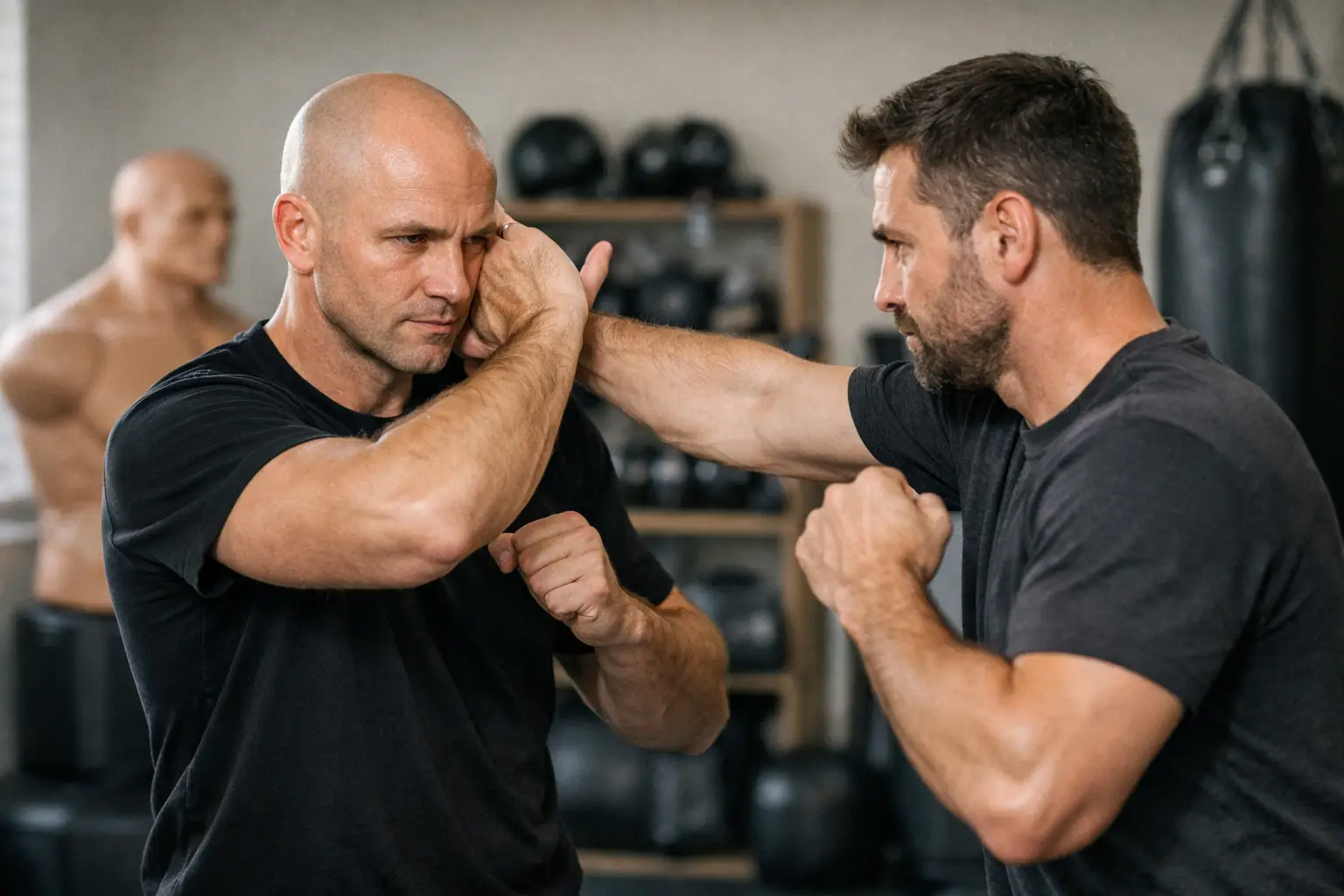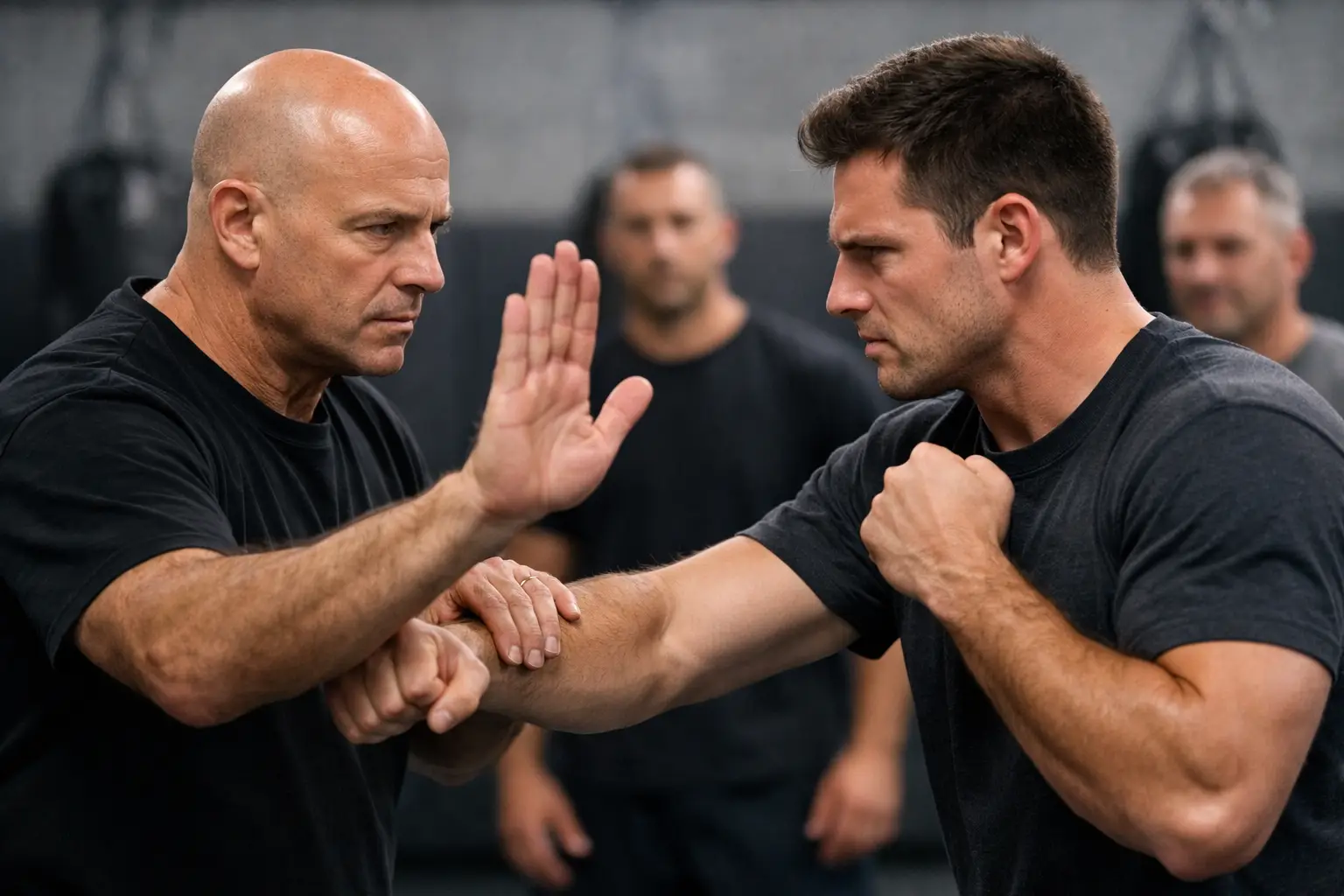
A self-defense system is only useful if you can apply it when your heart rate spikes, your space is limited, and the other person refuses to cooperate. So, is Krav Maga practical? Yes – when it is taught as a progressive, pressure-aware system rather than a collection of flashy techniques.
Krav Maga was built around a direct objective: help ordinary people respond to violent situations quickly and decisively. It does not ask you to win points, memorize elaborate forms, or rely on athleticism alone. It trains simple actions that can be learned, repeated, adapted, and used under stress.
That does not mean Krav Maga is magic. No martial art can guarantee safety, and no online course can reproduce every part of live training. Practicality depends on the quality of instruction, the way you train, and whether you develop judgment alongside physical technique.
What Makes Krav Maga Practical?
Krav Maga focuses on problems people may actually face: a sudden grab, a choke, a punch at close range, an attempted takedown, a threat involving a weapon, or an assault in a confined space. The goal is not to stay in a fight. The goal is to interrupt the attack, create an opportunity to escape, and get to safety.
This is why the system emphasizes direct strikes, instinctive body movements, awareness, and fast decision-making. A beginner can learn how to protect the head, move off the line of attack, strike vulnerable targets, and disengage without needing years of flexibility or competition experience.
Its practical value also comes from its economy. Under stress, fine motor control declines. A method that requires precise grips, perfect timing, or an extended series of moves may be harder to use when fear and adrenaline take over. Krav Maga generally favors gross-motor movements, natural reactions, and simple combinations that are easier to recall.
That simplicity should never be confused with carelessness. A strong defense still depends on posture, distance, timing, balance, and controlled aggression. The techniques may be straightforward, but developing reliable execution takes focused practice.
It Trains the Escape Mindset
Many people approach martial arts with the idea of defeating an opponent. Self-defense requires a different priority. The safest confrontation is often the one avoided early through awareness, verbal boundaries, movement, and recognizing danger before it becomes physical.
Krav Maga training should reinforce that mindset. If a route out is available, take it. If de-escalation is possible, use it. If physical action is unavoidable, respond with the level of force needed to stop the immediate threat and leave. This is a practical framework for civilians, not a fantasy about proving toughness.
It Can Fit Different Bodies and Starting Points
A useful self-defense system cannot be reserved for elite athletes. Adults with no martial arts background, busy professionals, older students, and people returning to fitness all need a training method that starts where they are.
Krav Maga can be adapted to different physical abilities because it does not depend on high kicks, acrobatics, or brute strength. A smaller defender still benefits from learning positioning, target selection, body mechanics, and how to use explosive movement at the right moment. Fitness helps, but skill and decision-making matter too.
Is Krav Maga Practical Without a Training Partner?
Solo training has real value, especially for people without a reliable local school or a schedule that fits fixed class times. You can build stance, movement, defensive habits, striking mechanics, shadow drills, conditioning, and a clear understanding of self-defense principles from home.
Structured video instruction is particularly useful when it provides a belt-by-belt path instead of random technique clips. Students need to know what to learn first, how one skill supports the next, and what standards they should meet before moving forward. A formal progression creates discipline and prevents the common mistake of jumping immediately to advanced weapon defenses before mastering movement and basic striking.
At Krav Maga Online, students can follow Master Alain Cohen’s structured curriculum at their own pace while working through recognized belt progression and certification requirements. That gives independent learners a clear framework instead of leaving them to piece together their training from scattered sources.
Still, honesty matters: solo training has limits. You cannot fully develop distance, timing, resistance, contact management, or the emotional pressure of an active attacker by practicing alone. Partner drilling, pads, controlled resistance, and qualified feedback remain valuable parts of serious self-defense development.
The practical approach is to use solo training consistently, then add safe partner practice whenever possible. Even occasional sessions with a trusted, willing partner can help test whether your movement holds up when another person is moving, grabbing, or pushing back. Start slowly, communicate clearly, and increase intensity only when both people can train safely.
Where Krav Maga Training Can Fall Short
The name on the program is not enough. Krav Maga varies widely between instructors and schools. Some programs teach reality-based principles and progressive drilling. Others rely on compliant demonstrations that look convincing but do not prepare students for resistance.
A technique is not practical merely because it is aggressive. It needs to work against realistic movement, imperfect timing, fatigue, confusion, and a person who is larger or stronger than expected. Good training does not promise that every defense will work perfectly. It teaches students to recover, keep moving, protect themselves, and switch to another option when the first response fails.
There is also a legal and ethical dimension. Self-defense is not permission to use unlimited force. Laws vary by state, and circumstances matter. Training should develop awareness of proportional response, immediate threats, and the importance of contacting emergency services after an incident when it is safe to do so.
Avoid instructors who make absolute claims, glorify violence, or suggest that a few lessons make someone invincible. Confidence is valuable. Overconfidence can create danger.
How to Make Your Krav Maga Skills More Usable
Practical skill comes from repetition with purpose. Watching a lesson once is education; practicing it consistently is training. Set aside regular sessions to work on movement, defensive position, strikes, and simple combinations until they feel familiar rather than novel.
Train with intent, but not recklessly. Visualize realistic scenarios: a parking lot, a hallway, a crowded public place, or your own front door. Consider where exits are, what objects could create obstacles, and how quickly you could move away after making space. This helps connect techniques to decisions.
Build physical capacity alongside technique. You do not need to become a professional fighter, but better balance, leg strength, cardiovascular endurance, and mobility improve your ability to move, strike, and escape. A short conditioning routine done consistently will support every level of Krav Maga training.
Most importantly, test your understanding over time. Can you explain the purpose of a defense? Can you perform it from both sides? Can you maintain awareness after a strike instead of freezing to admire the result? Can you stop when the threat ends and leave? These questions separate memorized movements from practical self-defense habits.
The Real Test of Practicality
Krav Maga is practical because it addresses the realities that many traditional training environments avoid: surprise, chaos, close distance, escape, and the need to make fast decisions. But its effectiveness is earned through quality instruction and consistent practice, not claimed by a logo or a belt color.
Train the fundamentals until they are dependable. Respect the limits of solo practice, seek controlled resistance when you can, and keep the objective clear: protect yourself, create distance, and get home safely. That is the standard every self-defense skill should be measured against.