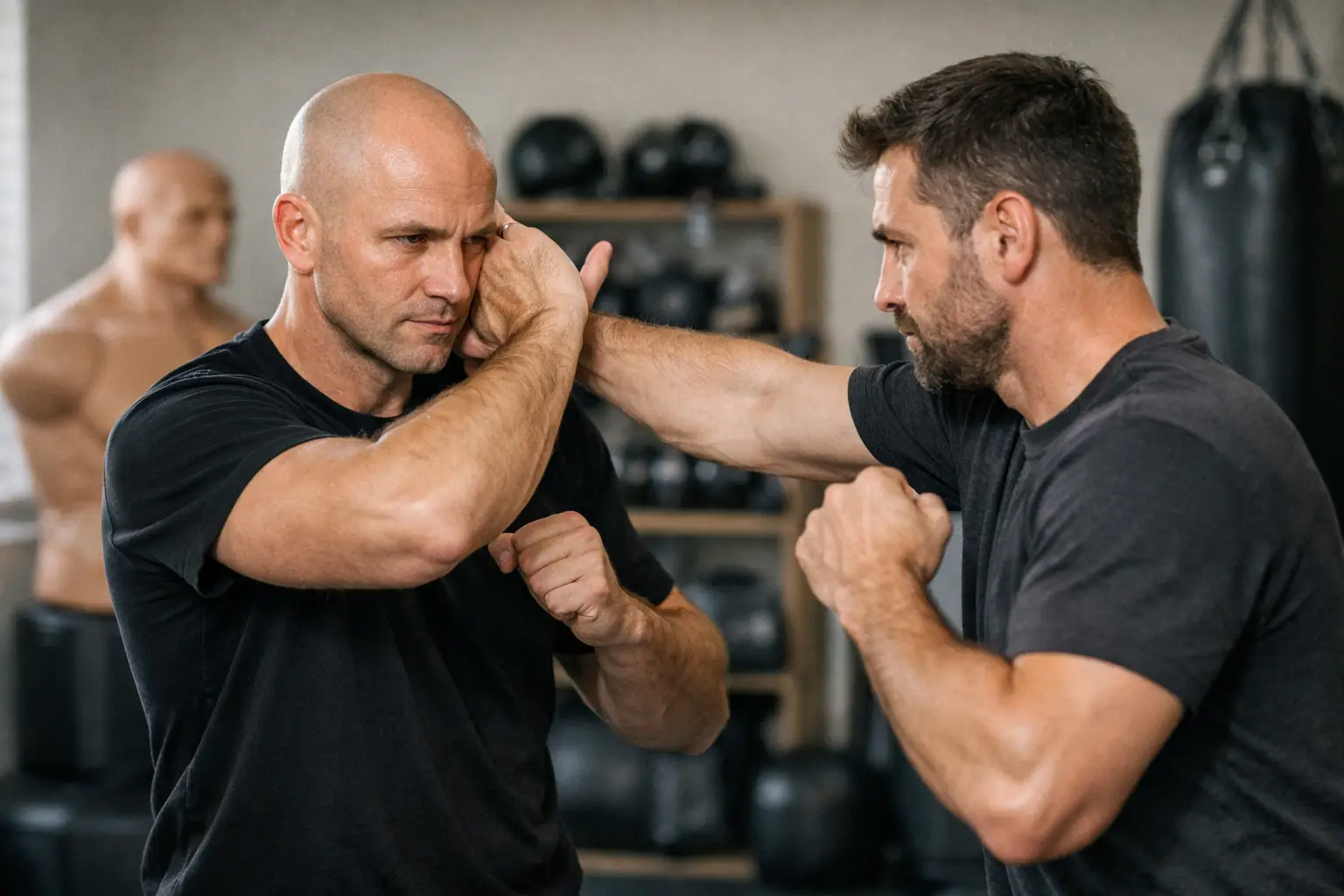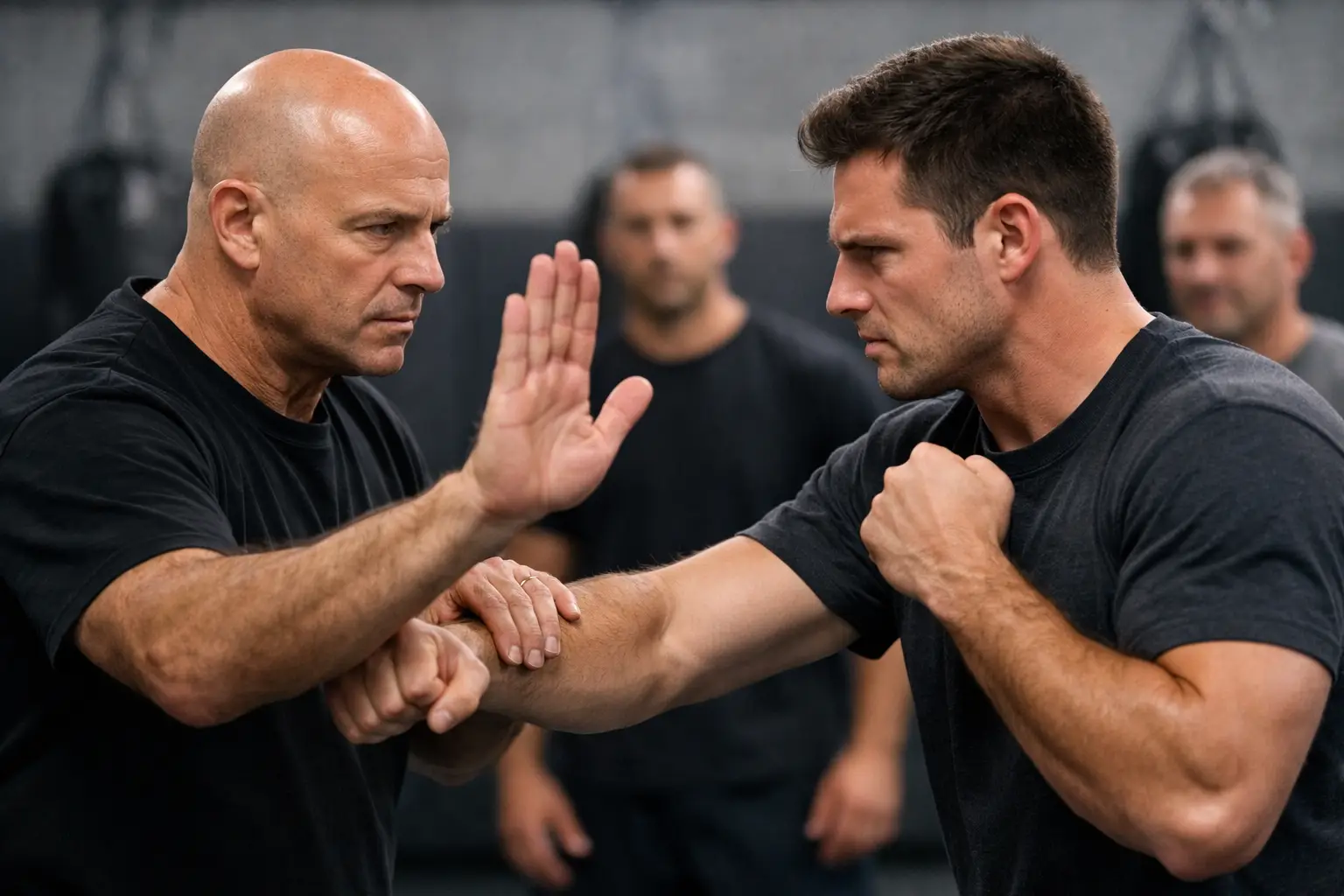
A missed class should not be the reason your self-defense training stops. A lifetime access self defense course gives serious students something a rigid weekly schedule cannot: the ability to return, review, and progress on their own terms while following a clear Krav Maga system.
That matters because self-defense is not information you consume once. It is a physical skill set built through repetition, decision-making, awareness, and disciplined practice. The right online program does more than show techniques. It gives you a structured path from beginner fundamentals to recognized belt progression, with instruction you can revisit whenever your schedule, confidence, or training goals change.
Lifetime Access Self Defense Course: What You Are Really Buying
Lifetime access is often treated as a pricing feature. For a committed student, it is a training advantage.
A technique may make sense when you first watch it, then feel entirely different after you have practiced the stance, movement, and defensive response for several weeks. When you can return to the lesson, slow it down, study the details, and train it again, you are no longer depending on memory from a single class. You are building a personal training library that stays available as your abilities develop.
This is especially valuable in Krav Maga. Practical self-defense depends on direct movement, balanced positioning, threat recognition, and decisive action under stress. Those skills require more than enthusiasm. They require a system that starts with fundamentals and gives each new lesson a place in the larger curriculum.
A quality lifetime program should provide more than a collection of random fight videos. Look for a defined belt-by-belt pathway, clear technical instruction, drills that reinforce each lesson, and a credible certification process for students who want formal recognition of their progress.
Train Around Real Life Without Lowering the Standard
Adults often delay training because the local class schedule does not match their work, family, travel, or shift responsibilities. Others have no qualified Krav Maga school nearby. Some live in areas where a long commute turns a one-hour class into a three-hour commitment.
Online training removes that obstacle, but only when it is organized with purpose. Flexible access should not mean vague training. You still need a progression that tells you what to learn first, what to repeat, and when you are ready to move forward.
With lifetime access, you can train before work, review a lesson while traveling, or spend an entire weekend reinforcing a specific section. If an injury, deployment, family obligation, or demanding season interrupts your routine, your training does not disappear. You return when you are ready and pick up the curriculum with a stronger understanding of what needs attention.
That flexibility benefits beginners and experienced practitioners differently. A beginner gets time to build coordination without feeling rushed by a class moving ahead every week. An experienced martial artist can focus on the Krav Maga material that fills a gap in their current training, such as defenses against common grabs, strikes, chokes, or weapon threats.
Why Repetition Changes Your Self-Defense Ability
The first time you learn a defense, you are thinking through the steps. Where do your hands go? Which direction do you move? When do you counter? Under pressure, that delay matters.
Repetition is how a sequence becomes more natural. It is also how you discover the difference between seeing a move and being able to perform it with balance, speed, and control. Lifetime access supports this process because you can revisit foundational lessons without sacrificing your place in the course.
For example, a student may advance into more complex scenarios and realize their stance is too narrow, their movement is too upright, or their striking mechanics need work. In a structured online academy, they can go back to the relevant foundation lesson and correct the issue. That is not moving backward. It is training with the discipline required for durable skill development.
The most effective students do not race through a course to collect lessons. They train a section, repeat the movements, test their understanding, and revisit it later. Progress comes from quality repetitions, not from how quickly a video reaches the end.
A Structured Path Creates Accountability
Freedom without structure often leads to inconsistency. A lifetime access self defense course should give you both: the flexibility to train when needed and the standards that keep your work focused.
A formal belt progression turns a large subject into attainable stages. Instead of wondering what to study next, you follow an organized curriculum that builds from basic movement and defensive positions toward more demanding combinations, scenarios, and professional-level applications.
This structure also gives your training a measurable purpose. Each level should require you to understand and demonstrate specific material before progressing. For students who want to earn certification, assessment matters. A certificate has more value when it represents documented work within an established system rather than simple course completion.
At Krav Maga Online, the curriculum is built around direct instruction from Master Alain Cohen and a progression that can take a student from Yellow Belt foundations toward advanced and professional tracks. That distinction matters for learners who want more than casual exercise. They want a recognized path, serious standards, and the ability to keep developing over time.
What to Look for Before You Commit
Not every lifetime offer delivers lasting value. Some programs use the term to describe a small set of videos with little guidance, no progression, and no meaningful way to evaluate whether you are improving. Before enrolling, assess the training model, not just the access period.
Look for these four essentials:
- A clear curriculum that starts at an appropriate level and advances in logical stages.
- Expert-led instruction that explains the purpose, mechanics, and common errors behind each technique.
- Training options for practical repetition, including solo drills and partner work where appropriate.
- A transparent path for testing, certification, mentorship, or advanced development if those goals matter to you.
Equipment requirements deserve attention as well. Good beginner training should not demand a fully equipped gym. You can develop stance, movement, defensive motions, striking mechanics, and situational awareness with limited space and basic resources. Partner drills can add valuable timing and resistance, but a well-designed program should still let you make meaningful progress when a training partner is unavailable.
Online Training Has Limits – Train Intelligently
Online instruction is powerful, but it is not magic. No video course can create pressure, timing, or physical contact for you. Those elements must be developed through responsible practice.
Train slowly before training fast. Prioritize body alignment, control, and awareness over dramatic movement. If you work with a partner, establish clear boundaries, use appropriate protective equipment when striking is involved, and increase intensity gradually. Never turn a drill into an ego contest.
There are also situations where in-person feedback is particularly useful, including close-contact work, weapon defenses, ground fighting, and high-intensity scenario training. A serious online course should acknowledge that reality while giving you the technical foundation and repeatable drills needed to prepare for better partner practice and future evaluation.
Self-defense also starts before physical contact. Awareness, distance, verbal boundaries, escape routes, and the decision to disengage are not secondary topics. They are often the safest and most effective tools available. The objective is not to win a confrontation. The objective is to identify danger early, create an opportunity to leave, and get home safely.
Make Lifetime Access Work for You
The advantage of permanent access can become a disadvantage if it encourages procrastination. Treat your course like an academy, not a streaming library.
Set a realistic weekly schedule. Two or three focused sessions can produce better results than an ambitious plan you abandon after ten days. Choose one lesson block at a time, practice the core movements, and record brief notes on what felt difficult. Then revisit the lesson after a few days. That second viewing often reveals details you missed at the start.
Use milestones to stay accountable. Completing a belt section, improving a movement pattern, or preparing for a formal assessment gives your training direction. If you have access to support or mentorship, use it to ask specific questions rather than waiting until confusion becomes frustration.
Most of all, stay patient with the fundamentals. The confidence that matters in a dangerous moment is not built by memorizing dozens of techniques. It is built by practicing the right responses often enough that your body can act with control when your mind is under stress. Start where you are, train with intent, and give yourself the time to become harder to intimidate.