A stranger who keeps changing direction when you change direction. A car that has circled the parking lot twice. An argument near the exit of a restaurant. These are not reasons to panic. They are reasons to notice, assess, and act before a situation forces your hand.
A guide to situational awareness training should begin with this principle: awareness is not paranoia. It is the trained ability to read your environment, recognize behavior that does not fit, and create time and distance before danger reaches you. In real self-defense, that early decision can matter more than any strike, technique, or physical advantage.
What Situational Awareness Training Actually Builds
Situational awareness is the skill of collecting useful information from your surroundings and turning it into practical decisions. It means knowing where the exits are, who is close enough to affect you, what obstacles limit your movement, and whether someone’s behavior deserves more attention.
For a beginner, this can feel like a lot to process. The goal is not to memorize every face or scan a room with theatrical intensity. The goal is to build calm habits that become automatic. With practice, you learn to notice without staring, position yourself without looking fearful, and leave early without feeling the need to justify it.
This is especially valuable for adults who train independently. You may not have a regular partner or a local school, but awareness can be practiced during a commute, at work, while traveling, and in ordinary public spaces. It supports Krav Maga training because it develops the first layer of defense: preventing a confrontation when prevention is still possible.
The Four Stages of Situational Awareness
A useful way to train awareness is to move through four stages: observe, orient, decide, and act. The sequence is simple, but the quality of your response depends on how well you train each stage.
Observe What Is Around You
Begin by taking in the facts. Where are the entrances and exits? Is there an open route away from crowds, vehicles, or confined spaces? Who is nearby, and what are they doing? Look for hands, body position, distance, unusual attention, and changes in behavior.
Hands deserve special attention because they can conceal intent. Someone who is nervous, angry, or preparing an attack may repeatedly touch a waistband, keep one hand hidden, clench their fists, or reach inside a pocket or bag. None of these signals proves a threat. They are cues to improve your position and stay ready to leave.
Avoid the common mistake of focusing only on people who look intimidating. Risk is defined by behavior, access, and context, not clothing, age, or appearance. The person who is too close, blocking your path, watching your movements, or ignoring clear boundaries may require more attention than the loudest person in the room.
Orient Yourself to the Environment
Observation becomes useful when you place it in context. A person talking loudly outside a stadium may be irrelevant. The same person moving toward you in an isolated parking garage after following you from the entrance deserves a different response.
Ask practical questions: What is normal here? What has changed? Where can I move if this becomes unsafe? Who could help? A well-lit store, security desk, family group, staffed reception area, or open public space can become an immediate destination if your instincts tell you something is wrong.
Your position matters. When possible, avoid standing with your back to entrances, corners, or blind areas. In a restaurant, choose a seat that lets you see the main access point. At an ATM, do not become absorbed in the screen. When approaching your vehicle, look around before you unlock it and check the area around the doors.
Decide Before the Pressure Peaks
Many people wait for certainty. They want proof that a person is dangerous before they change direction, enter a store, call someone, or leave an area. That delay can remove the options that awareness was meant to create.
You do not need certainty to make a safety decision. If the environment feels wrong, create distance. If someone repeatedly closes the gap after you move, treat that behavior seriously. If a disagreement is escalating, leave before pride traps you in it. The objective is not to win an argument or prove that you are fearless. The objective is to get home safely.
Decision-making also requires proportionality. A crowded subway platform calls for different actions than a dark parking lot. A rude comment may need no response. A person attempting to isolate you, control your movement, or invade your personal space requires clear boundaries and immediate action.
Act With Purpose
Action should be decisive, simple, and appropriate to the threat. That may mean crossing the street, changing floors, moving toward people, locking a door, calling emergency services, or using a direct verbal command such as, “Stop. Stay back.”
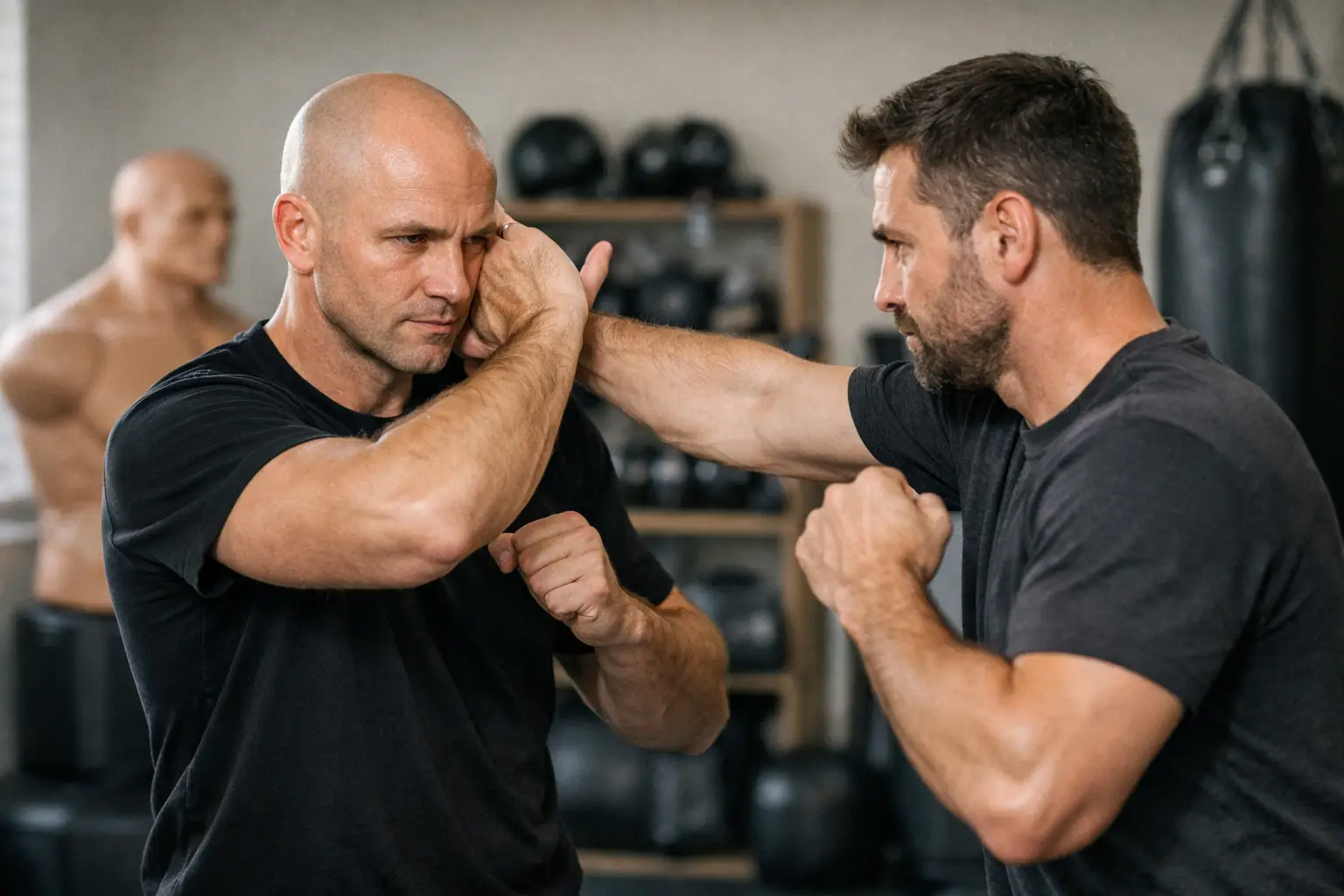
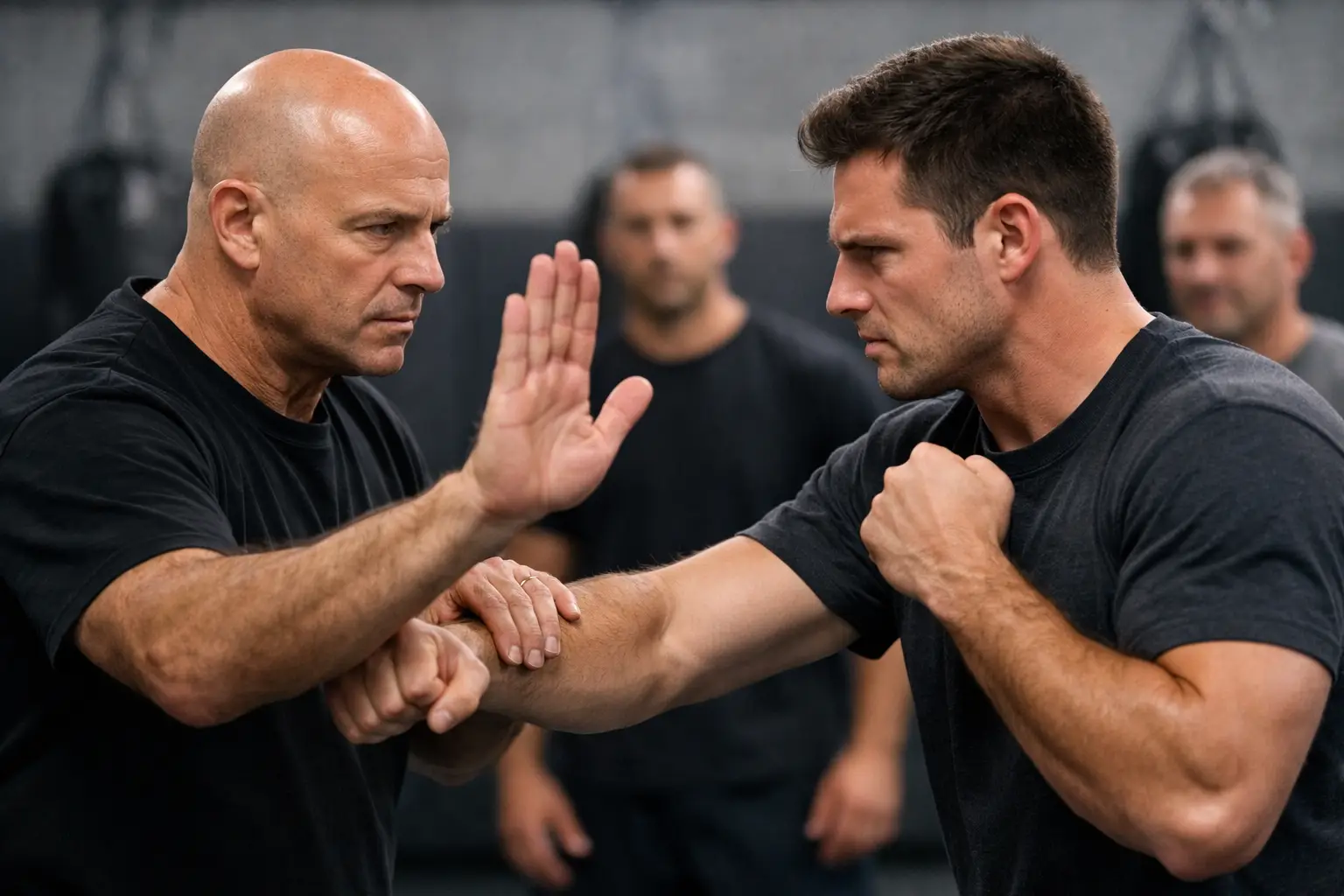
If physical contact becomes unavoidable, Krav Maga emphasizes immediate, practical responses designed to create an opportunity to escape. But physical defense is the last stage, not the starting point. The best outcome is often the one in which you saw the problem early enough that no fight happened at all.
A Practical Guide to Situational Awareness Training
The fastest way to improve is to make awareness a repeatable daily drill rather than an occasional thought. Start with short, focused exercises. When you enter a new space, identify two exits and one safe direction of movement. When you walk to your car, notice who is within a few seconds of your position. When you sit down, choose a place that gives you a useful view.
Then add recall. After leaving a coffee shop, elevator, or store, ask yourself what you noticed. Who was nearest to you? Where was the exit? Was there anything that changed while you were there? The purpose is not perfect memory. It is teaching your brain to gather relevant details without becoming distracted or anxious.
Use your phone with discipline. Looking down while walking, entering a building, waiting at a transit stop, or crossing a parking lot reduces your ability to read movement and react early. Put the phone away during transitions. These are the moments when you are entering, leaving, loading bags, unlocking doors, or otherwise less prepared to move.
You can also rehearse verbal and movement responses. Practice stepping back while raising your hands naturally in a non-aggressive protective position. Practice using a firm voice. Practice moving toward an exit instead of backing yourself into a corner. These details connect awareness to action and make the response more available under stress.
Build Awareness Into Your Krav Maga Progression
Technical self-defense and situational awareness must develop together. A student can know an effective release, strike, or defense against a common attack, yet still be caught off guard if they ignore distance, access, and environmental warning signs.
Train scenarios, not just movements. Before practicing a defense, ask what you would notice first. Is the attacker within reach? Are there barriers, exits, companions, or improvised weapons nearby? Would verbal de-escalation or movement prevent the attack? This approach turns isolated technique into real-world judgment.
For professionals in law enforcement, military, close protection, and security, the standards are higher. You may need to evaluate people, terrain, routes, crowd behavior, and threat indicators while carrying responsibility for others. Yet the core discipline remains the same: observe objectively, avoid assumptions, position intelligently, and act before the situation becomes harder to control.
Krav Maga Online provides structured training that helps students build these skills alongside practical self-defense technique, from foundational instruction through advanced professional tracks. The value of a formal progression is repetition with purpose: each level gives you a clearer framework for distance, timing, decision-making, and response.
Awareness Is Not Fear
Good awareness does not mean living on edge. It means you are less likely to be surprised because you are present. You can enjoy a night out, travel independently, walk into a new environment, and carry yourself with greater confidence because you have trained yourself to notice what matters.
Start small. Look up. Identify your exit. Trust behavior over appearances. Give yourself permission to leave when something does not feel right. Each repetition builds a more capable habit, and that habit can give you the time, space, and choices that real self-defense depends on.