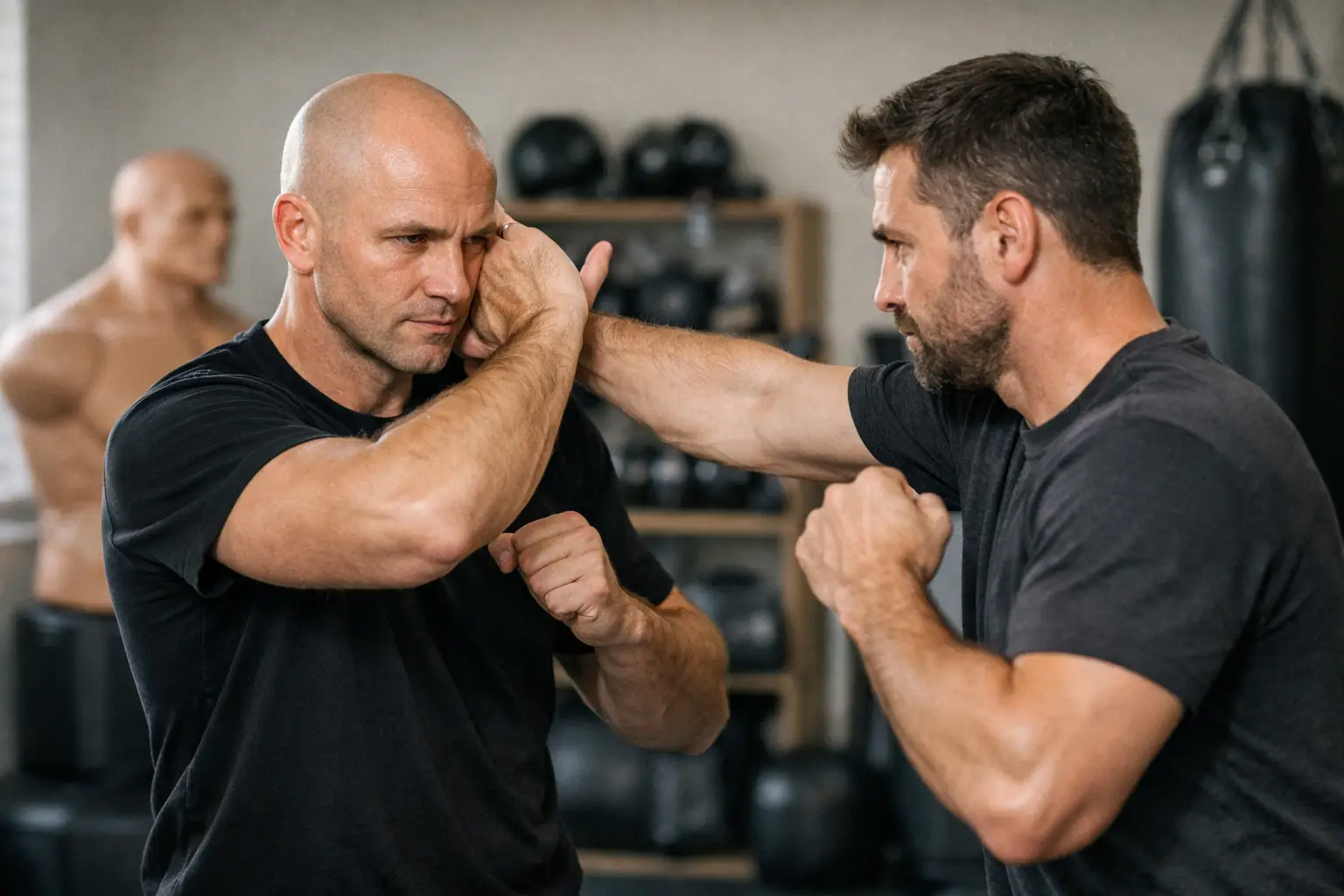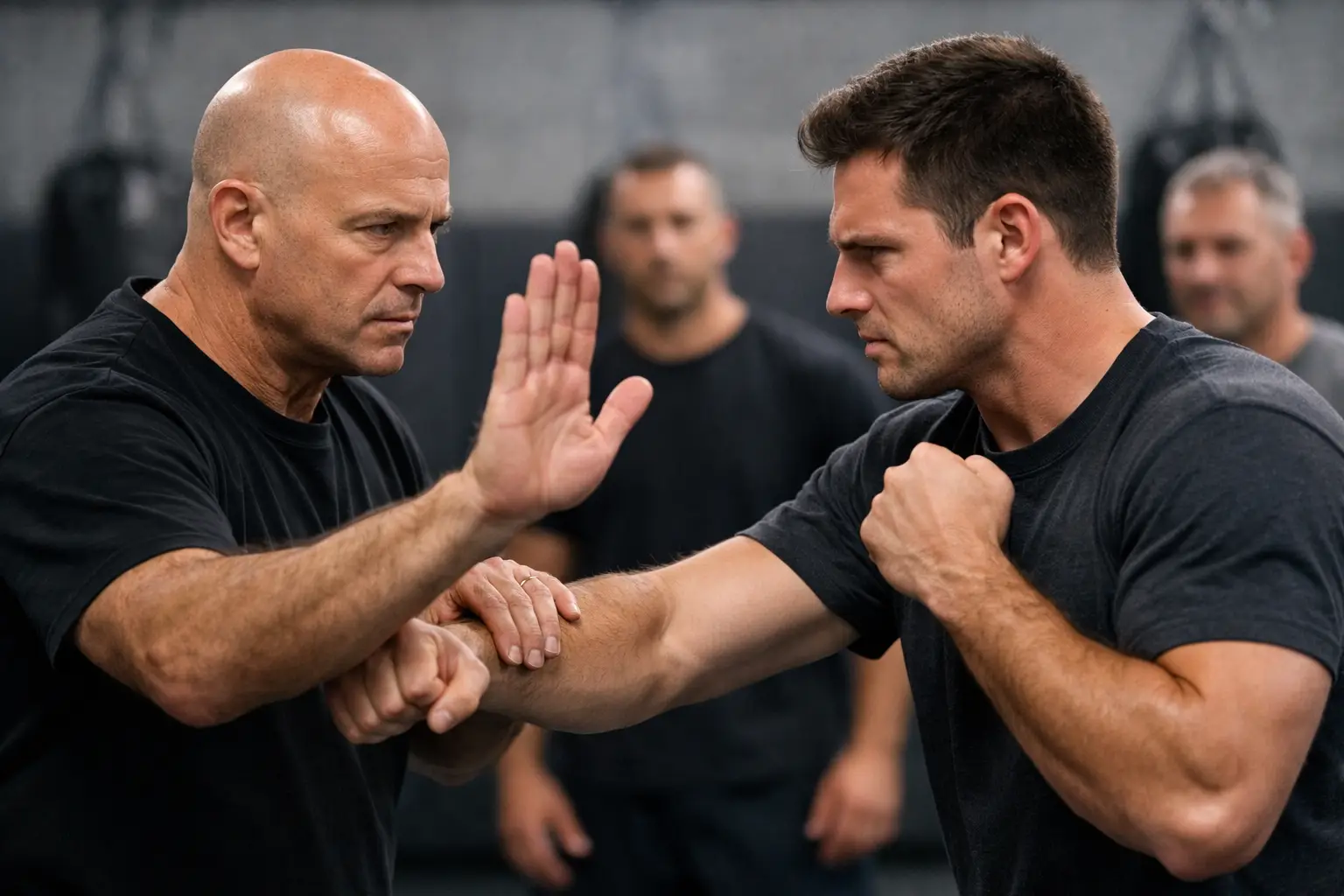

A belt should represent more than the number of videos you watched or the months you have been enrolled. If you are asking how to earn Krav Maga belts, the right answer is simple: train a defined curriculum, build reliable skills under pressure, meet your academy’s assessment standard, and keep progressing without gaps.
Krav Maga is built for practical self-defense, not performance. Your rank should reflect your ability to recognize danger, move decisively, protect yourself and others, and apply the appropriate response when stress rises. Online training can make that path far more accessible, but accessibility does not mean cutting corners. It means putting a serious progression system within reach wherever you live.
What Krav Maga Belt Progression Is Designed to Prove
A formal belt system gives self-defense training structure. Instead of collecting isolated techniques, you develop skills in a sequence: stance and movement first, then defensive reactions, counterattacks, releases, ground survival, multiple-threat awareness, and increasingly demanding tactical decisions.
Most programs begin with Yellow Belt and advance through higher color levels toward Black Belt. Exact colors, terminology, testing criteria, and time requirements can vary between Krav Maga organizations. That is why your first job is to understand the standards of the academy issuing your rank. A belt is meaningful when it comes from a documented curriculum and a credible assessment process, not when it is simply mailed after course completion.
At each level, you should expect to demonstrate more than technique recall. A quality evaluation looks at posture, balance, distance, timing, awareness, controlled aggression, and whether your actions remain functional when the scenario changes. You may know a defense in slow practice, but a belt test asks whether you can recognize the attack and execute the right response with intent.
How to Earn Krav Maga Belts Step by Step
Start by enrolling in a curriculum that clearly identifies what each belt requires. You need a visible path from beginner material to advanced work, not a random library of drills. Review the requirements for your current belt before you begin training so every session has a purpose.
Your first rank is normally where the foundation is built. Expect to work on a fighting stance, movement, striking mechanics, basic defenses against common attacks, awareness, and the mental discipline to act rather than freeze. These basics may look simple. They are not optional. A weak stance or poorly timed defense becomes a major liability as techniques get faster and more complex.
Train the material in order. Do not skip ahead to weapon defenses because they look advanced, and do not treat belt progression as a race. Higher-level scenarios depend on the mechanics and decision-making developed earlier. Moving too quickly may create the appearance of progress while leaving dangerous holes in your reactions.
Once you have learned a section, repeat it until you can perform it cleanly without constantly thinking through each step. Then add pressure in a controlled way. Increase speed, vary the angle, change the verbal cue, train from an awkward position, or work after a short burst of physical effort. Real self-defense does not arrive with a perfect setup.
Finally, complete the academy’s required assessment. Depending on the program, this may include video submissions, instructor review, live virtual evaluation, a formal test, or a combination of these methods. Follow the rules precisely. If a movement is unclear, ask for feedback and correct it before submitting again. The goal is not to persuade an instructor that you deserve a belt. The goal is to become the student who can perform at that level.
Train Online With the Discipline of a Real Academy
The main advantage of online Krav Maga is flexibility. You can train before work, after your children are asleep, during travel, or whenever your local school schedule would otherwise keep you out. The trade-off is accountability. Without a fixed class time, you must create your own training rhythm.
Set a realistic weekly schedule and protect it. For most beginners, three focused sessions per week can produce strong progress when the sessions are deliberate. One session can be dedicated to learning new material, one to repetition and technical correction, and one to conditioning, review, and scenario-based practice. If you have more time, add short movement and striking drills between full sessions.
Keep a training record. Write down the techniques you covered, the problems you noticed, and the date you intend to revisit them. This is especially valuable before a belt evaluation because it exposes weak areas early. You may discover that your punches feel sharp but your footwork collapses when moving backward, or that you remember a release but hesitate when the attacker changes sides.
Film yourself regularly. A camera does not replace an instructor, but it is an honest training tool. Compare your posture, guard position, distance, and movement to the lesson. Watch at normal speed, then slow the footage down. Small errors become visible quickly, and correcting them before they become habits saves months of frustration.
If your course includes instructor support or feedback, use it. Direct correction is one of the fastest ways to improve. Krav Maga Online provides a structured belt-by-belt pathway designed to give remote students this kind of direction, while allowing them to train without a local gym or rigid class schedule.
Build Skills That Hold Up Beyond the Lesson
A belt test is a checkpoint, not the finish line. The best way to prepare is to train for real function rather than to memorize an exam routine. Practice defending from both sides. Work from different starting positions. Add verbal commands and awareness habits, such as creating distance, identifying exits, and scanning after the immediate threat is addressed.
Partner training can help when it is available, particularly for learning distance, timing, and the energy of another person’s movement. Choose a responsible training partner and use controlled intensity. Do not turn a living-room drill into an ego contest. Protective equipment may be useful for striking practice, but you can still make substantial progress alone through footwork, shadowboxing, movement patterns, fitness, and carefully structured technical repetition.
Conditioning also matters. You do not need to be an elite athlete to earn a Krav Maga belt, but fatigue changes decision-making. Include work that develops your legs, core, cardiovascular capacity, and ability to regain composure after exertion. A technique that works only when you are fresh has not been fully tested.
Avoid the Mistakes That Stall Belt Progression
The most common mistake is confusing exposure with competence. Watching a lesson once is education. Repeating it correctly until your body responds naturally is training. Slow, accurate practice comes first; speed and power follow once the movement is stable.
Another mistake is training only the techniques you enjoy. Many students love striking combinations and avoid defensive movement, ground survival, or escape drills. A serious belt progression requires the full curriculum because real threats do not arrive according to personal preference.
Do not chase rank to compensate for insecurity. A legitimate Yellow Belt with dependable basics is more valuable than a higher rank built on rushed testing and vague technique. Progress can be fast when you train consistently, but there is no benefit in receiving a new belt before your reactions have caught up.
Finally, respect safety and legality. Krav Maga teaches decisive responses to threats, but self-defense always depends on the circumstances. Your objective is to create safety, escape when possible, and use only the level of force justified by the immediate danger. Training should build judgment alongside physical skill.
What It Takes to Reach Black Belt
Black Belt training is not simply more techniques. It requires a deeper level of control, adaptability, conditioning, and responsibility. By this stage, students should be able to connect principles across varied problems instead of relying on a separate memorized answer for every attack.
The path may take years, depending on your academy’s standards, your prior experience, training frequency, and assessment performance. Martial artists from boxing, wrestling, Brazilian jiu-jitsu, or traditional systems may progress quickly in certain areas, but they still need to learn Krav Maga’s tactical framework, threat awareness, and specific defenses. Beginners can advance steadily as well when they train with discipline and avoid long interruptions.
A credible Black Belt also carries an expectation of leadership. That does not necessarily mean becoming an instructor, but it does mean demonstrating composure, respect for training partners, sound judgment, and a commitment to continuing development.
Choose a Belt Path You Can Stand Behind
Before committing to any online program, look for a published curriculum, clearly explained certification procedures, qualified instruction, opportunities for feedback, and standards that do not promise instant rank. Convenience is valuable. So is credibility. You should never have to choose between the two.
Your next belt is earned one deliberate session at a time. Train the fundamentals until they are dependable, invite correction, test with honesty, and let each rank represent a real increase in your ability to protect yourself.