A close protection krav maga course is not about looking like a bodyguard. It is about learning to recognize danger early, control distance, move a principal safely, and act decisively when prevention has failed. For security professionals, aspiring close protection officers, and serious Krav Maga students, the standard is higher than winning a fight. The mission is to reduce risk, protect another person, and make sound decisions while pressure is rising.
That changes how you should evaluate training. A credible program does not sell fantasy scenarios or promise instant professional readiness. It develops a disciplined foundation: awareness, movement, communication, defensive tactics, and the ability to apply force only when the situation justifies it.
What Close Protection Training Is Really Designed to Do
Close protection is a protection mission, not a combat sport. The protected person, often called the principal, remains the priority. Your position, verbal direction, route choices, and ability to spot developing problems matter long before physical contact occurs.
A strong course teaches you to think in layers. First, avoid the threat through planning, awareness, and positioning. If avoidance is no longer possible, create space and move the principal away from danger. If an assault occurs at close range, use simple, high-percentage responses to break contact, protect vital areas, and regain control of the situation.
This is where Krav Maga has practical value. Its principles emphasize direct action under stress, common attacks, vulnerable targets, and rapid disengagement. Yet close protection requires more than technique. A practitioner must know when not to engage, when to use verbal control, when to evacuate, and when the safest choice is to create distance rather than pursue an attacker.
The Core Skills a Close Protection Krav Maga Course Should Build
The best professional-focused training is structured around repeatable skills, not complicated choreography. Technical ability matters, but it must serve the protection role.
Protective movement and positioning
You need to understand where to stand in relation to the principal, entrances, exits, crowds, vehicles, and potential threats. Good positioning gives you time to react and prevents a threat from reaching the person you are protecting. Training should cover escort movement, creating a protective barrier with your body, guiding a principal through confined spaces, and moving decisively toward safety.
This work can look simple from the outside. In reality, it demands timing, spatial awareness, and calm communication. A skilled protector does not drag a principal into confusion. They give clear directions, keep movement purposeful, and avoid creating unnecessary panic.
Threat recognition and decision-making
Most serious security problems give warning signs. A person may repeatedly close distance, watch the principal rather than the environment, block an exit, conceal their hands, or create a distraction while someone else approaches. No single behavior proves malicious intent, but patterns deserve attention.
Training should sharpen observation without creating paranoia. The goal is not to assume everyone is a threat. The goal is to notice anomalies early enough to make a safer decision. That may mean changing position, ending an interaction, choosing another exit, or calling for support before an incident turns physical.
Close-range defensive tactics
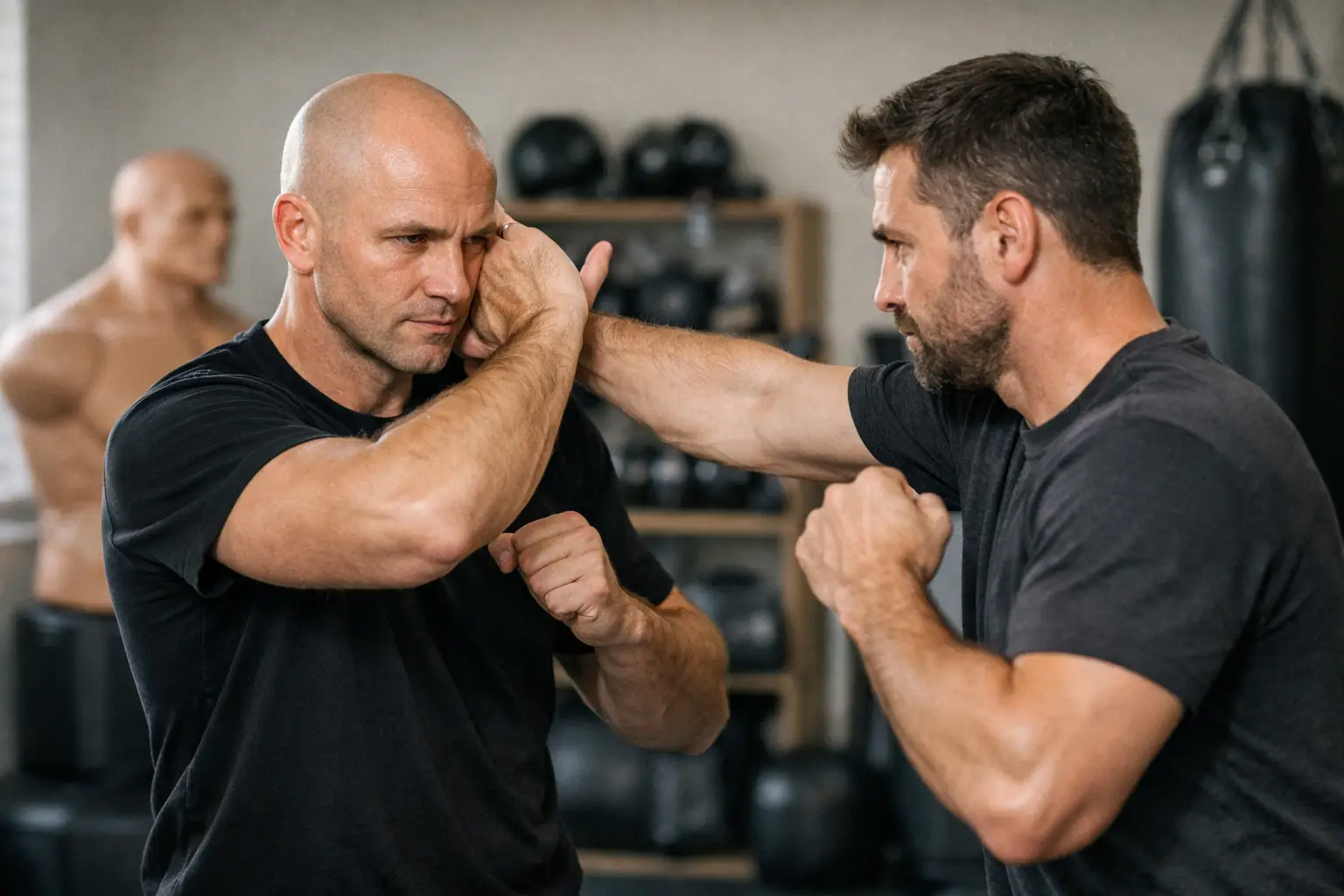
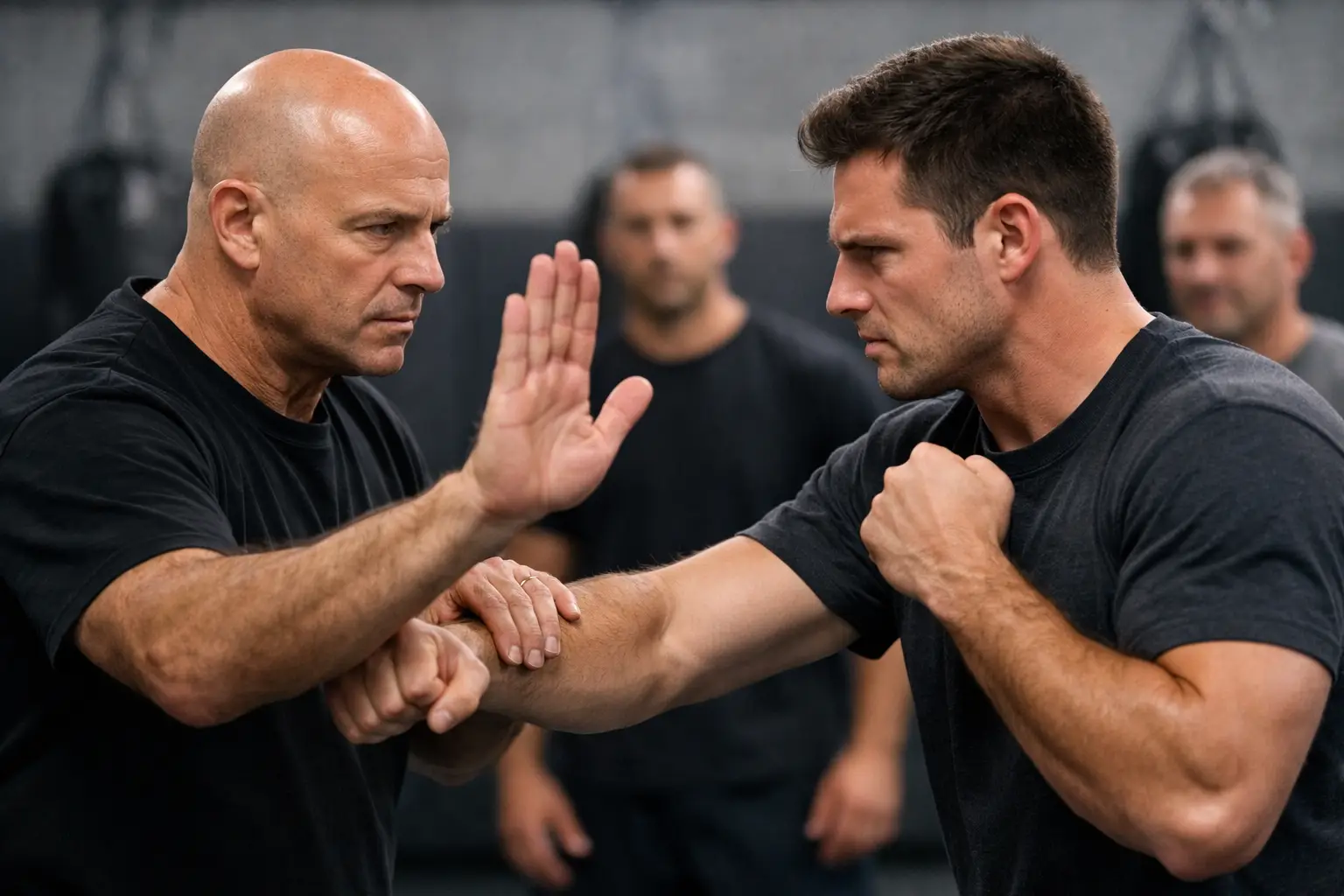
When an attacker is already within arm’s reach, there is little time for elaborate responses. Krav Maga training should develop protective posture, instinctive movement, releases from common grabs, defenses against strikes, and counterattacks that create an opportunity to disengage.
For close protection applications, every technique needs a mission-based question: does this response protect the principal and allow movement to safety? A tactic that works in a one-on-one gym exchange may be the wrong choice if it leaves the principal exposed, ties you up with an attacker, or prevents you from seeing additional threats.
Stress control and communication
Pressure affects vision, balance, memory, and judgment. A course should help students train with enough intensity to experience urgency while maintaining technical control and safe practice standards. The aim is not reckless aggression. It is the ability to function when the body wants to freeze, flinch, or overreact.
Clear communication is part of that skill set. Brief instructions such as “move,” “behind me,” or “exit now” can be more valuable than a perfect strike. You also need the discipline to communicate with teammates, witnesses, venue staff, and emergency responders after an incident.
Why Structured Progression Matters
Professional applications are built on fundamentals. Before training advanced protection scenarios, a student needs reliable stance, movement, striking mechanics, defensive reactions, and an understanding of distance. Skipping that base creates false confidence, especially when training is mostly theoretical or performed without resistance.
A belt-by-belt path provides accountability. It gives students defined objectives, a way to measure improvement, and a progression from general self-defense to more specialized material. At Krav Maga Online, that progression allows students to build their core Krav Maga skills before advancing toward professional tracks that demand greater judgment and responsibility.
The value is not the belt alone. The value is knowing what the belt represents: training hours, demonstrated fundamentals, consistent practice, and a clear next standard. For professionals, formal progression can also support a more disciplined training record. It should never be confused with a state license, legal authorization, or an automatic guarantee of employment, but it can demonstrate serious commitment to continued development.
Can You Train Close Protection Krav Maga Online?
Online training offers real advantages for learners with demanding schedules, no local Krav Maga school, or limited access to professional-level instruction. You can study movement patterns repeatedly, review scenario principles, train fundamentals at your own pace, and follow a structured curriculum rather than relying on disconnected videos.
It also has limits. Close protection work involves timing with another person, physical contact, environmental awareness, verbal communication, and decision-making under pressure. Those abilities improve fastest when online study is paired with responsible partner practice, qualified feedback, controlled drills, and, where required, recognized in-person professional training.
That is not a weakness in online learning. It is an honest training standard. Use digital instruction to build knowledge, repetition, and technical consistency. Then pressure-test appropriate skills safely with a trusted training partner or instructor. If your goal is paid close protection work, research the licensing, insurance, use-of-force requirements, and industry expectations in the state or country where you intend to work.
Who Benefits Most From This Training?
A close protection Krav Maga course can serve different students for different reasons. Private security personnel may want practical defensive skills that support their existing operational training. Law enforcement and military professionals may use the material to strengthen close-range defense, movement, and situational awareness. Martial artists may want a reality-based framework that connects technique to protection priorities.
It is also valuable for committed civilians who do not intend to work in security. You may never escort a principal through a crowded venue, but the habits of awareness, positioning, decisive movement, and controlled response remain relevant to personal safety. The key is to train for your actual environment and goals rather than adopting a professional identity you do not need.
How to Choose the Right Course
Look beyond dramatic demonstrations. A serious course should explain the purpose behind tactics, provide a clear progression, and distinguish between basic self-defense and professional protective work. It should be taught by credible instructors with relevant experience and should encourage legal awareness, restraint, and continued practice.
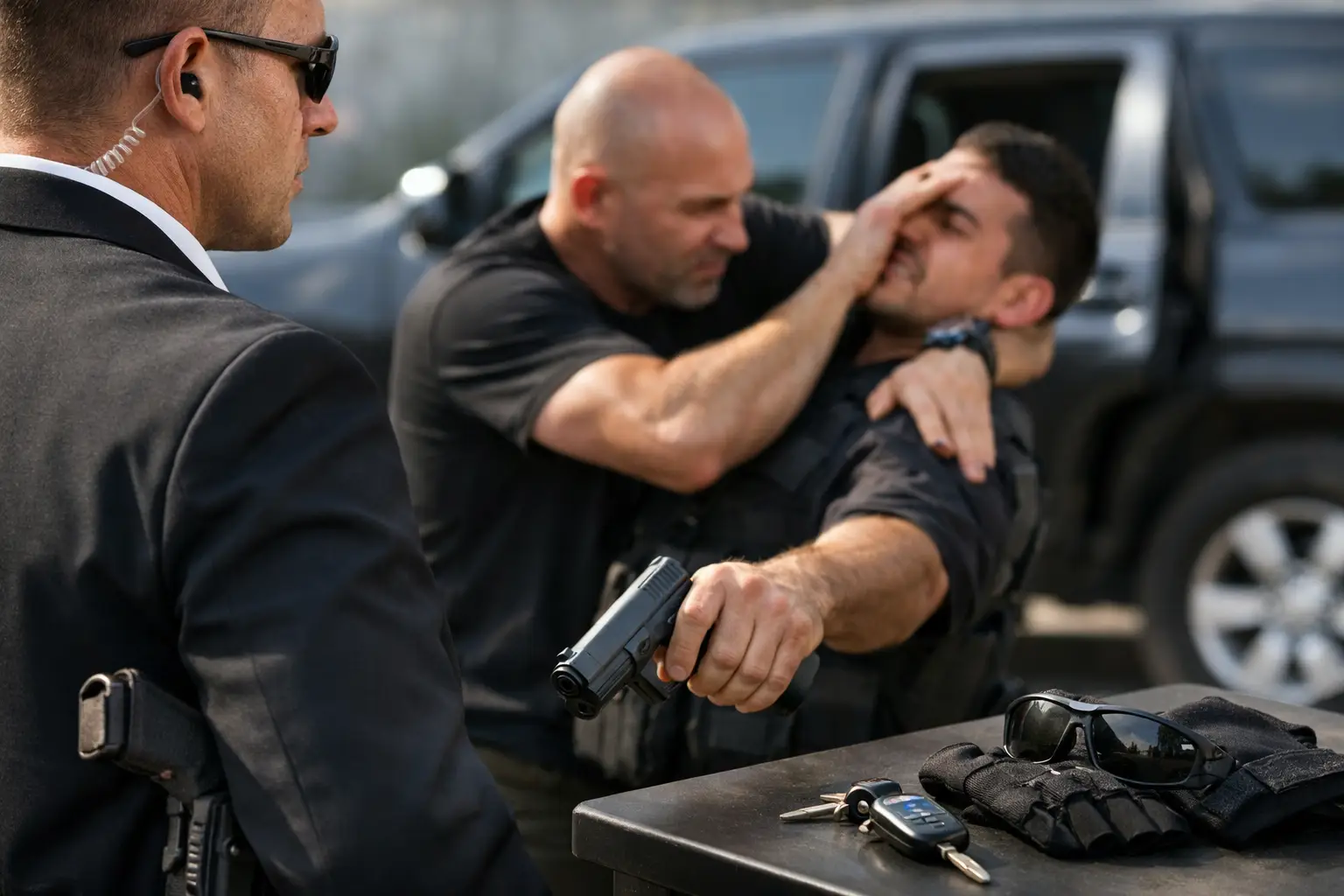
Ask whether the material addresses the full protection problem. Does it teach awareness before violence? Does it show how to move another person to safety? Does it account for confined spaces, crowds, and multiple variables? Does it make clear that weapon defenses and high-risk scenarios require careful instruction rather than casual experimentation?
Also consider how you learn. If your schedule makes regular gym attendance unrealistic, a structured online academy can give you access to consistent instruction and a defined path forward. If you need hands-on assessment or job-specific credentials, plan to add supervised, in-person training. The strongest approach is often both: disciplined independent study supported by practical coaching and realistic drills.
A protector is not measured by how much force they can use. They are measured by how effectively they prevent harm, keep control when conditions change, and guide others toward safety. Train for that responsibility with patience, standards, and a commitment to keep improving.