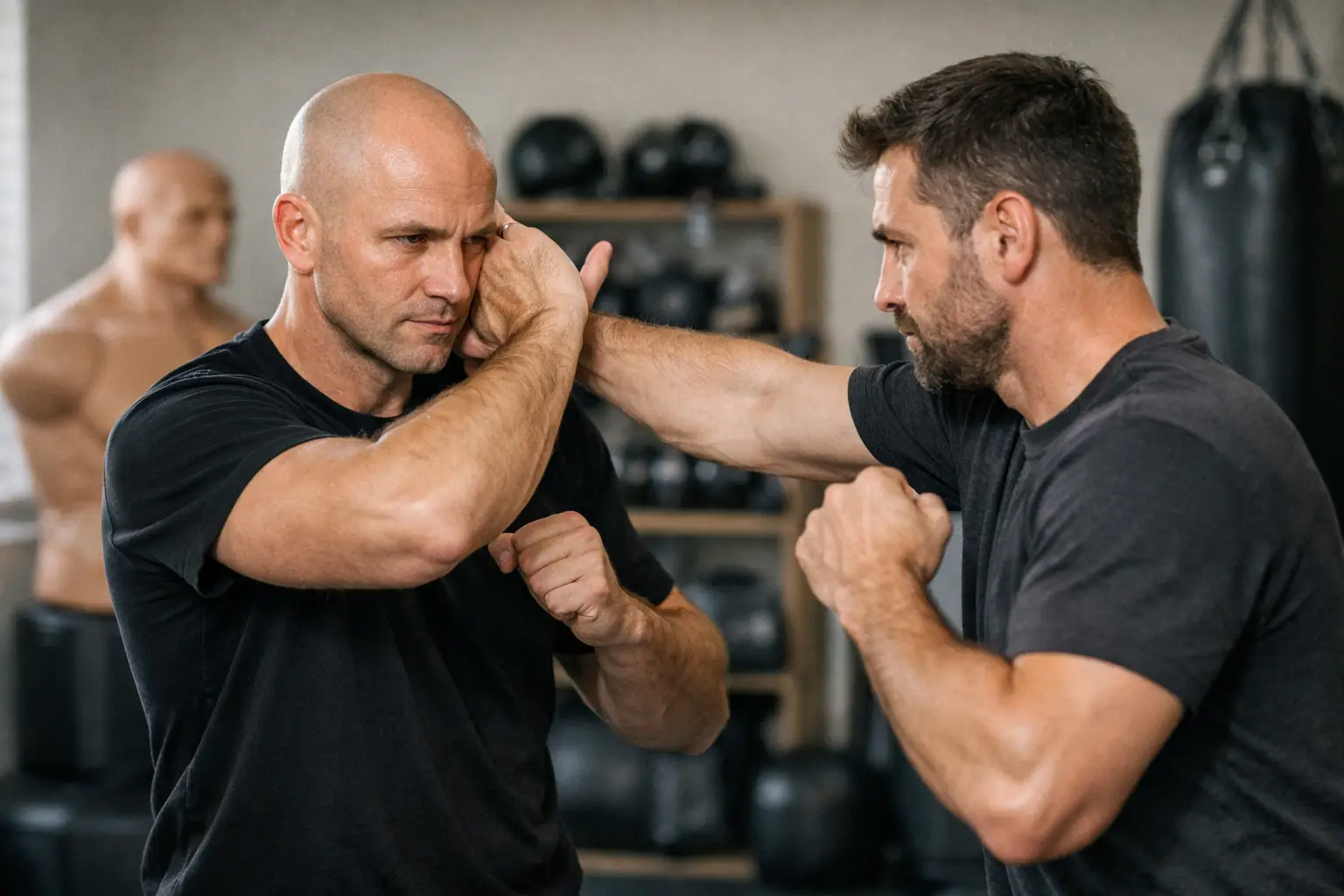

A confrontation rarely begins with a punch. It starts with distance closing, a raised voice, a blocked path, or the feeling that someone wants your attention for the wrong reason. Learning how to avoid street confrontations means recognizing those early signals and making decisions before pride, panic, or confusion takes over.
Real-world self-defense is not about proving you can win an argument. It is about getting home safely. That may mean leaving a place you wanted to stay, changing your route, ignoring an insult, or asking for help sooner than feels comfortable. These are not weak choices. They are disciplined choices.
How to Avoid Street Confrontations With Awareness
Awareness is your first layer of protection because it gives you time. Time creates options, and options reduce the chance that you will be trapped in a bad situation.
When walking, parking, using public transportation, or leaving a restaurant or bar, keep your attention on the environment. Notice who is close to you, where people are gathering, and where you could move if the mood changes. Avoid walking with your eyes fixed on a phone or both earbuds blocking out the sounds around you. You do not need to be paranoid. You need to be present.
Look for behavior, not stereotypes. A person’s clothing, age, or appearance does not tell you whether they are a threat. Actions do. Watch for someone following your movements, invading your personal space, staring aggressively, trying to block your path, or repeatedly demanding your attention after you have declined to engage.
Trust the moment when something feels wrong. That feeling is often your mind processing small details before you can explain them logically. If a parking garage, sidewalk, elevator, or store entrance feels unsafe, change direction. Go into a busy business, return to a populated area, or contact someone. You do not owe anyone an explanation for protecting yourself.
Keep Distance and Protect Your Exit
Distance is one of the most valuable assets in personal safety. The closer an aggressive person gets, the less time you have to react and the more easily they can grab, strike, or obstruct you.
If someone approaches with hostile energy, do not stand chest-to-chest to make a point. Step back at an angle and keep objects such as a car, bench, table, shopping cart, or doorway between you and them when possible. Your goal is not to corner the other person. Your goal is to keep a clear route away.
Pay attention to your position. Avoid letting a stranger draw you into an isolated area, an alley, a stairwell, or the side of a building. If you are near a venue, store, or transit station, move toward staff, security, cameras, and other people. A public, well-lit setting can change the behavior of someone looking for an easy target.
Use Words That Lower the Temperature
Many confrontations become physical because both people feel challenged. A calm voice, simple wording, and non-threatening body language can interrupt that pattern.
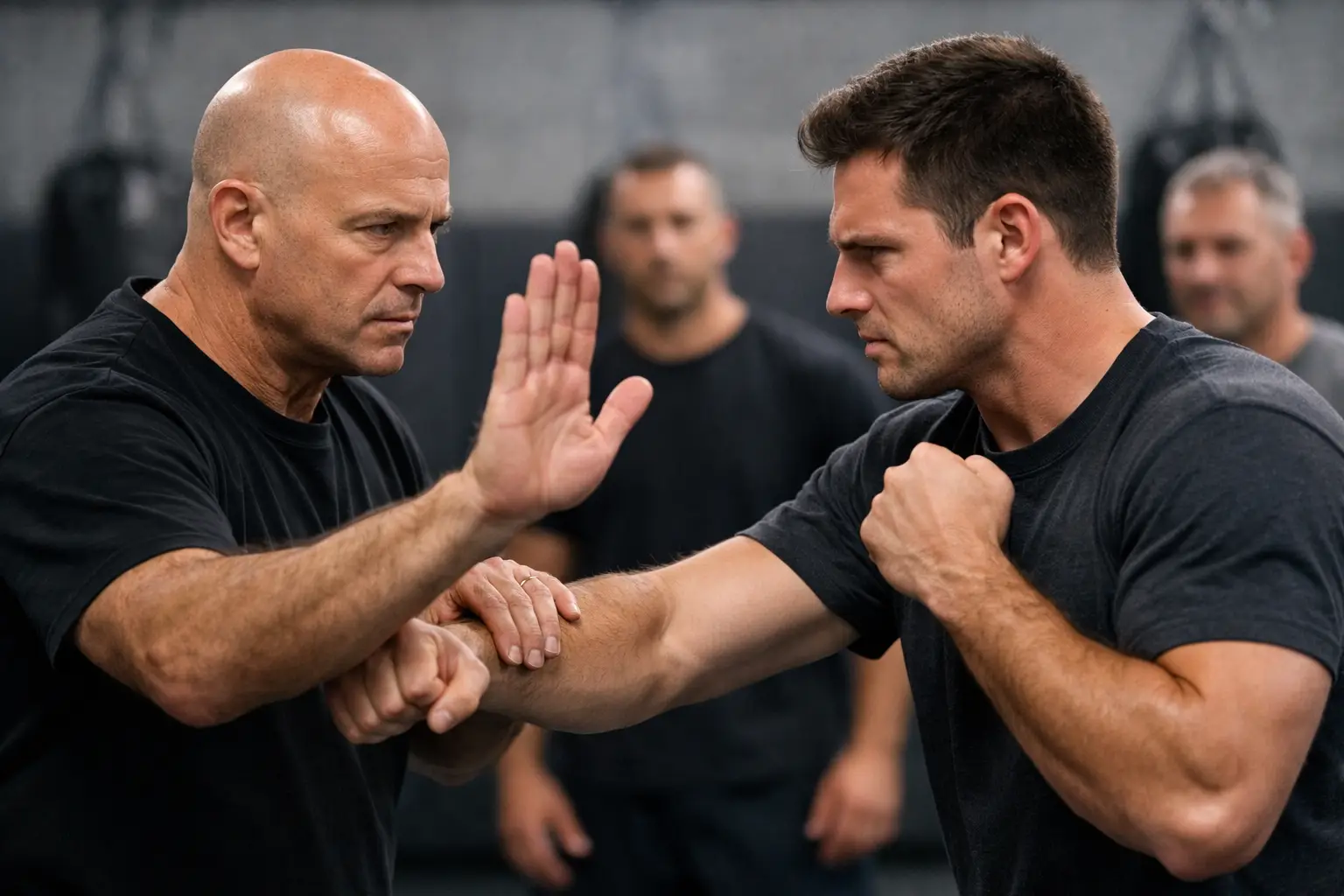
Keep your hands visible around chest level with open palms if you need to speak. This posture communicates that you do not want trouble while keeping your hands in a position to protect yourself. Stand balanced, do not point a finger, and do not move in suddenly. Your body language should say: I am not here to fight, but I am ready to leave.
Use brief phrases. “I don’t want a problem.” “You’re right, I’m leaving.” “Please give me space.” “I can’t help you.” Long explanations often create more opportunities for arguing, bargaining, or manipulation.
Do not confuse de-escalation with submission. You can acknowledge someone’s anger without agreeing with their version of events. If a driver is yelling after a parking mistake, for example, you can say, “I understand you’re upset. I’m moving on now.” There is no prize for delivering the perfect comeback. There is only the practical result: creating an opening to leave.
Never Argue With an Audience
Street confrontations can escalate quickly when friends, bystanders, or social media are involved. A person who might calm down alone may perform aggression when others are watching. Do not trade insults, accept dares, or let a crowd pressure you into staying.
If someone records you, do not let the camera become the center of your decision-making. Keep moving toward safety. If you have made a mistake, address it later through the appropriate channel. On the street, your priority is separating from the conflict.
Alcohol, drugs, exhaustion, and emotional stress also change the equation. When another person is impaired or highly agitated, logical discussion may not work. Use fewer words, give them more space, and leave earlier. Trying to reason with someone who cannot regulate their behavior can keep you in danger longer than necessary.
Do Not Let Pride Make the Decision
The most dangerous phrase in a confrontation is often, “I’m not backing down.” It turns safety into a test of identity.
A stranger may insult you, accuse you, cut in line, bump into you, or try to provoke a response. None of that automatically requires engagement. Ask yourself one direct question: What do I gain by staying here? In most situations, the honest answer is nothing worth the risk.
This does not mean you should ignore every problem. If someone is threatening another person, following you, attempting to take property, or preventing you from leaving, the situation requires action. But action should be purposeful, not emotional. Create distance, get attention from others, call emergency services when appropriate, and use reasonable force only when it is necessary to protect yourself or another person from an immediate threat.
Self-defense laws differ by state, and the facts matter. Avoid assuming that a verbal insult gives you the right to use force. The strongest legal and personal position is usually the one where you clearly tried to leave, clearly communicated boundaries, and acted only because you had no safe alternative.
Build Habits Before You Need Them
Avoidance works best when it is a routine, not an idea you try to remember under pressure. Tell a friend where you are when meeting someone new. Charge your phone before going out. Park where you can see your vehicle. Have your keys ready before you reach the car instead of searching for them while distracted.
Consider your routes and timing. A shortcut through an empty area may save three minutes but remove the people, lighting, and visibility that help keep you safe. If you regularly travel for work, train late, or use public transit, identify locations where you can step inside, find staff, or call for assistance.
Your personal boundaries matter in everyday interactions too. People who practice saying “no,” leaving uncomfortable conversations, and asking for help are often better prepared to act decisively when pressure rises. Confidence is not loudness. It is the ability to make a clear choice without needing approval from the person challenging you.
Train for the Moment Avoidance Fails
The goal is always to prevent violence. Still, responsible adults should prepare for the possibility that they cannot leave, talk, or create enough distance. Training gives you a safer response under stress, especially when it teaches situational awareness, verbal boundaries, movement, escape principles, and the legal realities of self-defense.
A structured Krav Maga program should develop more than striking ability. It should teach you to recognize pre-attack behavior, protect yourself from common threats, make decisions under pressure, and escape as soon as the opportunity appears. At Krav Maga Online, that progression can be developed around your schedule through practical, structured instruction rather than relying on occasional tips or improvised techniques.
Training does not make a confrontation desirable. It makes you less likely to freeze, overreact, or make an avoidable mistake when stress is high. The best practitioners understand that physical skill is the last line of defense, not the first.
The next time someone tries to pull you into a conflict, remember that leaving is a skill. Notice early, create space, speak calmly, move toward safety, and protect your future rather than your ego.