A military krav maga training program is not about collecting aggressive techniques or looking tactical in training gear. It is about building a disciplined response under pressure: moving with purpose, recognizing threats early, creating space, protecting others, and applying only the level of force the situation demands. For military personnel, security professionals, and serious civilians, the standard is not whether a technique looks impressive. The standard is whether it can be recalled when fatigue, confusion, and stress are working against you.
Krav Maga was built around practical problem-solving. A quality military-focused curriculum takes that foundation further by organizing it into repeatable skills, scenario awareness, physical conditioning, and decision-making. It trains the student to act decisively without losing control.
What Military Krav Maga Training Is Designed to Do
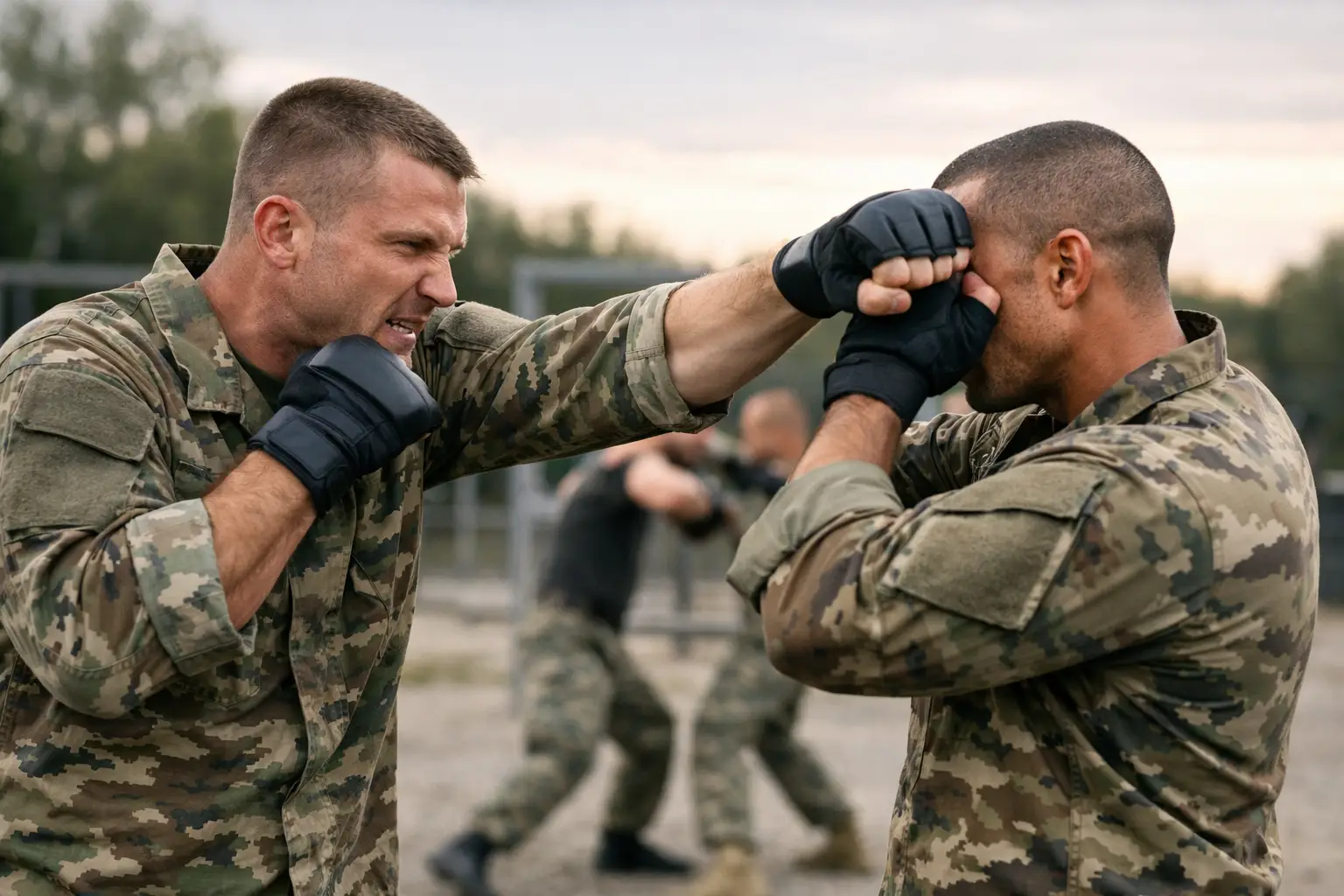
The purpose of military Krav Maga is straightforward: prepare people to function during close-range confrontations where time is limited and conditions are not ideal. Distance may disappear without warning. Terrain may be uneven. Visibility may be poor. You may need to protect a teammate, retain equipment, get to safety, or control a subject rather than simply escape.
That changes the way training must be approached. Technical knowledge matters, but it is only one part of readiness. Students also need body mechanics that hold up under pressure, habits that reduce hesitation, and an understanding of when not to engage.
A serious program develops the ability to recognize a threat, choose an appropriate response, move explosively when necessary, and regain control of the environment. It does not promise invincibility. No legitimate self-defense system can. What it can provide is a proven training structure that reduces uncertainty and makes useful responses more available when seconds matter.
The Core Skills in a Military Krav Maga Training Program
Close-Range Striking and Defensive Movement
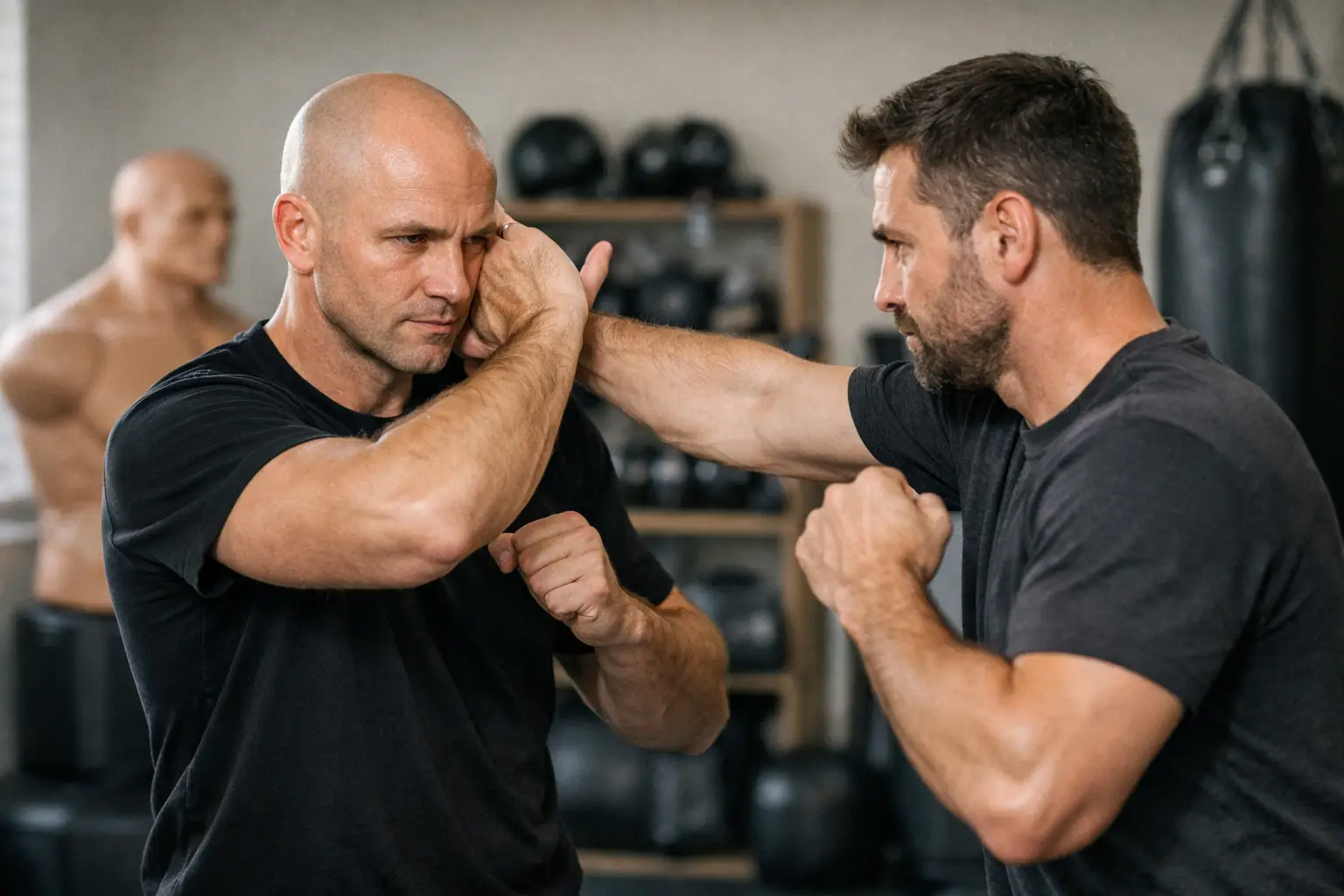
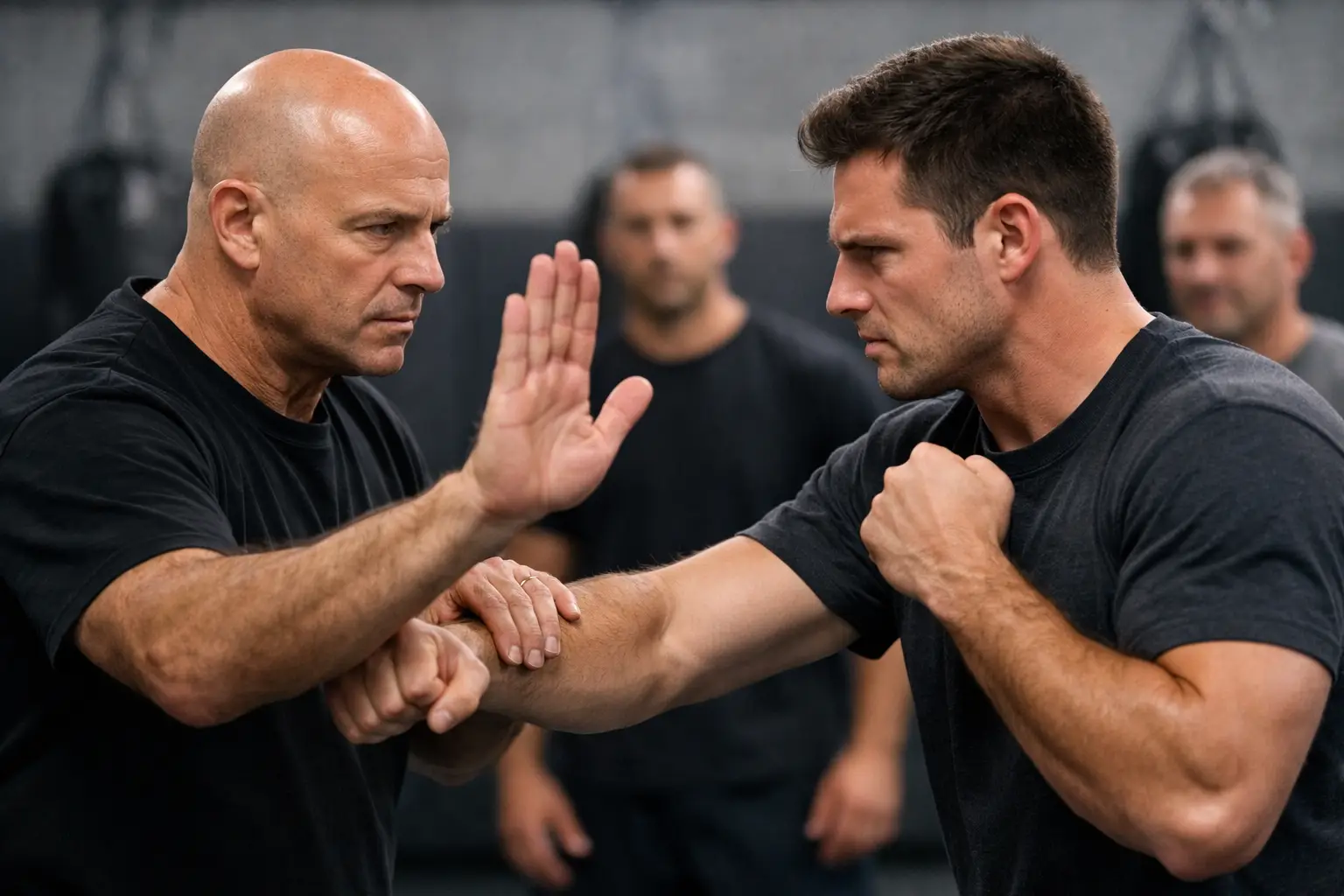
Military and tactical environments can place people in confined spaces where long-range fighting is unrealistic. Training therefore emphasizes direct, efficient strikes from natural positions, defensive movement, balance recovery, and rapid disengagement.
The goal is not to exchange blows. It is to interrupt an immediate threat, create an opening, and move toward the safest available outcome. Students learn how stance, posture, hand position, and angle affect their ability to strike, defend, or protect vital targets.
This is also where repetition becomes essential. Under stress, fine motor precision can deteriorate. A response that depends on perfect timing or complex choreography is less reliable than one built on simple, gross-motor movement practiced correctly over time.
Threat Recognition and Decision-Making
Technical skill without judgment can create bigger problems. A military-oriented Krav Maga curriculum must teach the difference between awareness, avoidance, control, escape, and physical intervention.
Students should learn to read pre-assault indicators, manage distance, use verbal commands, and identify environmental factors that change the decision. Is there a clear exit? Are there bystanders? Is the person armed? Are you responsible for another person’s safety? Is disengagement possible?
These questions matter because self-defense is never just physical. The best outcome is often the one that prevents contact altogether. When contact cannot be avoided, training should prepare you to act with discipline rather than panic.
Weapon Threat Principles and Equipment Awareness
Military and professional students may need training that addresses weapon threats, weapon retention concepts, and the realities of operating around equipment. This area requires mature instruction, careful safety controls, and a clear understanding of legal and organizational policy.
The objective is not to encourage reckless disarms or overconfidence. It is to understand positioning, timing, distance, movement, and survival priorities when a weapon is present. Every scenario is different. A tactic that may be appropriate at close range can be dangerous at a different distance or in a crowded environment.
For civilians, these lessons remain valuable because they reinforce one central principle: awareness and escape are preferable whenever they are possible. Physical action is a last resort, not a first impulse.
Ground Survival and Recovery
A fall, tackle, slip, or unexpected impact can put even a skilled person at a disadvantage. Ground survival training focuses on protecting the head and vital areas, creating frames, recovering position, getting back to the feet, and moving away from danger.
This is not sport grappling for points. The emphasis is survival, mobility, and escape. In a tactical context, staying on the ground can expose you to additional threats, restricted movement, or loss of situational awareness. The priority is to recover safely and reestablish your ability to move.
Why Structured Progression Matters
Random technique videos can provide ideas, but ideas are not a training system. A real military Krav Maga training program should build skills in sequence. Beginners need a foundation in stance, movement, basic striking, defensive reactions, and situational awareness before adding higher-pressure scenarios.
As students progress, drills can become more demanding. They may include directional movement, fatigue, limited space, verbal pressure, multiple variables, and decision-making before physical action. The progression matters because pressure should reveal and improve a student’s fundamentals, not overwhelm them before those fundamentals exist.
A belt-by-belt structure gives training a measurable path. It clarifies what you are working toward, which skills need refinement, and where your current level stands. For professionals, documented progression can also support a more disciplined approach to continuing education. For civilian students, it provides accountability and a clear way to track real development.
The right pace depends on your background. An experienced martial artist may move quickly through basic mechanics but still need to adapt to Krav Maga’s threat-focused mindset. A complete beginner may need more time to develop coordination and confidence. Faster is useful only when the movement remains accurate, controlled, and repeatable.
Online Training Has Real Advantages – and Clear Responsibilities
For many students, a local tactical training center is unavailable, inconsistent, or impossible to attend around shift work, deployments, family obligations, or travel. Online instruction makes structured training accessible without requiring a rigid class schedule or a nearby school.
A high-quality online program allows you to review instruction repeatedly, train at a deliberate pace, and return to essential details that are easy to miss in a live class. This is particularly valuable for foundational material. You can study body position, defensive angles, movement patterns, and tactical principles until they become familiar.
Krav Maga Online provides this kind of structured pathway through Master Alain Cohen’s instruction, with progression from foundational self-defense through advanced professional tracks. The value is not merely convenience. It is consistent access to an organized curriculum, formal progression, and a training standard that does not depend on whether you can make one class at a specific hour.
Still, online training has limits. Solo drilling can build movement quality, conditioning, coordination, and familiarity with the curriculum. It cannot fully replace responsible partner practice, live coaching, or controlled scenario work. Techniques involving contact, weapons, takedowns, restraints, or high-intensity pressure must be practiced safely and, when possible, under qualified in-person supervision.
The strongest approach combines both. Build your foundation and maintain your progress through structured online learning, then seek appropriate opportunities to pressure-test skills with trained partners and reputable instructors. That is how knowledge becomes usable performance.
How to Train for Results, Not Just Completion
Consistency will outperform occasional intensity. Three focused sessions each week can produce more progress than one exhausting session followed by two weeks away from training. Begin with clean mechanics. Train slowly enough to recognize mistakes, then increase speed only when posture, balance, and control remain intact.
Your training should include technical practice, physical preparation, and mental rehearsal. Technical practice teaches the movement. Conditioning helps you maintain that movement under fatigue. Mental rehearsal sharpens awareness, decision-making, and the ability to recognize the moment when avoidance is still possible.
Keep a record of your work. Note which movements feel natural, which ones break down under speed, and which scenarios cause hesitation. Honest assessment is an advantage. It tells you where to train next instead of allowing you to confuse familiarity with competence.
Most of all, train with the right purpose. Military Krav Maga is not a performance. It is a disciplined method for becoming harder to surprise, harder to control, and better prepared to protect yourself and others when a situation turns physical. The next session is not about proving how tough you are. It is about making your response more reliable than it was yesterday.