Most people do not skip training because they lack motivation. They skip it because real life gets in the way. Work runs late. The nearest gym is too far. A training partner cancels. That is exactly why krav maga without a partner matters. If your progress depends on another person being available, your progress will always be limited.
The good news is that solo training can build real self-defense skill when it is done correctly. The bad news is that random shadowboxing and a few punches in the air are not enough. Krav Maga is a system. If you want results, your solo work needs structure, progression, and clear standards.
That is where many people waste months. They train hard, but not in the right sequence. They repeat movements without understanding distance, timing, body mechanics, or tactical purpose. Solo training works best when every drill has a job. One drill sharpens stance. Another develops explosive movement. Another improves defensive reactions. Done together, they create a foundation you can trust.
Can you really learn krav maga without a partner?
Yes, but with a serious condition. You can develop strong fundamentals in krav maga without a partner, but you cannot pretend solo work replaces every part of live practice. Partner training teaches pressure, unpredictability, and contact management. Solo training teaches movement quality, speed, balance, precision, conditioning, and repetition at a volume most students never reach in class.
For many adults, solo training is not the second-best option. It is the only realistic option that gets done consistently. That matters. A person who trains alone four times a week with a proven curriculum will often progress faster than someone who attends an in-person class once every two weeks.
The key is understanding what solo training is for. It is not just exercise. It is skill development. You are building automatic movement patterns so that when you do work with a partner, or when you face a real threat, your body does not hesitate.
What solo Krav Maga training should focus on
A strong solo program should prioritize the parts of self-defense that do not require a partner to improve. That starts with stance and movement. If your base is weak, every defense is weaker. Footwork is not flashy, but it is where timing, stability, and striking power begin.
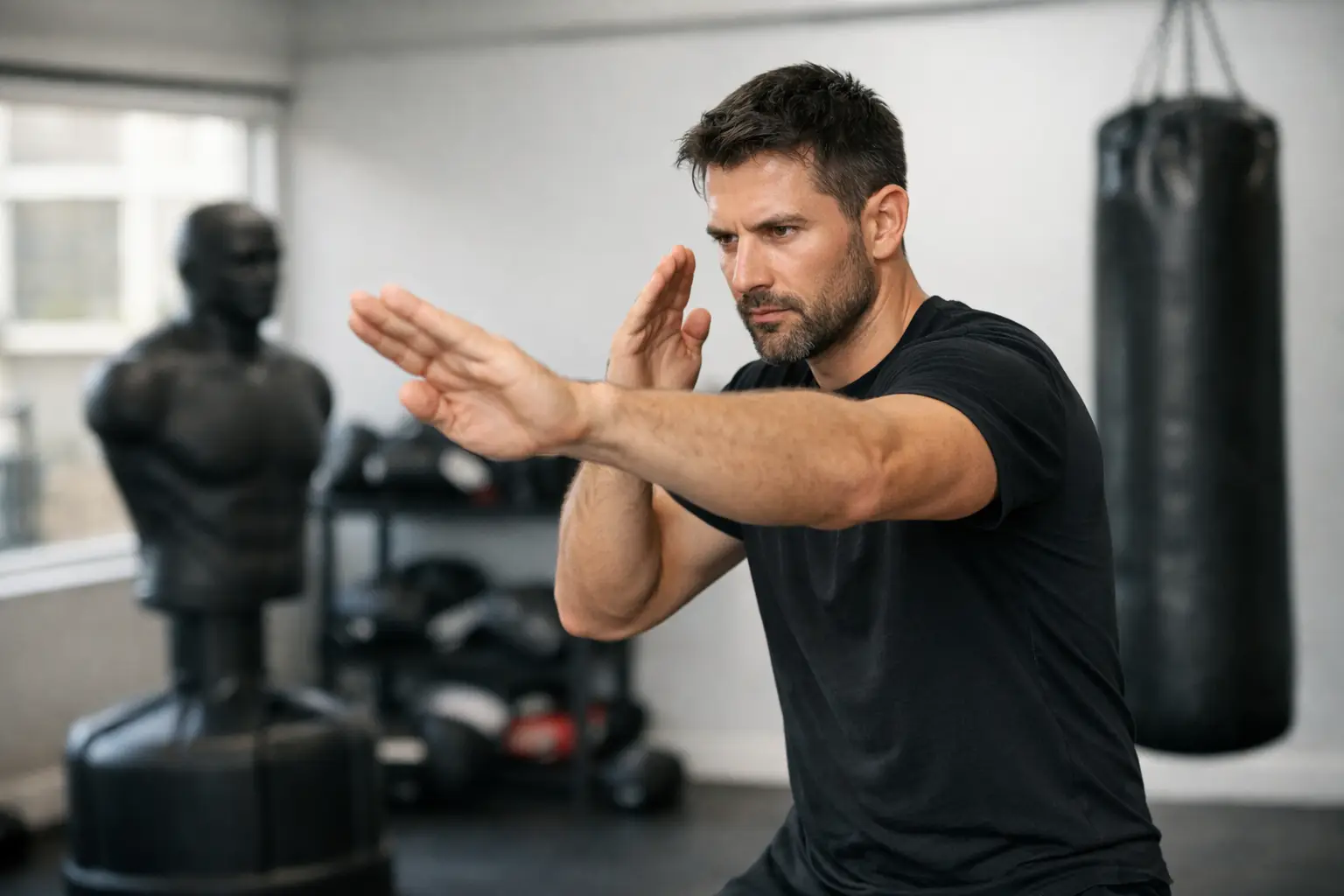
Next comes striking mechanics. Straight punches, elbows, knees, hammerfists, front kicks, and low kicks can all be trained alone. The goal is not to look fast. The goal is to deliver force with balance, recover your position immediately, and stay ready for the next action.
Defensive movement also belongs in solo work. Even without a partner, you can train cover positions, burst movement, offline steps, sprawls, hip turns, and transitions from defense to counterattack. That is a major part of Krav Maga. You do not defend and freeze. You defend and respond.
Then there is scenario preparation. While you cannot recreate full resistance alone, you can rehearse responses to common attacks with focus and realism. Visualizing a choke, bear hug, haymaker, or knife threat while moving through correct mechanics helps build recognition and decisiveness. It is not a replacement for contact training, but it is far better than doing nothing.
How to train krav maga without a partner the right way
Start with short, disciplined sessions. Most people make the mistake of trying to do too much. Twenty to forty focused minutes is enough if the work is precise. Begin with movement prep, then build into technical rounds, and finish with conditioning tied to self-defense actions.
A useful structure is simple. Spend the first block on stance, guard, footwork, and movement in all directions. Spend the next block on striking combinations with clean form. Then add defensive motions and tactical transitions. Finish with bursts of intensity, such as sprawls, knees, palm strikes, or kick-punch exits, so your body learns to perform under fatigue.
Tempo matters. Some rounds should be slow and exact. That is where technique gets corrected. Other rounds should be explosive. That is where you build the ability to act fast under pressure. If every round is done at one speed, your development will flatten out.
Mirror work can help in the beginning, especially for posture, hand position, and balance. But do not become dependent on watching yourself. In a real confrontation, there is no mirror. You also need rounds where you feel the movement, trust your mechanics, and keep your eyes on the imagined threat.
The most effective drills for krav maga without a partner
Shadow fighting is the obvious starting point, but it needs intention. Do not just throw combinations. Move as if an attacker is actually in front of you. Change angles. Defend, counter, and exit. Use verbal commands if appropriate. Krav Maga is not passive. Your solo rounds should reflect that.
Footwork rounds are equally important. Advance, retreat, pivot, step offline, and reset your stance without crossing your feet or losing your guard. Good footwork is what allows your defenses and strikes to show up on time. Without it, even strong techniques arrive late.
Strike development can be done in the air, but if you have access to a heavy bag or pad substitute, it becomes much more powerful. A bag teaches impact, distance, and recovery. Still, no equipment does not mean no progress. You can train sharp mechanics, hip rotation, hand return, and explosive entry with excellent results.
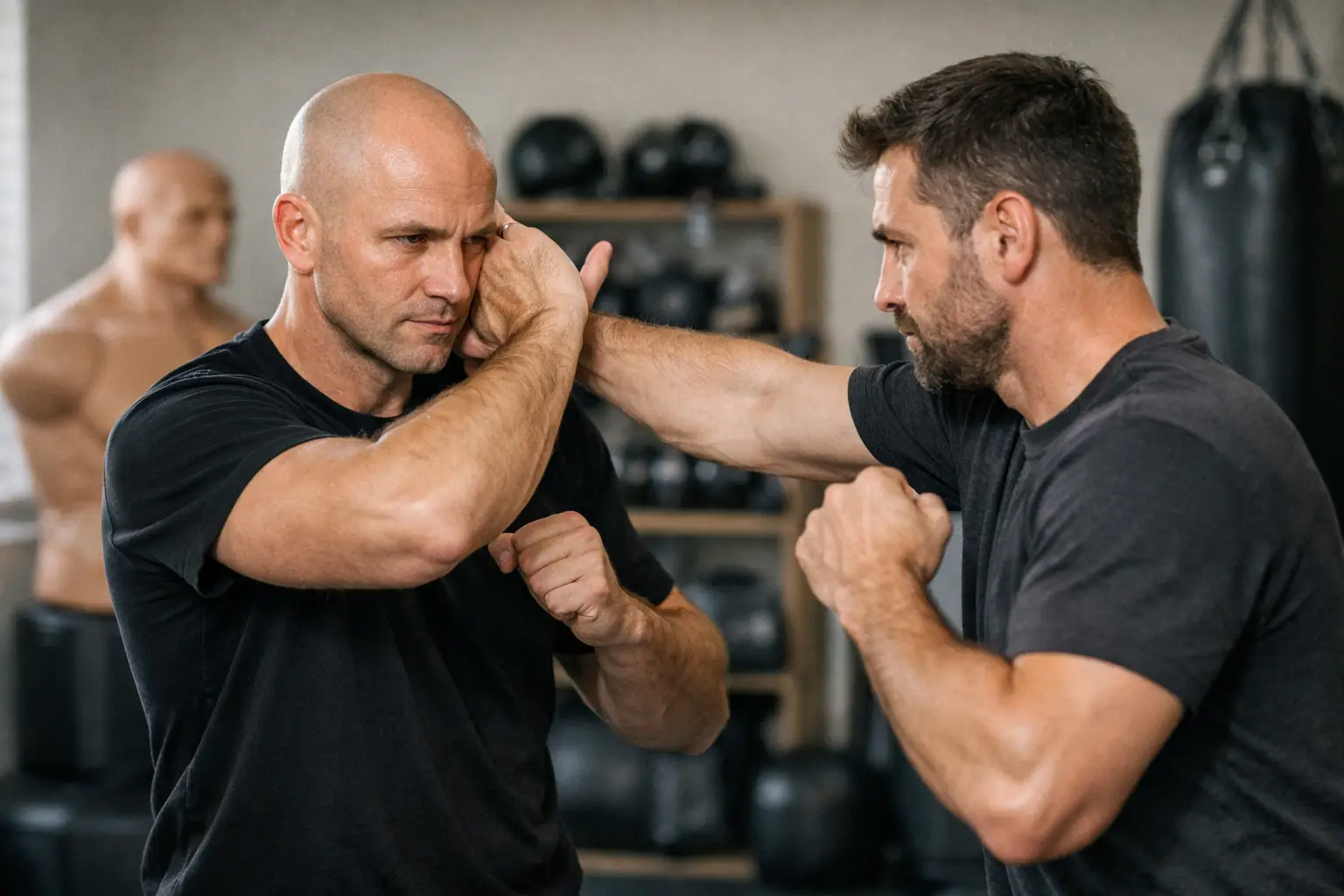
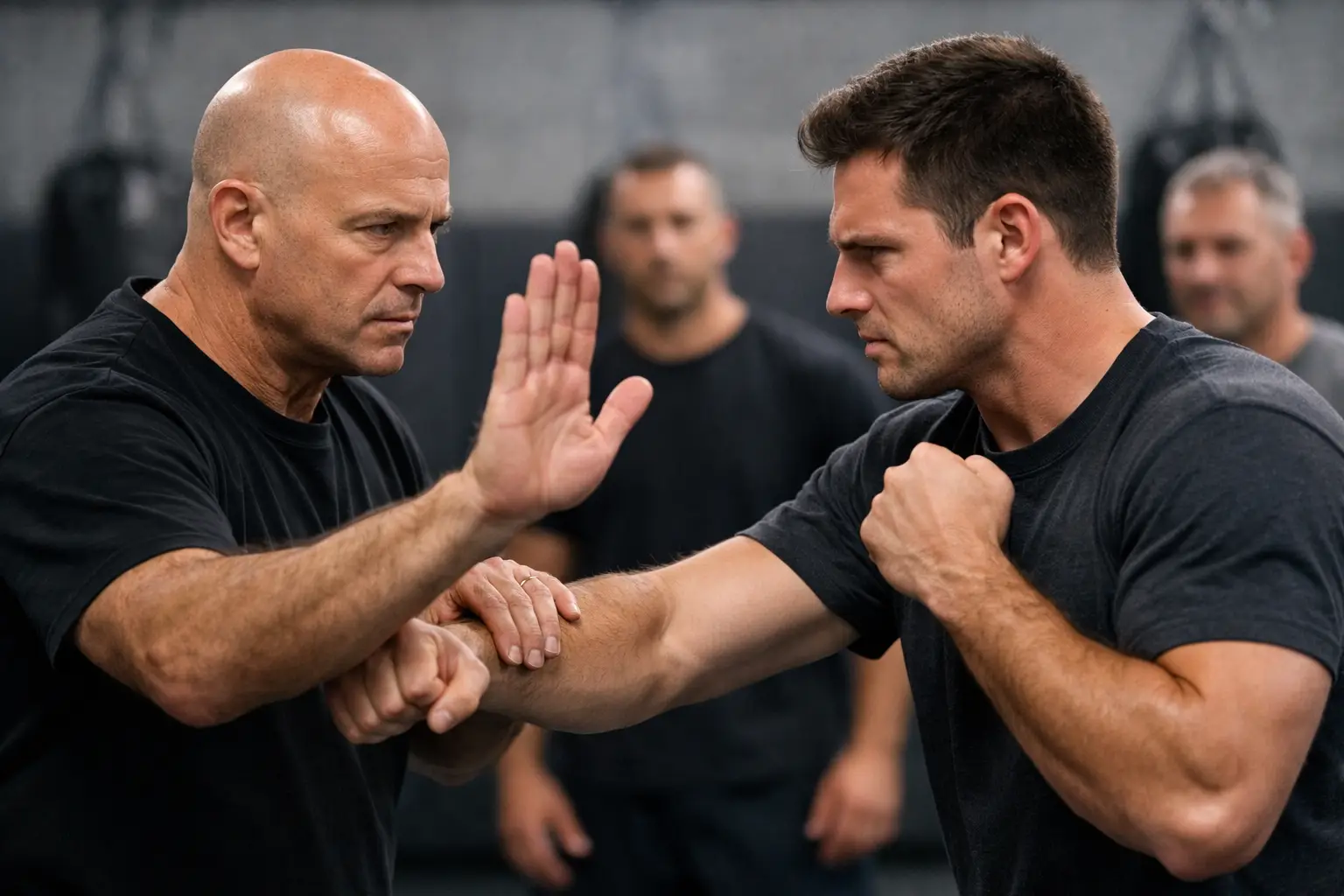
Defense-to-counter drills are where solo training starts to feel like real Krav Maga. Practice a cover against a hook, then explode forward with elbows and knees. Practice a pluck motion for a front choke, then counter with strikes and movement. Practice a sprawl, get back to your stance, and counterattack immediately. These sequences train the system, not just isolated motions.
Visualization drills deserve more respect than they often get. Serious professionals use mental rehearsal because it improves reaction quality and decision speed. The key is specificity. See the line of attack. See the environment. See your response. Then execute it with commitment, not half speed.
Common mistakes in solo Krav Maga training
The biggest mistake is training without progression. If you repeat beginner drills forever, you will become comfortable, not capable. Skill must evolve. Your combinations should become cleaner, your movement sharper, and your rounds more demanding over time.
The second mistake is chasing intensity before accuracy. Exhaustion can feel productive, but sloppy reps build sloppy habits. First own the movement. Then increase speed. Then add power. Then test it under fatigue.
Another mistake is ignoring context. Krav Maga is not fitness choreography. Every defense and counter has a purpose tied to a specific threat. If you do not know what problem a movement solves, you are rehearsing shapes, not self-defense.
There is also the issue of false confidence. Solo training can build real ability, but it should also build honesty. You need to know where you are strong and where you still need feedback. Serious students do not guess. They follow structured instruction, track their progress, and correct mistakes early.
Why a structured online system changes everything
This is where many students finally break through. They stop piecing together random videos and start following a real curriculum. That difference is huge. A belt-by-belt system gives you order, standards, and measurable progression. Instead of wondering what to train next, you know exactly what comes first, what builds on it, and what level you are reaching.
For adults with demanding schedules, this is one of the strongest ways to make krav maga without a partner actually work. You can train early in the morning, late at night, at home, while traveling, or on a schedule that changes every week. What matters is consistency and correct instruction, not access to a physical school three nights a week.
That is also why serious online training has become such a strong option for beginners, experienced martial artists, and professionals in security, law enforcement, and military roles. A structured academy model gives you repeatable lessons, progression benchmarks, and the ability to study under recognized authority rather than improvising your development. Krav Maga Online was built around that exact reality.
What results should you expect?
If you train seriously, you should expect better balance, sharper striking mechanics, stronger defensive movement, improved conditioning, and faster recognition of common attack patterns. You should also expect more discipline. Solo training removes excuses. It makes your progress a direct reflection of your effort and your system.
What you should not expect is overnight mastery. Real self-defense skill is earned through repetition and correction. Some techniques adapt well to solo practice. Others improve much faster once you can test them with resistance. That is not a flaw. That is the nature of training.
The standard should be simple. Are you becoming more precise, more explosive, and more prepared than you were last month? If the answer is yes, your training is working.
You do not need perfect conditions to build real Krav Maga skill. You need commitment, structure, and instruction that respects reality. Train with purpose, and even when no partner is available, your development does not stop.